Public debate on Afghanistan today is increasingly shaped by frustration, grievance and a deep sense of injustice – much of it directed outward, particularly towards Pakistan.
Given Afghanistan’s long history of conflict, displacement and external interference, these emotions are understandable. Yet while anger may offer momentary release, it does not provide a strategy for recovery. If Afghanistan is to move towards stability, legitimacy and meaningful engagement with the international community, it must confront an uncomfortable but unavoidable reality: deflection cannot substitute for accountability.
At the heart of Afghanistan’s strained regional and international relations lies a question that Afghan civil society, journalists and opinion-makers must examine honestly: the responsibility of the de facto authorities in Kabul under binding UN counterterrorism obligations. This issue is often ignored in public discourse, even though it directly shapes Afghanistan’s diplomatic isolation, economic distress, and security challenges.
UN Security Council Resolutions 1368 and 1373, adopted under Chapter VII, in the aftermath of the September 11 attacks, impose clear obligations on all authorities, without exception. These resolutions require states and governing authorities to deny terrorist groups safe haven, prevent their recruitment and financing and stop cross-border movement and operations. These are not discretionary guidelines or political tools aimed at a particular country; they are universal legal commitments designed to safeguard international peace and security.
In addition to these general obligations, Resolutions 1267 and 1988 – adopted under Chapter VII of the UN Charter – establish enforceable sanctions regimes targeting Al-Qaeda–linked entities and individuals associated with the Taliban. These resolutions remain fully in force today, whether the Taliban like it or not. Their applicability does not depend on diplomatic recognition, regional narratives or claims of victimhood. They are triggered by conduct, not by rhetoric.
Yet public discourse in Afghanistan often portrays these resolutions as distant, abstract or selectively enforced. This is a serious mistake. The continued presence of groups such as the Tehreek-e-Taliban Pakistan (TTP), Islamic State Khorasan Province (ISKP), Al-Qaeda, the Islamic Movement of Uzbekistan (IMU) and the East Turkistan Islamic Movement (ETIM) on Afghan soil has been repeatedly cited by the UN, international and regional actors as a core concern. These groups are not theoretical threats; they have demonstrated operational capability, transnational intent (Pakistan, Iran, Russia, Tajikistan) and a record of violence.
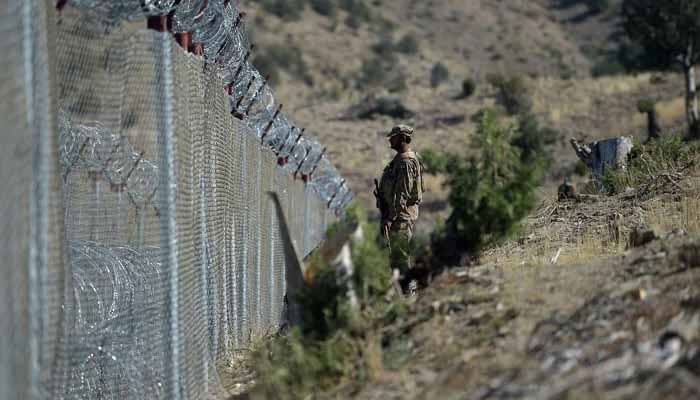
For Pakistan in particular, the consequences have been tangible. Cross-border attacks linked to militant sanctuaries in Afghanistan have resulted in significant security and civilian losses. But this issue should not be framed narrowly as a bilateral dispute between Kabul and Islamabad. That framing obscures the larger reality: persistent cross-border militancy places Afghanistan in direct tension with the UN’s global counterterrorism framework.
Ignoring or downplaying this reality does not strengthen Afghan sovereignty. On the contrary, it reinforces international perceptions that Afghanistan is either unwilling or unable to meet its obligations. This perception has costs – economic, diplomatic and humanitarian. Sanctions regimes remain in place. Foreign investment is absent. Humanitarian assistance is constrained. Afghan citizens, not foreign governments, bear the heaviest burden of this isolation.
For Afghan civil society and media, this moment demands courage and responsibility. Journalism and public debate should not merely echo popular sentiment or amplify external blame. They should ask difficult questions: Are Afghanistan’s current policies reducing the risk of international enforcement or increasing it? Are they improving the country’s standing or entrenching suspicion? Are they serving the long-term interests of Afghan citizens?
History offers a clear lesson. Whenever Afghanistan has been perceived as a permissive environment for transnational militancy, the response from the international community has been swift and punitive. Sanctions, isolation and intervention have followed. Conversely, periods of engagement and support have coincided with credible efforts to prevent the use of Afghan territory against others.
If Afghanistan seeks economic recovery, humanitarian relief and regional integration, the path forward is neither emotional nor rhetorical. It lies in credible, verifiable action against terrorist sanctuaries and in transparent compliance with international counterterrorism norms. This is not about appeasing external powers. It concerns protecting Afghanistan from the consequences of renewed Chapter VII enforcement under the UN Charter.
This conversation should not be reduced to choosing sides between Afghanistan and Pakistan, or between regional rivals. Such framing distracts from the core issue. The real question is whether Afghanistan wishes to be seen as part of the solution to global security challenges or as a persistent exception to international law.
For Afghan civil society, accountability should not be viewed as betrayal. It is, in fact, an expression of patriotism. Real sovereignty is not asserted through denial or defiance; it is demonstrated through responsible governance. Legitimacy is not claimed through rhetoric but earned through conduct that reassures neighbours and the international community alike.
Afghanistan stands at a crossroads. Continuing to externalise blame may offer short-term political comfort, but it carries long-term strategic costs. Choosing accountability, however difficult, offers a path towards dignity, stability, and reintegration. The choice should be guided not by anger, but by the future Afghans wish to secure for themselves and for generations to come.
The writer is a former ambassador of Pakistan to Iran and the UAE. He is also a former special representative of Pakistan for Afghanistan and currently serves as a senior research fellow at the Islamabad Policy Research Institute (IPRI).