“The rashes and skin conditions and lice affect dignity. It also affects love for life; the children wonder: what kind of life am I living?” This reflection, shared by an international organisation staff member working in Gaza, captures a dimension of war that statistics alone cannot convey.
Beyond bombs, rubble and school closures, the ongoing assault on Gaza is eroding children’s dignity, sense of self and attachment to life itself. Education in Palestine is not merely under attack as a system; it is under assault as a source of identity, safety and hope for children growing up amid relentless violence.
On January 22, 2026, just two days before the International Day of Education, the report ‘Palestinian Education Still Under Attack: Restoration, Recovery, Rights and Responsibilities in and through Education’ was formally launched at the University of Cambridge Faculty of Education. Nearly 300 people attended in person and online from around the world. The launch of the report, by the REAL Centre at the University of Cambridge and Centre for Lebanese Studies in partnership with UNRWA, highlighted a central truth: the destruction of education in Palestine is not incidental to the conflict, but fundamental to it.
Dr Husam Zomlot, Palestine’s ambassador to the UK, opened the event by describing the devastation in Gaza and the “shocking” conditions in the West Bank as a legacy of “teachers who will never teach again; students who will never graduate”. The targeting of schools and universities, he argued, represents the attempted systematic destruction of education to disable a people’s future, commonly referred to as ‘educide’ or ‘scholasticide’. “This is not collateral damage”, he said. “It is the devastation of a fundamental human right”.
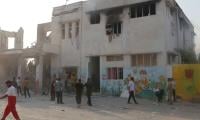
The report provides overwhelming evidence supporting this claim. In Gaza, nearly all school buildings have been damaged or destroyed. Children learn – when learning is possible at all – in tents, overcrowded shelters or makeshift spaces without basic materials. In the West Bank, schooling is repeatedly disrupted by attacks on schools, arrests of students and teachers, movement restrictions and settler violence. Yet the report makes clear that the deepest harms extend far beyond infrastructure.
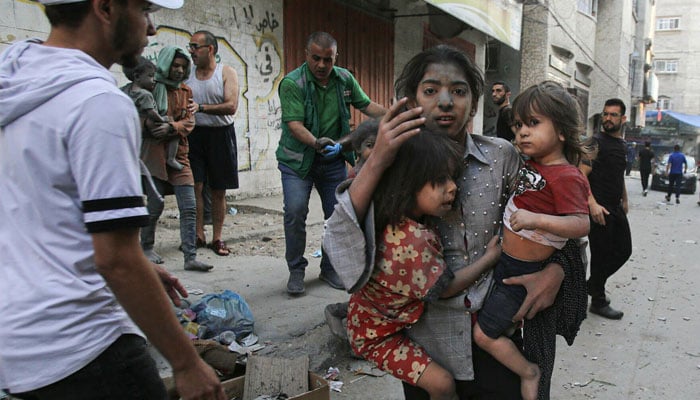
Children are bearing the heaviest costs. Learning loss is severe, but it is only one dimension of deprivation. Hunger, malnutrition and starvation undermine children’s physical health and cognitive development. Trauma, displacement and grief affect their ability to concentrate, to feel safe – and even to imagine a future. Interviews cited in the report describe children who fear every sound, expect death to come at night and have narrowed their aspirations to surviving another day.
These harms are not evenly distributed. Children with disabilities face compounded exclusion as assistive devices, rehabilitation services and inclusive learning environments are largely unavailable. Girls experience heightened risks linked to lack of menstrual hygiene supplies, loss of privacy, early marriage and gender-based violence. Boys are increasingly drawn into dangerous survival activities, including travelling to militarised aid distribution points, pulling them out of education and placing them at serious risk of injury or death.
Thousands of children have lost one or both parents, or have been separated from their families, forcing them into adult responsibilities while cutting them off from schooling and protection.
What emerges most starkly is how deeply this war attacks children’s dignity. The quote that opens this piece speaks not only to rashes or lice, but to the humiliation of being unable to care for one’s body, to learn, to play or to dream. When children cannot wash, cannot wear clean clothes, cannot sit with a notebook and pen, they internalise the message that their lives are expendable. Education, even in its most basic form, can act as a powerful counterweight to that message. A piece of paper, a lesson, a teacher’s presence can restore routine, meaning and a sense of being valued.
One of the report’s striking findings concerns the international community’s failures. While children’s educational needs in Gaza and the West Bank have increased exponentially and the economy is close to collapse due to the war, international funding for education has declined dramatically. Cuts to UNRWA’s funding have had particularly devastating effects on children’s schooling, given its central role in providing education to Palestinian refugees. Dr Julia Dicum, director of education at UNRWA rightly emphasised during the launch event that “Education is a human right and frontline necessity in times of crises”.
The international community is further complicit in its failure to ensure that international law is effectively upheld, including laws explicitly designed to protect children. Children in Gaza are resultantly voicing feelings of abandonment by the very international system meant to safeguard them.
The report warns of a “generation of lost learning” unless urgent action is taken. The central recommendation of the report is that recovery and reconstruction of education must be led by Palestinians themselves. This is not only a matter of effectiveness, but of rights, agency and dignity.
Yet the report also situates the current crisis within a longer history. Decades of occupation, blockade and colonial domination have systematically constrained Palestinian agency over education. Decisions about funding, governance and reconstruction have repeatedly been made externally, often in the name of efficiency or security, while marginalising Palestinian voices, knowledge and priorities. The report makes clear that denying agency in education is itself a continuation of harm.
This history matters deeply for what comes next. As discussions intensify around reconstruction, recovery and peace in Gaza, education risks once again being sidelined. Plans drawn up without Palestinian leadership risk reproducing the very conditions that made the system so fragile in the first place.
The consequences of exclusion are not abstract. When Palestinian educators, families and children are sidelined, interventions lose legitimacy, relevance and sustainability. These risks are especially acute as new international mechanisms and forums are proposed to shape Gaza’s future, including the Gaza Board of Peace. Such bodies may carry the language of stability, recovery and coordination, but critical questions remain unanswered. Whose peace is being imagined? Who defines priorities for children’s futures? Whose knowledge counts when decisions are made about rebuilding schools, curricula and education systems?
In sharing his reflections about the report, Professor Kamal Munir, pro-vice chancellor at the University of Cambridge, highlighted the role that universities such as Cambridge can play in supporting a Palestinian-led reconstruction of education. This includes providing full scholarships to affected students, facilitating evacuations and offering sustained mentorship and support. Professor Munir also outlined the steps taken by the University of Cambridge, including the establishment of a dedicated working group.
What would it mean for a Board of Peace to genuinely centre Palestinian voices, rather than consult them after decisions are taken? How would children’s lived realities of hunger, trauma and loss be reflected in policy deliberations? How would teachers, counsellors and families be positioned not as beneficiaries, but as decision-makers?
There are also broader international responsibilities to consider. What role will states play in shaping these processes? What responsibilities do countries such as Pakistan have in ensuring that peace-building efforts do not reproduce colonial hierarchies? How might such states use their influence to insist that education is treated not as a secondary concern, but as a foundational right and political priority?
The report is clear on one point: restoring education in Palestine is inseparable from restoring dignity, rights and agency. Anything less risks entrenching cycles of loss, resentment and exclusion. Palestinian children do not need sympathy alone. They need classrooms that are safe, learning that is meaningful, and futures shaped with them rather than for them.
Dr Laraib Niaz is an assistant research professor at the University of Cambridge.
Professor Pauline Rose is a professor of international education and the head of the REAL Centre at the University of Cambridge.