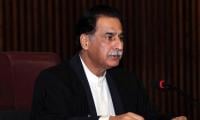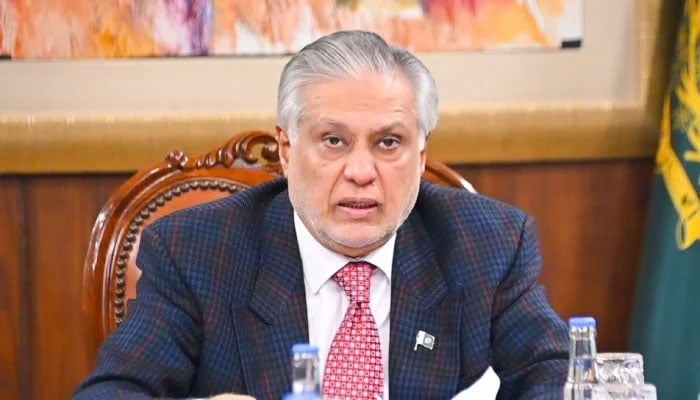
ISLAMABAD: A high-powered committee headed by Deputy Prime Minister and Foreign Minister Senator Ishaq Dar has approved a comprehensive gas circular debt management plan, paving the way for its presentation to the International Monetary Fund (IMF) mission scheduled to arrive in March, officials familiar with the matter told this scribe.
The 17-member committee was constituted by the Prime Minister on December 31, 2025, to review and finalise measures aimed at arresting the rapidly growing gas circular debt. Besides Deputy PM Senator Dar, the committee comprises federal ministers for the Economic Affairs Division, Planning and Special Initiatives, Climate Change, Inter-Provincial Coordination, Privatisation Commission, and representatives from the Petroleum and Power Divisions, along with coordinators of the Special Investment Facilitation Council (SIFC) and the Energy Task Force.
The plan, prepared jointly by the Energy Task Force, KPMG, and officials of the Petroleum Division, has now been cleared by the committee and will be formally shared with the IMF as part of ongoing discussions under the Fund’s programme.
According to the latest official estimates, gas circular debt has surged to Rs3.2 trillion, up from Rs2.6 trillion, primarily due to a sharp escalation in late payment surcharges (LPS), which now stand at Rs1.45 trillion.
Officials said that of the remaining Rs1.75 trillion, around Rs210 billion is on account of accumulated income tax and GST, while the actual stock of circular debt is estimated at approximately Rs1.5 trillion.
Under the proposed plan, the government intends to waive the LPS for government-owned entities, arguing that gas suppliers — including exploration and production companies — and buyers such as Sui Northern and Sui Southern Gas Companies are state-owned and did not resort to bank borrowing that would justify such penalties. However, Pakistan State Oil (PSO) will be required to clear its LPS liabilities, as it borrowed from banks to meet payment obligations.
In addition, the government plans to eliminate Rs210 billion in income tax and GST liabilities linked to the gas sector. To retire the Rs1.5 trillion circular debt stock, the government has proposed a mix of revenue and cost-saving measures, including the imposition of a petroleum levy of up to Rs5 per litre on petrol and diesel, diversion of regasified LNG (RLNG) cargoes to international markets, and utilisation of dividends from public sector oil and gas companies after capping them at budgeted levels.
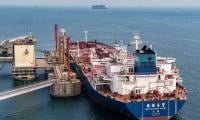
As part of the strategy, the government plans to divert 35 LNG cargoes in 2026, a move expected to reduce the country’s fuel import bill by over $1 billion and generate around Rs160 billion annually to help retire gas circular debt. The proposed petroleum levy is estimated to yield Rs90 billion per year, while dividends from state-owned energy companies will also be channelled toward debt reduction over a five-year period.
Meanwhile, officials said the government has managed to reduce the cost of RLNG diversion to the domestic sector from Rs242 billion to Rs185 billion, resulting in savings of Rs57 billion, which have been passed on to consumers in the form of relief.
Improved recovery of gas bills amounting to Rs61 billion — including Rs13 billion by Sui Northern Gas Pipelines Limited and Rs47 billion by Sui Southern Gas Company — has also helped offset part of losses accumulated in previous years.
The approval of the plan is seen as a critical step ahead of IMF engagement, as the Fund has repeatedly flagged the ballooning circular debt in Pakistan’s energy sector as a major structural risk to fiscal stability.