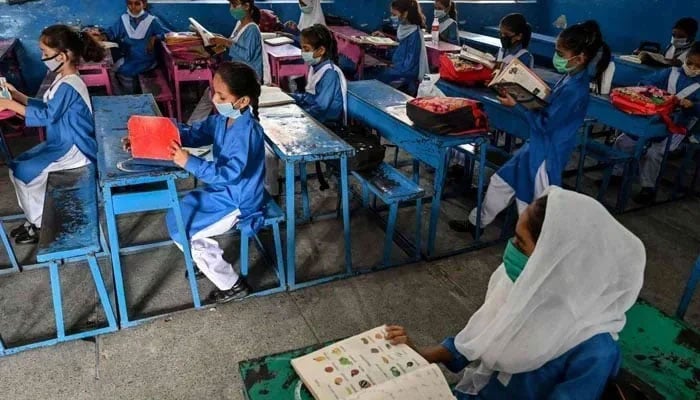
South Asia’s education crisis is no longer a future concern but an unfolding emergency. Home to over 1.7 billion people and one of the youngest populations in the world, the region should be poised for rapid economic and social advancement.
Instead, persistent inequality, poor learning outcomes and systemic neglect continue to undermine the promise of its demographic strength. Pakistan, India and Afghanistan face strikingly similar challenges.
Inequality in access to education remains the most serious obstacle. In Afghanistan, more than 70 per cent of the population lives in poverty and female literacy is estimated at just 23 per cent. Pakistan continues to struggle with widespread deprivation, with around 42 per cent of its population living below the poverty line and women’s literacy rates ranging between 50 and 63 per cent. Even India, despite notable economic growth, still has nearly 200 million people living in poverty. These disparities translate directly into unequal educational access, reinforcing intergenerational cycles of exclusion.
The quality of education is equally troubling. Across South Asia, learning systems rely heavily on rote memorisation, producing students trained to pass exams rather than think critically or solve real-world problems. Such approaches leave graduates poorly prepared for modern labour markets.
This problem is compounded by widespread malnutrition. Millions of children in Pakistan, India, and Afghanistan suffer from undernutrition, which has a direct and lasting impact on cognitive development. In Pakistan alone, around 20 per cent of the population is undernourished, limiting children’s learning capacity before they even enter a classroom.
The growing commercialisation of education has further distorted outcomes, particularly in Pakistan. Private schooling has expanded rapidly, but at costs that many families cannot afford. Quality education is increasingly treated as a commodity, accessible primarily to those with financial means. Meanwhile, public schools remain underfunded and overstretched. Academic pressure in both systems often prioritises grades over holistic development, reinforcing inequality rather than correcting it.
This pressure has also triggered a quiet mental-health crisis among students. Education systems across the region place excessive emphasis on examination results, leaving little space for creativity, emotional development, or personal growth. Stress, anxiety and burnout are becoming common experiences, affecting not only academic performance but also social development. Ignoring student well-being risks producing a generation ill-equipped to cope with economic and social challenges.
Yet the region also offers evidence that reform is possible. India’s digital learning initiatives, including the SWAYAM platform, have demonstrated how technology can expand access to education in remote and underserved areas. Bangladesh’s targeted investment in girls’ education, supported by public-private partnerships, has significantly improved female literacy and narrowed gender gaps. These examples underline the value of focused, outcome-driven policy interventions.
International experience also offers guidance. Finland’s education model, which emphasises project-based learning, teacher autonomy, and emotional well-being, shows that strong academic outcomes can coexist with low stress and high student engagement. South Asian countries need not replicate this model wholesale, but its underlying principles offer important lessons.
Fixing South Asia’s education system requires urgent and coordinated action. Governments must treat education as a central pillar of national development, alongside healthcare, employment and infrastructure. Resources diverted from development priorities should be redirected to schools, teacher training, nutrition programmes and digital connectivity. At the regional level, persistent political tensions and militarisation continue to drain public resources. Greater cooperation could free up fiscal space for social investment, including education.
Reform must also rebalance academic achievement with student well-being. Schools should integrate creativity, life skills, and mental-health support into curricula. Public-private partnerships, if properly regulated, can help improve infrastructure and service delivery without pricing students out of the system. Strengthening public education remains essential to ensuring equitable access.
South Asia’s future depends on choices made today. Education systems that prioritise equity, quality, and well-being can become engines of stability and growth. Continued neglect, however, will only widen inequality and weaken institutions. The region cannot afford further delay.
The writer is a policy analyst and commentator on governance, education reform and socio-economic development in South Asia.