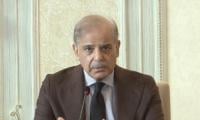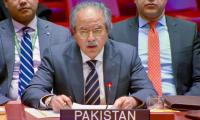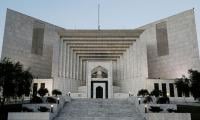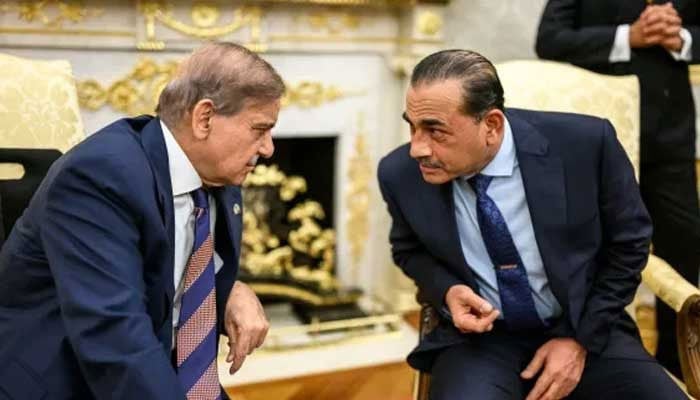
Power is now centralised. The judiciary has been restructured. The state’s core operating system has shifted to a military-backed model. Centralisation alone solves little. What matters is not the concentration of power but its direction. Centralisation without direction is control, not reform.
Pakistan’s leadership must now decide what kind of state it wants to run. Power has been gathered. Purpose must now be chosen.
Field Marshal Abdel Fattah el-Sisi runs Egypt as a ‘security-managed stability state’ – military-led governance in which the private sector is crowded out and mega-projects are the narrative. This model has delivered order but not productivity. Egypt has achieved stability but has so far failed to convert stability into growth.
Under el-Sisi, military-owned firms enjoy preferential access to land, tax exemptions and state procurement. Egypt, under el-Sisi, has compressed margins for civilians, deterred FDI and turned markets into extensions of command. Stability has been achieved. Growth remains uncommanded.
Under el-Sisi, security is treated as the outcome itself, not as a platform for productivity and exports. Mega-projects are debt-financed and import-heavy. Egypt, under el-Sisi, is a state that can build fast, borrow large and enforce order but struggles to generate productivity, exports or private investment.
Lt-Gen Paul Kagame runs Rwanda as a ‘technocratic authoritarian development state’ with centralised authority and technocratic execution. The Rwandan Model has three distinct characteristics: clear national priorities, rapid execution and zero tolerance for bureaucratic drift. Rwanda, under Kagame, shifted to performance contracts (Imihigo), clear targets and consequences management. Ministries were judged on delivery, not intent.
Rwanda, under Kagame, has managed 7-8 per cent GDP growth, poverty has fallen sharply and Rwanda has become a regional hub for services, health and tech-led governance.
General Park Chung-hee ran South Korea as an ‘authoritarian developmental state’ with centralised authority, export discipline and private sector delivery. Power was concentrated under a military ruler, political freedoms were curtailed, but economic targets were non-negotiable. The state directed credit and punished failure. Chaebols were supported – and disciplined.
Lesson for Pakistan: Centralisation can work when the state commands outcomes, not loyalty. General Park’s Korea shows that military-backed authority can produce growth but only when rent-seeking is crushed.
Senior General Min Aung Hlaing runs Myanmar as a ‘command-without-capacity’ state – total military control without an economic doctrine. The armed forces dominate every lever of power, yet no coherent development strategy exists. Markets have been replaced by crony enterprises, capital is fleeing and institutions are decaying.
Across Kagame and Park there are three non-negotiables of a successful model: Export discipline, performance contracts and punishment of failure. Every successful centralised model shares three traits: export obsession, measurable targets and the willingness to punish failure – even among insiders.
These are not templates to copy but choices to consider. Pakistan must choose. Egypt’s stability without productivity is a cul-de-sac. Myanmar’s control without capacity is collapsing. Rwanda and early Korea show that authority only works when it is tied to delivery.
Red alert: Centralisation without direction is the concentration of combat power absent a designated Schwerpunkt. Caution: Unifying command without clear intent is simply amassing strength with no defined point of decision.
The question before Pakistan is no longer whether power should be centralised. That decision has already been made. The question is where that power is pointed. Power has been consolidated. Its direction will determine Pakistan’s future.
The writer is a columnist based in Islamabad. He tweets/posts @saleemfarrukh and can be reached at: [email protected]