Iran’s current upheaval is neither sudden nor at all anomalous. It is the cumulative product of decades of unaccountable authority, compounded by economic attrition and exacerbated by foreign intervention.
Any serious attempt at understanding the crisis in the making in 2026 must have no romance. The Islamic Republic is not a misunderstood moral state under fire. The Pahlavi monarchy was not a beneficent moderniser derailed by clerical excess. And the US and Israel are not neutral advocates of Iranian freedom. Each of the actors, in various ways and at different times, has contributed to the fragility of the structures we see unfolding now.
For regional observers, especially those influenced by lived experience rather than ideology, Iranian history shows a pattern that repeats itself. Power centralises, legitimacy is claimed rather than accrued, dissent is commodified and the bill is passed to society. When pressure builds up, the authority’s response is not reform but hardening. The form of rule changes. The governing logic does not.
The Islamic Republic emerged from the need to struggle against monarchical authoritarianism and foreign domination. Its legitimacy in the early days was founded on mass mobilisation, resistance and the promise of social justice. Over time, however, revolutionary authority petrified in clerical supremacy. Unelected institutions gained veto power over elected ones. Accountability narrowed. Political pluralism was allowed within strictly controlled limits. The state increasingly resorted to coercion and ideology to compensate for its declining performance.
This transformation has had real economic consequences. Iran’s economy today is warped by opacity and patronage networks. Strategic sectors are invisible to the public eye. Sanctions have indeed worsened hardship, but have not caused inflationary spirals, currency mismanagement or elite capture. These are failures of governance. A state that defines itself as morally exceptional but one that presides over growing inequality and declining opportunity is one over which social credibility inevitably evaporates.
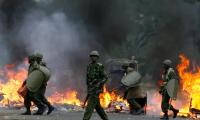
The protest movements that have periodically erupted are too often labeled cultural rebellions or foreign-instigated unrest. In fact, they are anchored in material grievance. Rising costs of living, unemployment, loss of purchasing power and crumbling public services have turned frustration into defiance. The generational dimension is essential. Younger Iranians are less invested in the memory of the revolution and more sensitive to world benchmarks on governance. Repression, surveillance and securitisation suppress dissent for a time, but they augment the deficit of legitimacy.
Yet the counter-narrative that is gaining ground outside Iran is equally flawed. The recovery of the Pahlavi monarchy as a golden age lost is a product of selective memory rather than of history. The Shah’s Iran was an authoritarian state kept afloat by centralised power, political exclusion and support from the international community. Development was, of course, real but uneven. Modernisation was imposed without participation. Opposition was made a criminal offence. The intelligence apparatus served as an instrument of fear and not stability. The monarchy crumbled not because Iranians did not believe in progress, but because they were not given agency.
To see Iran’s crisis as a choice between clerical rule and a restoration of the monarchy is to misunderstand the root problem. Both systems centralised power and expropriated society. Both were based on legitimacy stories that could not withstand economic stress and political awakening. The revolution did not end authoritarianism in Iran; it changed its marble.
External actors have always exploited these internal fractures. The US and Israel do not see Iran as a society in crisis but as a strategic adversary to be weakened. Economic warfare, secret operations and political signalling get justified in the language of human rights and democracy. Yet the regional record is conclusive. Iraq, Syria, Yemen, Afghanistan and Palestine prove that destabilisation from the outside rarely generates accountable governance. It gives rise to fragmentation, militias and long-term insecurity.
Sanctions in particular have been used as blunt instruments. They have limited state capacity and have destroyed ordinary citizens. Inflation, shortages and currency collapse have been borne disproportionately by the people least responsible for policy decisions. Far from empowering reformist forces, the economic siege has strengthened hardliners by narrowing political space. Israel’s hidden pressure and America’s maximalist strategies will perhaps weaken Iran’s ability to do this, but they also feed paranoia and legitimise repression. This is not support for Iranian society; it is strategic instrumentalisation.
The danger, then, in 2026 is the combination of internal decay and external agitation. Iran is not a small, homogeneous state that can absorb the sudden collapse. Its demographic diversity, institutional complexity and regional reach mean that destabilisation would not be internal. Energy markets, refugee flows, sectarian dynamics and proxy conflicts would all be affected. For neighbouring states like Pakistan, this is not an abstract moral debate; it is a very real security concern. Another prolonged crisis state in the region would put pressure on the already fragile regional equilibrium.
Reform must address systemic barriers because unaccountable authority threatens Iran’s stability, highlighting the urgency for the audience.
Iran’s modern history is thus the history of a cycle of domination followed by rupture. Each rupture promises renewal, and each renewal freezes into another type of constraint. The monarchy collapsed because it refused to be accountable. The clerical state is now faced with the same verdict. Foreign powers, rather than breaking this cycle, aggravate it by accelerating pressure without taking responsibility for the results.
The central lesson is grim but unavoidable. Unchecked authority, whether blessed by religion, tradition or external approval, does not create stability. It makes a crisis. Iran’s predicament is not an ideological one but rather a structural one. The question is not whether Iran should be religious or secular, or whether it should be revolutionary, monarchic or otherwise. It is whether power can finally be made answerable, institutions made transparent, and economic policy oriented towards citizens and not factions.
Until all the sources of domination are confronted – clerical absolutism, monarchical nostalgia and foreign manipulation – Iran’s upheavals will continue to recycle familiar patterns. The tragedy is not that Iran is not capable of having people and institutional memories. It is that authority, in all its competing forms, has consistently refused to trust society. History shows that there is a price to pay for this refusal. Once again, Iran is being asked to pay it.
The writer is an international and regional affairs analyst.