ISLAMABAD: Measles cases have risen alarmingly at the start of 2026, signalling a worsening public health crisis after the disease killed at least 143 children across Pakistan in 2025, immunisation authorities and World Health Organisation data reveal.
Citing new surveillance data, officials said statistics show higher suspected and confirmed measles cases in the first week of 2026 compared to the same period last year, despite the availability of an effective vaccine.
Doctors say many measles deaths never reach major hospitals and are likely underreported, especially in urban slums and peri-urban settlements where families seek care late or rely on unqualified practitioners.
Measles is one of the most contagious viral diseases known, spreading through coughing, sneezing and shared air. It suppresses a child’s immune system for weeks, increasing the risk of pneumonia, severe diarrhoea, blindness and brain inflammation. In malnourished children, the disease can be fatal, a reality reflected in Pakistan’s rising death toll over recent years.
During Week-1 of 2026, a total of 740 suspected measles and rubella cases were reported nationwide, of which 276 were laboratory-confirmed measles cases, compared to 491 suspected cases and 239 confirmed measles cases during the corresponding period of 2025, indicating rising transmission as the country enters the new year.
Health experts warn that the early surge suggests measles transmission chains were never broken in 2025, when Pakistan recorded over 50,000 suspected cases, more than 15,700 confirmed infections and 143 measles-related deaths, most of them among young children.
Karachi remains one of the epicentres of the outbreak. Sindh reported over 11,000 suspected measles cases in 2025, with more than 4,200 confirmed infections and 65 deaths, the highest toll among all provinces.
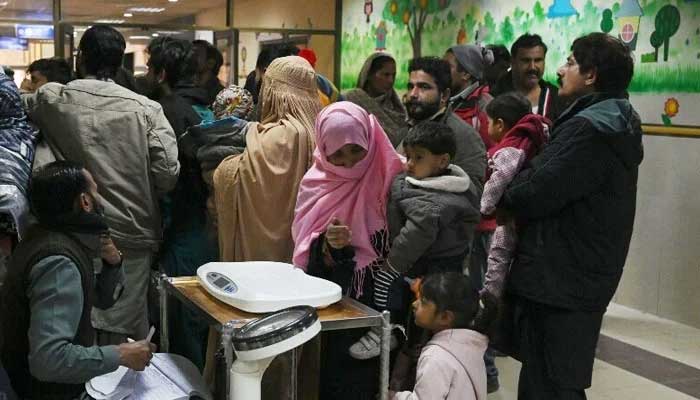
Pediatricians at Aga Khan University Hospital, the Sindh Infectious Diseases Hospital, the National Institute of Child Health and the Sindh Institute of Child Health and Neonatology say they continue to see a steady influx of measles patients, many arriving late with severe complications.
Doctors say the disease is no longer confined to poor or remote areas. Islamabad has reported worrying positivity levels, while hospitals in Peshawar have repeatedly flagged clusters of measles among children under five. Khyber Pakhtunkhwa recorded over 14,600 suspected cases and more than 5,700 confirmed infections in 2025, while Punjab reported the largest overall number of suspected cases nationally.
Data from early 2026 show that 52 percent of measles cases were completely unvaccinated, while 93 percent of all cases occurred in children under five years of age, underlining the failure of routine immunisation to protect the most vulnerable. Alarmingly, 55 confirmed cases were reported in infants younger than nine months, an age group too young to receive the first dose under the routine schedule, reflecting intense community transmission.
Among unvaccinated children, 30 percent were younger than nine months, while 22 percent were older than nine months and eligible for vaccination but missed, pointing to both programmatic gaps and parental neglect. Public health experts say these figures expose weaknesses in the Expanded Programme on Immunisation, particularly in tracking missed children and ensuring follow-up doses in urban centres.
Pediatricians and public health experts are urging authorities to treat the rising 2026 figures as an emergency warning, strengthen routine immunisation rather than rely on sporadic campaigns, and directly confront vaccine hesitancy. At the same time, they stress that parents who delay or refuse vaccination are putting not only their own children but entire communities at risk.
“Every measles death is preventable,” said a senior pediatrician in Karachi. “When children are still dying of measles in 2025 and now 2026, it reflects failures by the health system and by families who choose not to vaccinate.”