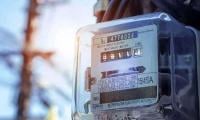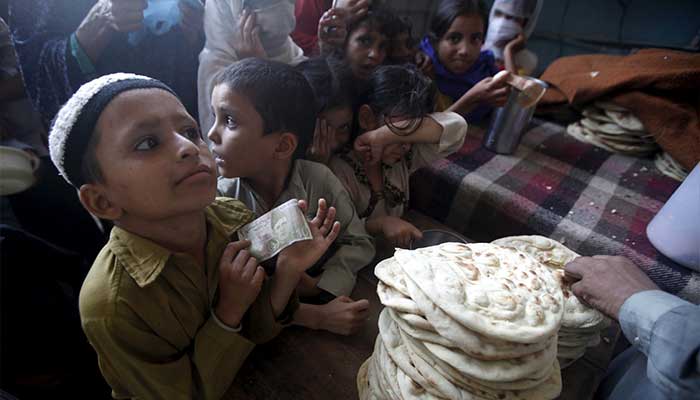
One needs food for survival and education for a future. Right now, Pakistanis are struggling to afford both. According to a new poll released by Gallup Pakistan on Tuesday, a 20-year comparison of household consumption patterns reveals a structural reallocation of spending away from food and toward fixed living costs. Data from the Household Integrated Economic Survey (HIES) shows that the share of household spending devoted to food fell from 43 per cent to 37 per cent between 2005 and 2025. Within the same period, housing and utilities have risen from 15 per cent to a quarter of household budgets. Gallup analysis finds that, when viewed alongside weaker real incomes and evidence of declining food quantities, this trend likely reflects households cutting back on food consumption to cope with rising fixed expenses, like housing and utilities, rather than food becoming more affordable. This is also not the only analysis to find that Pakistanis are cutting back on food. The HIES 2024-25 survey found that the share of people experiencing moderate-to-severe food insecurity had risen from one in six to one in four between 2018-19 and 2024-25. As such, it is becoming harder for Pakistanis to survive in the present and the prospects for the future do not look too bright either.
According to the Institute of Social and Policy Science (I-SAP)’s 15th annual report on ‘Public Financing of Education’ families are now bearing the majority of spending on education; a first in the nation’s history. Of the Rs5.03 trillion total cost of education, household spending accounts for Rs2.8 trillion while the public sector pitches in Rs2.23 trillion. The household spending includes Rs1.31 trillion spent on private school fees, Rs613 billion on shadow education and tuition and Rs878 billion in other out-of-pocket costs. With this disparity coming amidst an increasing preference for private education and major unresolved issues concerning the adequacy of the public education system, experts are right to argue that the trends in education spending raise fundamental equity concerns. Around 20 million children remain out of school and it often seems as though only those with pockets to afford private schooling and tutors are the only ones who will be able to get an education. For countries that are serious about surviving and competing in the 21st century, education cannot be treated as a luxury. Without massive increases in public spending on education, Pakistan will fail to build the human capital needed for the digital era and improve the standard of living of its people.
So if the present is too tough and the future does not look much better, where exactly is left for the people to seek solace? Things simply cannot continue like this. Ordinary people can no longer be expected to cut down on food in order to pay for an inefficient gas and electricity system that they cannot even rely on when it gets too cold or too hot. Nor should they be forced to live in a country where they spend more on the most valuable public resource than those elected to manage and enhance public resources. And this is not just a point that the government must consider but one institutions like the IMF also need to look at. The structure of much international lending and bailouts is a big part of what makes it harder for people to eat and get educated. A country where these fundamental rights are not guaranteed in practice is unlikely to ever balance its books.