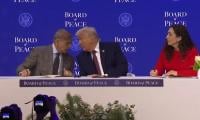
Pakistan’s decision to join US President Donald Trump’s much-hyped Board of Peace has landed squarely at the intersection of realism and unease. The move has been framed by Islamabad as part of its commitment to implementing the Gaza peace plan under UNSC Resolution 2803. Yet the body it has chosen to join remains controversial, opaque and unmistakably personalised. On paper, the intent appears laudable. According to the Foreign Office, Pakistan’s participation is aimed at achieving a permanent ceasefire in Gaza, scaling up humanitarian aid and facilitating reconstruction, while advancing the Palestinian right to self-determination and statehood. These are long-standing pillars of Pakistan’s Palestine policy and are difficult to fault in principle. However, the credibility of the Board of Peace itself is precisely what is under question. Conceived and chaired by Trump, the board is structurally unlike any multilateral forum Pakistan has previously joined. Its draft charter grants sweeping powers to its chairman, including veto authority over decisions, control over appointments and removals and the ability to reshape or dissolve subsidiary bodies at will.
This is what makes Pakistan’s move simultaneously understandable and troubling. From a realpolitik perspective, the decision is not entirely surprising. Trump is known for his transactional diplomacy and volatile temperament and in a global environment where Washington’s goodwill still matters, provoking the ire of the White House is hardly a luxury Pakistan can afford. Supporters of the decision say that there is also a pragmatic argument. In a fragmented world order, absence often translates into marginalisation. Participation, even in imperfect forums, may expand Pakistan’s foreign policy space, particularly in the Middle East. Pakistan is among the few countries that maintain workable relations with all major global powers, a position that could be leveraged for conflict mediation. Yet these strategic calculations cannot obscure deeper concerns about what the board represents. Critics say it appears less like a neutral peace-building body and more like a mechanism for securing international endorsement for unilateral initiatives. Not just that, the charter’s ambition to rival existing global structures, coupled with a controversial pay-to-play model requiring $1 billion contributions for prolonged membership, raises uncomfortable questions. Does peace now come with a price tag? And what happens when leadership changes in Washington, as it inevitably will?
Equally worrying is the board’s mandate. Though Pakistan has justified its participation through UNSC Resolution 2803, the board’s charter extends far beyond Gaza, invoking vague goals such as ‘stability’ and ‘governance’ across conflict zones. What begins with Gaza could easily morph into something far broader and far more problematic. Still, it would be simplistic to portray Pakistan’s decision as an abandonment of principle. Some analysts have said that Pakistan’s positions on Gaza, Palestine, Iran and Occupied Kashmir have remained consistent and there is little evidence so far of any dilution of these stances. The board itself flows from UNSC Resolution 2803 – lending a degree of formal legitimacy to Pakistan’s engagement, at least in legal terms. Where the government does deserve criticism, however, is process. The absence of parliamentary debate or meaningful public consultation has lent weight to domestic concerns that such a consequential foreign policy decision was taken with undue haste. Essentially, Pakistan’s entry into the Board of Peace can be seen neither as an outright capitulation to unilateralism nor as a bold leap towards a new peace architecture but instead perhaps as a cautious gamble that seeks to balance geopolitical necessity with normative commitments. The real test will lie not in the symbolism of signing charters at Davos, but in whether Pakistan can use its seat to consistently push for international law, Palestinian statehood and genuine multilateralism.