Pakistan’s debates on governance are often loud, cynical and repetitive. They are also frequently unfair. Few provinces have been judged as harshly as Sindh.
For years, a single narrative has dominated public discourse that institutions cannot improve, that service delivery is condemned to stagnation and that democratic continuity produces little beyond rhetoric.
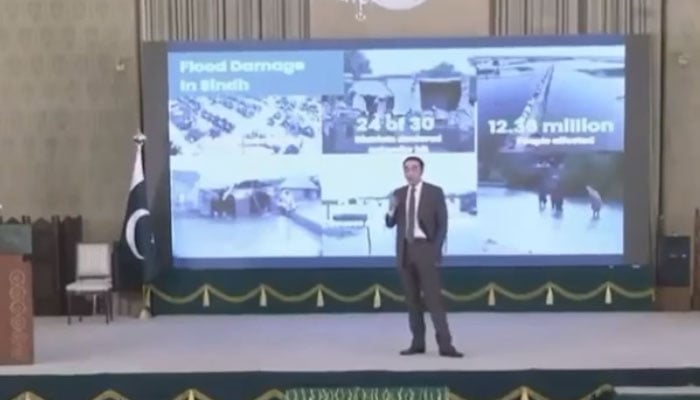
It is against this backdrop that Chairman Bilawal Bhutto Zardari’s Sindh Vision briefing at Aiwan-e-Sadr last week must be understood. It was not a political spectacle or a victory lap. It was a deliberate invitation to scrutiny, delivered before diplomats, development partners, business leaders, philanthropists and the national media. The central argument was straightforward: judge Sindh by outcomes, not assumptions.
At its core, Sindh’s case is constitutional rather than partisan. The 1973 constitution envisioned Pakistan as a parliamentary federation grounded in rights, representation and provincial autonomy. The 18th Amendment restored that balance by devolving power to the provinces. Devolution, however, is not an end in itself. When matched with institutional capacity, political continuity and administrative reform, it becomes a delivery mechanism. Sindh demonstrates what federalism looks like when it is allowed to function.
Healthcare is where this transformation is most visible. Since 2008, Sindh has increased its health allocation from 2.9 per cent of the provincial budget to nearly 10 per cent today. This is not a technical adjustment but a policy choice that prioritises dignity over exclusion. Public institutions such as Jinnah Postgraduate Medical Centre, the National Institute of Cardiovascular Diseases and the Sindh Institute of Urology and Transplantation have expanded dramatically in both scale and reach. They now function as province-wide networks serving patients not only from Sindh but from across Pakistan.
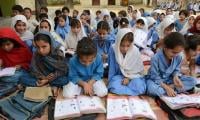
Education reflects the same institutional logic. Sindh has expanded from 10 public universities in 2008 to 30 today, with multiple campuses established in underserved districts. After the devastation of the 2022 floods, over 5,000 schools were reconstructed, and more than 100,000 teachers were recruited through merit-based processes. Beyond infrastructure, Sindh has moved towards specialised inclusion, including institutional support for children with autism.
The floods of 2022 posed the most severe governance test in recent memory. With approximately 2.1 million homes destroyed, Sindh faced a stark choice between short-term relief and long-term recovery. It chose the harder path. To date, over 750,000 climate-resilient homes have already been completed, with the remaining under active construction. Ownership rights have been transferred to women, shifting welfare into empowerment. This reconstruction has generated large-scale employment, restored livelihoods and embedded resilience into future planning. Chairman Bilawal acknowledged the roles of the federal government, international partners and development agencies, highlighting that cooperative federalism is essential in times of national crisis.
Economic inclusion in rural Sindh follows the same philosophy. Farmer compensation, agricultural input support and initiatives such as the Benazir Hari Card are designed to stabilise production, protect livelihoods, and secure food systems. Sindh manages the world's largest irrigation system, sustaining Pakistan’s agricultural backbone. Since 2008, the province has also constructed and rehabilitated over 24,000 kilometres of roads, reconnecting markets, farms and communities that had long remained isolated.
Urban mobility and climate action further demonstrate how policy translates into daily life. Public transport systems now serve over 200,000 passengers daily, with electric buses signalling a shift toward sustainable urban transit. Mangrove restoration has expanded coastal cover dramatically, strengthening Pakistan’s natural climate defences while generating carbon value. Wind and solar projects have added significant clean energy capacity, alongside large-scale solarisation of public buildings and households. Climate action in Sindh is not just rhetoric but also operational.
Perhaps the most compelling evidence presented in the Sindh Vision briefing concerns fiscal performance. When Sindh was given the mandate to collect sales tax on services, annual collections stood at approximately Rs18.6 billion. Today, Sindh collects close to Rs300 billion through the Sindh Revenue Board. This shows that provinces, when empowered and properly resourced, can outperform centralised systems in efficiency, compliance and transparency. Building on this proven capacity, Sindh has now formally argued that the collection of sales tax on goods should also be devolved to the provinces.
Pakistan’s federation cannot be fiscally sustainable if provinces remain perpetually dependent while simultaneously being blamed for underperformance. Devolution must be accompanied by trust in provincial capacity.
In the final analysis, governance is not measured by slogans, soundbites or social media cycles. It is measured by hospitals that treat without discrimination, schools that function after disaster, homes rebuilt with dignity, women who gain ownership, farmers who recover, and institutions that collect revenue transparently. Sindh’s journey is not perfect, and no serious democrat claims it is. But it is real, measurable and anchored in democratic continuity.
The Sindh Vision briefing asked Pakistan to do something long overdue: replace prejudice with evidence and cynicism with accountability. That is not only Sindh’s case. It is a democratic case for a more functional, humane and confident Pakistan.
The writer is a member of the National Assembly. She holds a PhD in Law, and serves on the National Assembly’s Special Committee on Kashmir.