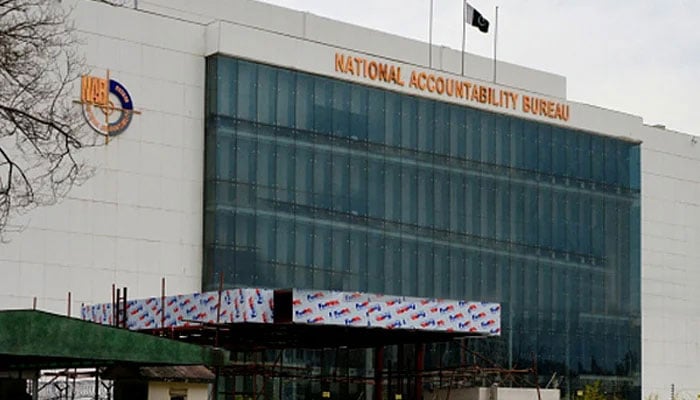
The steady erosion of institutional relevance has begun to pose a serious challenge to effective governance in the country. Accountability is intended to provide assurance that public funds and resources are utilised in a prudent, lawful and efficient manner, while also ensuring that fraud, abuse of authority, maladministration, violations of law and losses to the public exchequer are properly investigated and addressed.
Over the years, Pakistan has established a wide array of accountability institutions, including the National Accountability Bureau (NAB), the Federal Investigation Agency (FIA), the Auditor General of Pakistan (AGP), ombudsmen and anti-corruption departments. Despite this elaborate accountability architecture, public confidence in the accountability system remains fragile and increasingly strained.
The anti-corruption bodies (ACBs) are frequently criticised for their limited success in curbing corruption, improving transparency, preventing inefficiencies or stemming losses in the public sector. In recent years, a significant number of cases initiated by ACBs have failed to withstand judicial scrutiny. This failure is often attributed to weak evidence, political interference, limited understanding of government decision-making and lack of professional capacity.
At the same time, media and public discourse have increasingly questioned the effectiveness of audit. Many irregularities and instances of financial mismanagement highlighted in audit reports have had little tangible impact on improving governance or transparency. This is partly due to a traditional audit approach that focuses on reporting procedural compliance issues and partly due to delayed or ineffective remedial actions by the executive, coupled with lukewarm legislative oversight of public finances.
Across the world, states establish accountability institutions under law, including anti-corruption bodies and supreme audit institutions (SAIs), to uphold transparency and good governance. The real challenge, therefore, lies not in the existence of these institutions but in their effectiveness. Meaningful reform, rather than abolition, is the need of the hour. Strengthening independence, professionalism and non-partisanship and fostering functional synergy among accountability institutions offers a more credible path toward combating corruption and restoring public trust in the governance system.
To strengthen the capacity of state accountability institutions, there is increasing awareness worldwide of the need to enhance inter-agency collaboration. Around the world, countries are working toward close cooperation between their auditing and anti-corruption authorities and in this context the Far East Asian model is working successfully. In Europe, state audit institutions and OLAF (the European Anti-Fraud Office) focus their collaboration on sharing expertise, coordinating efforts against fraud and corruption, improving public accountability and conducting rapid ‘focus audits’ on topical issues.
To this end, the UNODC initiated a programme in 2021 in collaboration with SAI UAE under its global programme to prevent and combat corruption through effective implementation of the UN Convention in support of SDG 16: “to promote the role of SAI in tackling corruption and enhance their collaboration with anti-corruption bodies (ACBs)”. Pakistan also needs to move in this direction, as enhanced collaboration between anti-corruption agencies and AGP can significantly improve the accountability framework by leveraging their complementary mandates and expertise.
Tackling corruption is an important responsibility of the state and joint, coordinated and collective efforts of relevant accountability institutions can be used as an effective tool in the fight against corruption. SAI Pakistan can play an important role in this area through enhancement of collaboration with anti-corruption agencies to promote integrity, accountability, transparency and proper management of public affairs and public property.
The scope of collaboration between ACBs and SAI Pakistan could pertain to important areas such as prevention, enforcement, investigation and asset recovery, knowledge and capacity building and the use of modern information and data analytics tools. NAB, for example, has a very strong mandate to execute its activities. However, without adequately trained human resources that are well versed in government decision-making processes, financial regulations and forensic analysis, its actions can sometimes prove counterproductive, weakening rather than strengthening the accountability regime.
On the other hand, the mandate of SAI Pakistan is not to tackle corruption per se, but to oversee and scrutinise government revenue and expenditure. The core mandate of SAI Pakistan is to examine public accounts, assess compliance with laws and regulations and uphold financial integrity. This role places it in a strong position to deter and detect corruption in the public sector.
Through its audit work, the AGP’s staff routinely uncovers indicators of malfeasance, including falsified statements, illegal procurement practices, tax and customs evasion, non-delivery of goods and services and irregularities in the liquidation of public entities. However, SAI Pakistan’s investigative powers are limited. Suspected fraud and corruption cases are therefore referred to relevant authorities, either through the principal accounting officers or via the Public Accounts Committee.
Cross-agency coordination of anti-corruption activities is weak in our system and there is no specific coordinating mechanism as has been established in Bulgaria and Bolivia, while in Bolivia this coordination mandate is given to the SAI itself. Pakistan lacks an institutional framework for cross-agency collaboration that can create synergy among different accountability institutions for effective collaboration with each other.
Instead of operating in silos, the federal and provincial ACBs and audit can collaborate within their respective mandates by sharing information, applying data analytics and aligning with regulatory regimes. Joint training and capacity-building initiatives could help investigators better understand financial systems, while auditors could acquire investigative techniques and forensic skills.
It is noteworthy that at times NAB cases originate from irregularities identified in AGP’s audit reports. However, audit observations alone are insufficient to establish criminal liability, as AGP’s mandate is focused on compliance with financial laws and regulations. Audit findings should therefore be treated as leads and not as conclusive evidence. Investigative agencies can significantly strengthen their cases by supplementing audit insights with independent evidence supported by detailed financial and accounting data provided by audit. A structured mechanism for staff secondments, joint task teams for high-profile cases and shared access to forensic and analytical expertise could help overcome mandate-related constraints while enhancing outcomes.
The way forward for our most pressing national economic and governance challenges demands fresh and out-of-the-box solutions, as old, stereotyped and traditional approaches have failed to deliver sustainable results. Accountability institutions must be insulated from political interference to restore public trust and credibility.
At the national level, the government may consider establishing a core anti-corruption coordination group comprising representatives from NAB, FIA, AGP, provincial anti-corruption departments and civil society. This body could review laws, regulations and procedures across government to identify systemic corruption risks and recommend reforms.
Major internal reforms within accountability institutions, including the audit department, are essential to eliminate inefficiencies and restore their relevance in the current socioeconomic context. Establishing a formal coordination forum between ACBs and AGP, forming joint investigation-audit teams for high-profile cases and institutionalising joint seminars, conferences and training programmes can foster a culture of cooperation and professional excellence.
Ultimately, effective governance requires government institutions to move beyond silo-ed functioning. By pooling knowledge, expertise and resources, Pakistan’s accountability framework can be transformed into a coherent, credible and effective system capable of combating corruption, improving service delivery and restoring public confidence in the state.
The writer is the former auditor general of Pakistan.