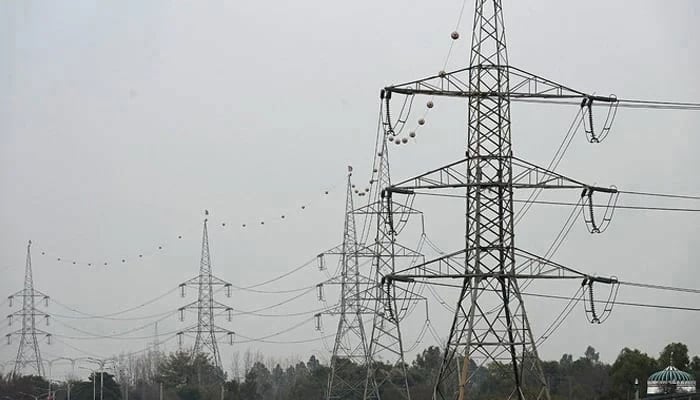
In Pakistan today, the most consequential energy decisions are being made on rooftops, in factory yards and in the quiet arithmetic of monthly bills.
Distributed solar has expanded rapidly for a simple reason: when grid power is expensive and unreliable, self-supply is a rational hedge. The result is a decentralised transition driven by necessity and consumer economics and it now tests governance because a system built for one-way flows and volumetric sales must operate in a world where demand can disappear behind the meter.
Once distributed capacity reaches scale, integration challenges emerge regardless of the intentions that originally drove adoption. The debate now centres on whether the power system can accommodate large volumes of distributed generation without weakening reliability, undermining utilities’ financial stability or widening the inequality between those who can self-supply and those who remain fully dependent on the grid.
It is worth stating the underlying lever plainly. Solar adoption accelerated because the grid tariff rose far above the economic cost of self-generation for many users, and that gap keeps widening. High tariffs reflect high generation costs, heavy taxes used to fill fiscal gaps, cross-subsidies and the accumulation of technical and commercial losses that are priced into the bill. The incremental tariff structure then amplifies the incentive to cut grid consumption, since each additional unit can be priced far above marginal cost, discouraging demand and pushing consumers towards self-supply.
The integration problem has two parts. The technical part is local and time-sensitive. Midday solar can reduce net demand on certain feeders and create reverse flows, voltage fluctuations and protection coordination issues in distribution networks designed for one-way service. Stress then reappears in the evening when solar output falls and consumption persists, creating steep ramps that require flexibility. Aggregate demand can be weak even when local constraints remain binding, because transformers and feeders fail at specific hours and streets.
The financial part is structural. Distribution networks carry high fixed costs that do not shrink when electricity sales fall. As higher-consuming customers reduce purchases through self-generation, volumetric revenue declines while obligations remain. If utilities recover most fixed network costs through per-unit tariffs, then falling grid sales raise tariffs. Higher tariffs then make self-generation even more attractive for those who can afford it, shrinking sales further and leaving a smaller, more grid-dependent customer base to carry the same network costs.
Export compensation sits at the centre of this tension. Net metering, introduced in Pakistan in 2015, credited exports at or close to the retail rate and allowed one-to-one offsets against later imports. It was simple and financially attractive. It encouraged system sizing aimed at maximising annual offsets and treated the grid as a virtual battery in financial terms. At higher penetration, the limits become clearer. Retail tariffs include more than just energy costs, including network and fixed costs. Paying retail value for exports can therefore shift cost recovery onto customers without solar.
Net billing separates imports and exports. Customers continue to buy electricity at retail tariffs, but exports are credited at a different rate linked to a purchase benchmark rather than retail value. This strengthens incentives for self-consumption. Using solar when it is produced becomes more valuable than exporting it, and storage and load shifting become more important to preserve returns.
This is why the draft Prosumer Regulations matter. They propose a net billing arrangement in which imports are billed at the applicable tariff and exports are credited at the national average energy purchase price (NAEPP) benchmark. They also introduce design and compliance features that shape market behaviour, including limits linked to sanctioned load, provisions up to one megawatt, and load flow studies for larger systems, alongside a fixed contract term and monetary settlement for exports.
It is also important to be precise about distributional effects. Formal net metering has been more accessible to affluent households and larger businesses that can afford compliant interconnection, bidirectional metering and upfront costs. Many lower-income households have responded with smaller behind-the-meter systems focused on self-use and bill reduction rather than export. That means the move from net metering to net billing primarily reshapes incentives for those who were exporting at scale, even as the broader reality of behind-the-meter adoption continues. Perceived unfairness is a core driver of whether reforms remain politically and socially durable.
Net billing may reduce incentives for oversized export-driven systems and address some forms of cost shifting, but it does not create hosting capacity, stabilise voltage, modernise protection systems, or add flexibility for evening ramps. If the response becomes too focused on restricting export value, it may encourage a shift from grid-interactive systems to maximised self-consumption, including through batteries, which can further reduce grid sales without solving the grid’s fixed-cost problem, creating pressure for additional charges on those who remain tied to the grid.
Battery storage matters here. Batteries offer flexibility as they can shift midday solar into evening use, reduce ramp stress and help manage local distribution constraints by smoothing exports and supporting power quality. Under net billing, storage becomes financially more relevant because it increases self-consumption, allowing customers to avoid higher-priced imports rather than exporting at a lower credit rate.
Storage also brings obligations that need to be addressed early. Safety standards, installation quality, warranty transparency, performance expectations and end-of-life responsibility are not optional details. Without them, rapid storage adoption can create waste liabilities that undermine trust and force reactive regulation. Panel and battery costs continue to fall due to global learning curves and manufacturing scale. Even if export credits were reduced sharply, many consumers would still invest in PV and storage because private returns are increasingly driven by avoided grid purchases.
International experience is instructive. Jamaica’s net-billing pilot shows that export-credit design works best when paired with clear processes and technical governance. Evaluations emphasised the need for clear distributed generation goals, a reliable inventory of connected systems, and integrated resource planning with scenario analysis to maintain predictable, system-safe scaling.
Spain offers a complementary insight, where net billing has been embedded within broader self-consumption reforms that simplify administration and allow shared self-consumption, supporting inclusion for households without suitable rooftops. The common lesson is that export compensation is only one component of an integration agenda, and that implementation quality and participation models often determine outcomes.
A serious response, therefore, has to address the practical question of whether the grid and the rules will transform in ways that support the energy transition, or whether they will keep reacting to it in ways that undermine reliability, reduce trust, and deepen inequality. The draft regulations have already shown that signals travel quickly. That is a reason to be deliberate now.
The path forward requires integration measures that stabilise operations and incentives, while addressing the upstream drivers that keep tariffs high. Export valuation under net billing should be transparent and method-based, including how NAEPP is calculated and updated, with predictable transition and grandfathering rules to prevent existing investments from being exposed to sudden policy risk. Interconnection must become an engineering-led process with consistent technical standards and defined timelines, supported by feeder-level hosting-capacity information where feasible.
System planning should prioritise flexibility through targeted distribution upgrades, better visibility and control, time-of-use pricing that shifts flexible demand into midday hours, and a storage roadmap for both behind-the-meter and feeder-level systems with safety codes and lifecycle responsibility. Equity and cost recovery should be handled explicitly by recovering fixed network costs transparently while protecting lifeline consumption and by widening participation through concessional finance, leasing, shared or community solar options, and public procurement that solarises schools, clinics and water systems.
These steps will not hold if core tariff drivers remain untreated: high generation costs and legacy capacity payments, persistent losses and weak recoveries, and fiscal extraction through the electricity bill. Reducing that pressure requires improving tax collection, renegotiating costly legacy contracts, advancing Competitive Trading Bilateral Contracts Market (CTBCM), and reforming distribution and transmission through credible performance-based concessions or privatisation to cut losses and improve service quality.
Pakistan’s solar surge came from rational choices in response to high costs and unreliable supply. The task now is to match that momentum with credible integration, by modernising the grid and setting predictable rules. If reliability improves and cost recovery is fair, more people will stay connected and the transition will remain durable.