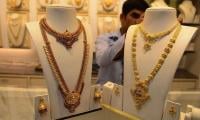
KARACHI: Gold prices surged to unprecedented levels in the local market on Wednesday, crossing the Rs500,000-per-tola mark for the first time in Pakistan’s history, as a powerful rally in international bullion markets fuelled fresh gains.
According to the All Pakistan Sarafa Gems and Jewellers Association (APSGJA), gold prices jumped by Rs12,700 per tola, pushing the rate of 24-karat gold to a record Rs506,362 per tola. The surge marked a new all-time high not only locally but also in regional and global markets, underscoring the strength of the ongoing rally in precious metals.
The price of 10-gram gold also increased sharply, rising by Rs10,888 to Rs434,123, reflecting intense buying pressure despite already elevated levels.
In the international market, gold prices climbed by $127 to reach $4,840 per ounce, setting a fresh global record. Analysts attributed the surge to persistent geopolitical tensions, concerns over global economic growth, and strong investor demand for safe-haven assets amid volatile financial markets. Expectations that interest rates in major economies may remain restrictive for longer have further strengthened gold’s appeal as a hedge against inflation and currency instability.
Local bullion dealers said gold prices in Pakistan are typically adjusted with a premium of around $20 per ounce over international rates. This premium reflects exchange rate movements, import and financing costs, and domestic market conditions.
Silver prices also edged higher, though the increase was modest compared to gold. Rates rose by Rs64 to Rs9,933 per tola, while the 10-gram silver price increased by Rs54 to Rs8,515. Traders said silver continues to benefit from investment demand, although price movements have been relatively restrained after recent sharp rallies.
Despite record prices, jewellery demand remains deeply depressed. Karachi-based goldsmith Muhammad Shafi Khan said that jewellery purchases had fallen to “an alarming level,” leaving many skilled workers without jobs. “The trained workers are now working in other industries, as the sale of jewellery has decreased,” he said, describing a structural shift within the sector as prolonged high prices erode traditional consumer demand.
Khan noted that buying patterns have changed significantly, with investment now dominating the market. “People are buying raw gold as a source of investment. Investors are investing in gold and silver, which are considered safe havens,” he said. According to jewellers, most transactions now involve bars and raw gold rather than finished ornaments, as households and investors seek to protect their savings against inflation and economic uncertainty.
Market participants cautioned that while the bullish trend remains intact, price volatility is likely to persist. Any shift in global monetary policy signals, easing of geopolitical tensions, or sharp movements in the US dollar could trigger corrections. However, analysts said that as long as uncertainty dominates global markets, gold is likely to remain well supported, even at levels once thought unimaginable in Pakistan’s bullion market.