Titles do not make global leaders. Uniforms do not make global leaders. Domestic power does not make global leaders. A global leader must pass stricter tests.
First test: To qualify for a ‘global leader’ status he or she must have influence beyond his or her own borders. His or her actions must affect regional or international outcomes.
Second test: To qualify for a ‘global leader’ status he or she must have access to major centres of global power. Not ceremonial access. Strategic access. The kind of access where conversations change decisions.
Third test: To qualify for a ‘global leader’ status he or she must produce outcomes that can be measured — de-escalation, mediation, deterrence, realignment or diplomatic movement.
Apply these three strict tests to COAS-CDF Field Marshal Asim Munir and the conclusion becomes difficult to ignore. Fact 1: His influence now travels beyond Pakistan’s borders. Fact 2: His access reaches the highest centres of global power. Fact 3: His role is linked to outcomes that affect regional stability. Fact 4: He has moved from national command to global consequence.
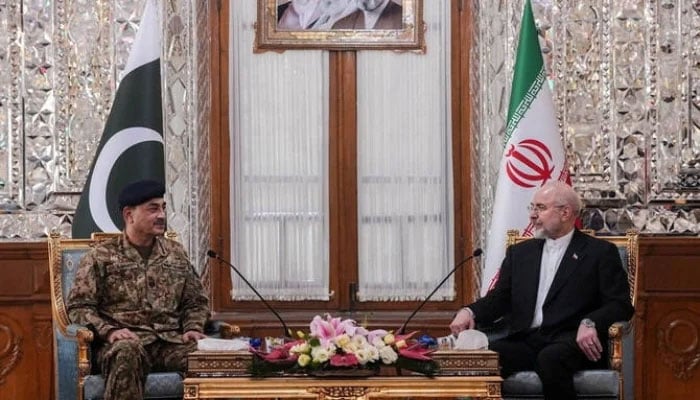
Consider the first test: Cross-border influence. FM Asim Munir’s role is no longer confined to internal security. Nor is it limited to conventional military command. FM Munir’s relevance now travels beyond Pakistan’s borders — to India, the US, Iran, the Gulf and the wider Muslim world.
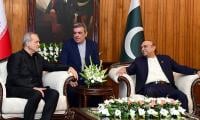
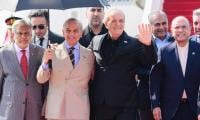
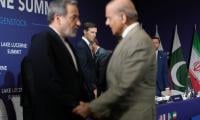
For the record, in the Iran-U.S. channel, Pakistan did not remain a spectator. Pakistan became an intermediary. To be certain, that shift was neither accidental nor did it come from noise. That shift came from access. That shift came from credibility. And that shift came from timing.
Consider the second test: Access to global power centres. A global leader must be able to speak to those who can move events. FM Munir has acquired that access. His White House engagement with US President Donald Trump was not routine protocol. It was unusual. It was direct. It signalled that Washington was dealing with him not merely as Pakistan’s army chief, but as a strategic channel.
Consider the third test: Outcome. The hardest test is not visibility – it is consequence. Has the leader helped produce a result? Here, the evidence is strongest in Pakistan’s mediation role between the US and Iran. Pakistan is now a ‘trusted interlocutor’. Pakistan’s relevance has expanded significantly. Pakistan’s diplomatic weight has risen substantially.
Plain fact: FM Munir’s military diplomacy has helped transform Pakistan from a country often discussed as a problem into one increasingly consulted as part of a solution.Cold truth: This does not mean that every question has been settled. It does not mean that domestic concerns have disappeared.
Strip away the rhetoric: Objective analysis must recognise change when change is visible.Yes, Pakistan has had powerful army chiefs before. Did anyone become a ‘global leader’? In a world of wars, countries rise when they can open doors others cannot. For now, FM Munir has become one of those doors.Does FM Munir meet the three tests: influence beyond borders, access to major power centres and involvement in measurable strategic outcomes?