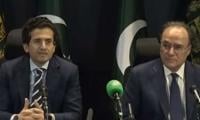
ISLAMABAD: A comprehensive plan to revive Pakistan Railways from decades of decline was presented to Prime Minister Shehbaz Sharif on Thursday, which could save the national economy billions of dollars annually while addressing critical transport inefficiencies.
A presentation by Ziad Bashir of Gul Ahmed Group highlighted the decline of Pakistan’s rail network since the Partition in 1947. While railways once carried 75 per cent of the country’s freight, that figure has plummeted to just 5 percent today, with roads now handling 95 percent of cargo transport. In contrast, India has maintained approximately 20 per cent rail freight capacity despite road network expansion.
According to the Pakistan Institute of Development Economics, the transport sector’s inefficiencies are costing the national economy between Rs4.6 to 6.9 trillion annually, with logistics expenses consuming 15.6 per cent of GDP, far above international benchmarks.
Clogged highways cause severe delays and congestion, while increased truck traffic has led to higher carbon emissions, air pollution, and elevated accident rates. The transport sector currently contributes 10.7 per cent to GDP but employs only 5.8 per cent of the labour force, highlighting systemic inefficiencies.
Railways receive just 5 percent of transport infrastructure spending, while roads consume 95 per cent. The strategic blueprint recommends shifting this to 20 percent for railways in the first phase, then 30 per cent in the second phase, arguing that rail freight costs approximately 40 per cent less than road transport.
Three-Year Plan
The proposal outlines an ambitious timeline to shift freight back to rail, potentially saving USD 1.75 to 2.5 billion in the first year alone by increasing rail’s freight share from 5 percent to 10 percent. By year three, targeting a 20 percent rail freight share could generate annual savings of USD 3.6 to 4.6 billion.
Required investments are substantial but structured. Phase one calls for USD 1.0 to 2.0 billion to address critical bottlenecks in the ML-1 corridor connecting Karachi to Peshawar, focusing on yards, loops, signaling upgrades, and digital systems. Phase two would require USD 2.5 to 3.5 billion for the ML-2 mineral corridor and enhanced connectivity to Gwadar port and Central Asia.
The plan proposes 80-85 per cent government funding with 15-20 per cent private sector participation. Pakistan Railways would generate revenue through track access fees, land monetization, terminal operations, and digital freight platforms, potentially earning Rs43 to 70 billion annually by year three. This approach aims for fiscal autonomy while remaining neutral to IMF programme requirements.
The blueprint rests on modernisation across four dimensions: infrastructure, digital and operational efficiency, human capital and governance.
Infrastructure includes upgrading the 1,726-kilometer ML-1 backbone, building integrated freight terminals with customs facilities, creating direct rail connections from ports to industrial zones, and implementing international-standard signaling systems. All investments would follow an independent third-party audit establishing baseline freight capacity.
Digital and operational efficiency includes developing a national digital freight booking platform with real-time tracking, allowing private ownership of wagons and containers under a track access model, implementing market-based pricing benchmarked to road freight costs, and diversifying non-core revenue through land leasing and logistics park development.
Human capital involves restructuring the workforce from approximately 75,000 to 60,000 employees by year three, retraining staff on modern equipment and simulators, upgrading technical workshops with digital diagnostics, establishing rail logistics education programmes in universities, and transferring pension obligations to the Finance Division.
Governance includes converting Pakistan Railways into a corporate entity under the SOE Act 2023, restructuring the Railway Board from its current 7-government-3-private composition to 5-government-6-private with independent professionals from infrastructure, finance, and transportation sectors, establishing an independent rail regulatory authority, and granting commercial autonomy to retain revenues.
Central to the plan is implementing the existing but dormant Track Access framework, allowing private operators to run freight services on Pakistan Railways tracks.
Under this model, private companies would invest 100 percent of capital and cover all operational costs while paying Pakistan Railways on a gross ton-kilometer basis for track usage.
Various government assessments over the past decade have projected this could generate Rs58 to 200 billion in profits for Pakistan Railways, attract USD 1 billion in private investment, save USD 1.05 billion annually in foreign exchange through reduced fuel imports, and cut 11.2 million tonnes of greenhouse gas emissions by 2025.
The presentation emphasised that success depends on immediate action and sustained commitment. Mandatory deliverables include submitting a corporatization and governance transition plan within 45 days and a comprehensive three-year human resource renewal plan within 90 days.