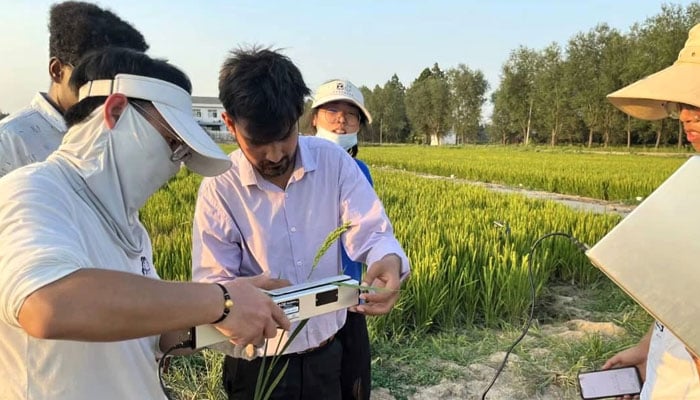
Islamabad: Pakistani and Chinese agricultural researchers have developed a temperature-responsive irrigation approach that could help protect crops from rising heat while improving water efficiency, according to a peer-reviewed study published in the international journal Irrigation Science, Gwadar Pro reported on Thursday.
The research was conducted by a joint team from China and Pakistan, including Pakistani researcher Dr. Imran Ali Lakhiar, alongside Chinese Scientists Professor Chuan Zhang and Professor Haofang Yan, and other experts from agricultural engineering institutions in China.
The study examines how precision irrigation systems, combining drip irrigation, micro-sprinklers and temperature-based control, can reduce heat stress on crops while conserving water, an issue becoming more urgent as climate change drives higher temperatures and frequent heatwaves.
“Water is considered one of the vital natural resources and factors for performing short- and long-term agricultural practices on Earth,” the authors wrote, warning that the agriculture sector utilizes around 70% of available freshwater annually to irrigate only 25% of the arable land.
According to the researchers, traditional irrigation practices are increasingly unable to cope with climate variability. In contrast, precision irrigation systems adjust water application based on real-time temperature, soil moisture and plant needs, helping crops maintain healthier physiological activity during periods of extreme heat.
The study found that properly regulated micro-sprinkler irrigation improves the cooling environment around plants by lowering air and leaf temperatures, which supports photosynthesis that is often suppressed when temperatures exceed optimal levels.
The diagram shows how field sensors send real-time data to a cloud platform, enabling remote monitoring and control of smart irrigation systems.