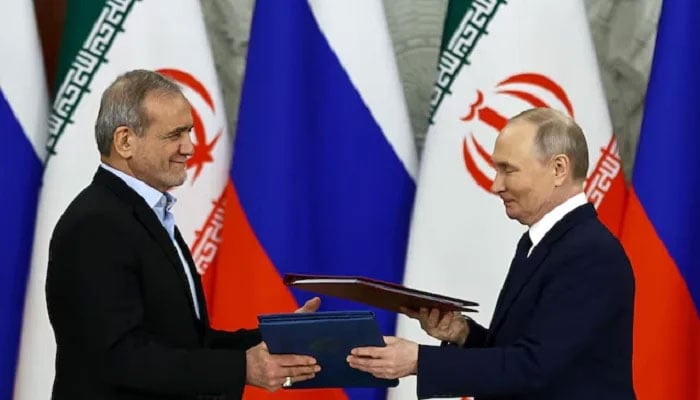
LONDON: Days before protests erupted in Iran in late December, Israeli officials notified the Iranian leadership via Russia that they would not launch strikes against Iran if Israel were not attacked first. Iran responded through the Russian channel that it would also refrain from a preemptive attack, diplomats and regional officials with knowledge of the exchange said. The communications between Israel and Iran — and the role played by Russia as the intermediary — were unusual given the hostility between the two Middle Eastern rivals, which engaged in a 12-day war in June.
But the contacts reflected a desire by Israel to avoid being perceived as escalating tensions toward Iran or spearheading any potential new wave of attacks against it at a time when Israel was preparing a significant military campaign against Hezbollah, the Iran-aligned militia in Lebanon, according to the diplomats and regional officials. The private reassurances contrasted with Israel’s public rhetoric late last year, when its officials openly hinted at the possibility of carrying out renewed strikes on Iran to roll back what they said was Iran’s rapidly replenishing ballistic missile stockpile. Although Iranian officials responded positively to the Israeli outreach, they were wary of Israel’s intentions, two officials with knowledge of the message exchange said. Iran believed that even if the Israeli assurances were genuine, they left open the possibility that the U.S. military would carry out attacks on Iran as part of a campaign coordinated between the two allies, while Israel was training its firepower strictly on Hezbollah, the officials said.