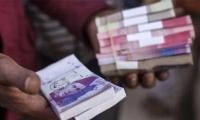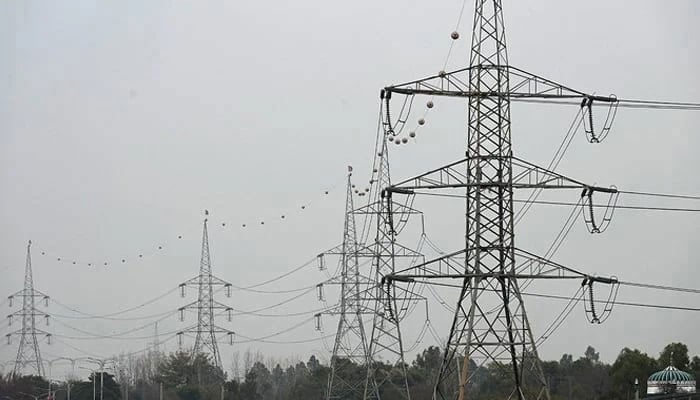
In the latest sign of the growing financial strain on those still unfortunate enough to be stuck to the country’s ailing national grid, electricity consumers are now expected to shoulder Rs2.95 trillion in capacity payments and energy purchase costs over the course of this year. Nepra reportedly forecasts that consumers will pay Rs1,923 billion in capacity payments and Rs1,023 billion under the Energy Purchase Price (EPP) next year. Combined, these charges alone translate into Rs22.76 per unit, even before other tariff components are added. Reports also say that if K-Electric’s capacity payments are included, the total capacity payment burden alone will surge to Rs2.1 trillion nationwide. While the government will provide Rs629 billion in electricity subsidies during 2026, including Rs614 billion for domestic consumers, one must ask how exactly ordinary consumers are supposed to keep up with these costs? No one appears to have a good answer. The saddest part of this increasing energy unaffordability is that it comes at a time when the nation is going through a remarkable shift to renewable energy, courtesy of the solar boom. Net metered solar contributes 6,320MW and off grid solar 12,629MW, pushing clean energy share to 55.0 per cent of the energy mix. And Pakistan’s energy is also becoming more indigenous with local fuels plus renewables now supplying 74.0 per cent of electricity.
Indigenous and renewable, these were supposed to be the very factors that liberated Pakistani consumers from high energy costs. And yet, the pricing mechanisms in the country’s energy sector have somehow made it so that people and businesses are paying more for power than ever before. Must-run plants still account for 55.0 per cent of generation, inflating capacity payments. Tragically, the solar shift has, in many ways, actually added to this energy cost burden. The number of protected domestic consumers has surged from 9.5 million to 20.71 million, accounting for 61.0 per cent of all domestic consumers, largely due to rooftop solar adoption. As per reports, this segment now receives the largest share of power subsidies, at Rs474 billion annually, significantly increasing the burden on remaining paying consumers. Most are familiar with the impact that such high energy costs will have on ordinary, salaried households, but they will be just as adverse for the government’s much-touted economic stability. With an industrial electricity tariff of 12.90 cents per unit, more than double China’s 5.0 cents per unit, exports are not likely to get more competitive. Nor will foreign, or for that matter local, investors line up to pay uncompetitive prices to help an ailing grid find revenue.
Though the finance minister has claimed that 20 new foreign investors have become interested in the Pakistani market over the last 18 months, even he had to admit that some firms have ceased their operations in Pakistan because of high taxes and costly energy. The situation is not much better when it comes to gas either. While the government has frozen gas tariffs for all consumers for the next six months, despite the gas sector’s circular debt swelling to nearly Rs3 trillion, at least two major business associations have said that the move falls far short of the expectations and urgent needs of an already distressed industrial sector. The fact that Pakistanis do not even get a good and reliable distribution and transmission network for such high costs, with loadshedding and low pressure far too common, makes the energy crisis simply infuriating. While the imperative for the government to bring down the debts in the power sector is important, so is maintaining business and consumer confidence in the economy. What is the point of all this stability if people and businesses cannot spend, save or invest enough? And this is a point that Pakistan’s creditors, principally the IMF, must also take into account. Another way out of the energy malaise needs to be found. One that does not burden the country’s people and firms with absurd bills.