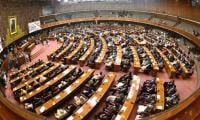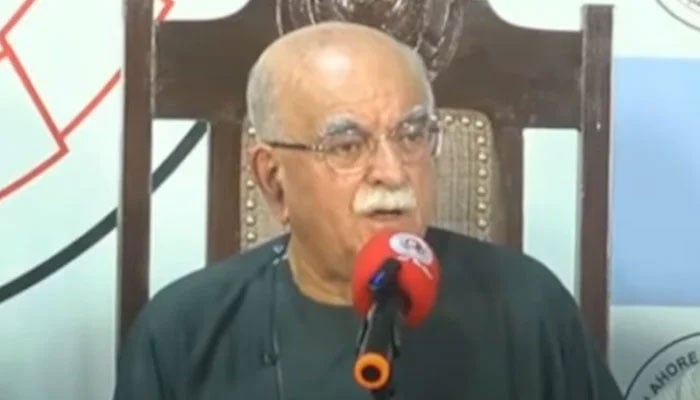
Pakistan’s political landscape is once again caught in a familiar and deeply damaging loop: stalemate, suspicion, brinkmanship and drift. The latest developments – the formal nomination of Mehmood Khan Achakzai as opposition leader in the National Assembly, the PTI’s internal contradictions on engagement versus agitation and the continued institutional erosion of the judiciary – show a simple truth: the current impasse is unsustainable. It must move forward now. The PTI’s decision to nominate Achakzai as leader of the opposition is, on paper, a step towards parliamentary normalisation. Yet, this move sits uneasily alongside the PTI’s parallel rhetoric of protest, street agitation and rejection of the political process. The party is attempting to straddle two irreconcilable positions negotiating with the system while simultaneously seeking to delegitimise it. The party must decide what it wants. If it believes in negotiations, then it must commit to them seriously, consistently and in good faith. If it wants agitation, then it must own that choice and accept its consequences. What it cannot do – and what Pakistan cannot afford – is a politics of permanent ambiguity where every olive branch is paired with a threat. But the burden does not lie with the PTI alone. The current ruling setup, too, must recognise that political stability cannot be manufactured through exclusion, coercion or managed consent. The only viable path forward for Pakistan is for all stakeholders to sit together and work out a framework that allows the system to function, heal and reset. That framework does not require the immediate collapse of the present government. It requires something far more difficult: an honest commitment to allow it to run its course and then hold a genuinely free and fair general election in which everyone can participate without fear, engineering or pre-determined outcomes.
Pakistan has tried every other shortcut – hybrid arrangements, political quarantines, selective accountability, judicial manipulation and electoral experiments. None have delivered stability. All have deepened distrust. The country is now paying the price. Central to this reset must be the restoration of the judiciary’s lost status. Without an independent and credible judiciary, political disputes fester, rights erode and power struggles migrate to the streets. All of this is unfolding at a moment when Pakistan’s external environment is becoming more volatile by the day. The western border with Afghanistan remains unstable, marked by security threats, refugee pressures and diplomatic deadlock. The eastern border with India is forever tense, shaped by hostility, brinkmanship and unresolved disputes. To the southwest, Iran is grappling with its own internal and regional pressures, with inevitable spillover effects. In such a neighbourhood, Pakistan cannot afford to be internally fractured, politically paralysed or institutionally brittle. National strength can only be built through cohesion, legitimacy and public confidence in the political process. A divided polity, locked in endless internal conflict, is an open invitation to external pressure and internal implosion.
This is why the current moment demands maturity from all sides. The government must resist the temptation to govern through exclusion and attrition. The opposition must abandon the fantasy that chaos will somehow produce clarity. Institutions must step back and return to their constitutional lanes. And the judiciary must be freed from the shadows of controversy. Pakistan does not need another round of winners and losers. It needs a collective recalibration. That means accepting uncomfortable compromises, abandoning zero-sum thinking and recognising that no faction, however popular or powerful, can stabilise the country alone. The alternative is grim but familiar: prolonged paralysis, deepening polarisation, economic drift and strategic vulnerability. The stalemate has to move. The politics has to mature. And the future has to be negotiated.