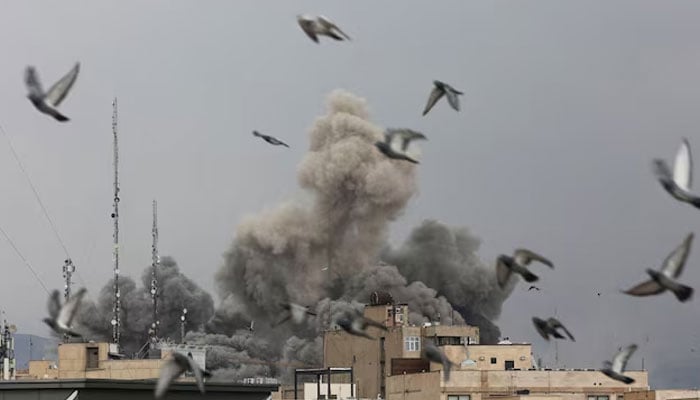
The grim reality of the US-Israel war on Iran has entered its fifth day and its toll is already staggering. Iran’s Red Crescent has reported hundreds of casualties, with civilian deaths mounting rapidly under relentless strikes by the US and Israel. Let’s be clear: this conflict did not begin as a defensive act. As diplomatic channels were still open and indirect negotiations over Iran’s nuclear programme were underway, missiles and bombs rained down on Tehran and cities across the Islamic Republic. The impact has been horrific. Initial data from reputable sources indicates that close to 555 Iranians have been killed in this escalation, with many more wounded. The first reported attack that ignited this broader conflagration was nothing short of a catastrophe – a strike on a girls’ elementary school in Minab that claimed the lives of around 160 young girls, most between the ages of seven and twelve. This is the human cost of a policy driven by geopolitical ambition and strategic intimidation.
Behind the rhetoric of self-defence and imminent threat lies a troubling admission. US Secretary of State Marco Rubio publicly acknowledged that Washington was aware Israel planned to strike Iran, and that US forces acted preemptively because they expected Iranian retaliation against US interests in the region. This does not a defensive posture make. Observers have long argued that Israel had been pushing the US to confront Iran militarily for nearly two decades, and that under President Donald Trump, that pressure finally translated into open warfare. Trump’s Iran strikes benefit Israel strategically while entangling the US in yet another volatile Middle Eastern conflict without a clearly defined endgame. The confusion surrounding Washington’s objectives only deepens the unease. Was the goal regime change, which has not materialised? Was it to degrade Iran’s missile capacity and its ability to strike neighbours? Or was it, as Rubio’s remarks suggest, an action taken because Israel forced Washington’s hand? The absence of a coherent narrative fuels the perception that this is less a defensive war than a reactive one. American political commentator Tucker Carlson has gone further, alleging that some Arab countries had detained Israeli agents planning bombings in those countries, suggesting a broader strategy of sowing instability among Gulf states. While such claims remain contested, they reflect a widening belief that this war risks engulfing not only Iran but the broader region. Meanwhile, retaliatory cycles are already unfolding and the Middle East stands at the brink of wider destabilisation. Those who predicted a swift fracturing of Iranian society may also have miscalculated. Iran is no Venezuela. Even Iranians critical of the Ayatollah regime are likely to rally around their country in the face of foreign attack.
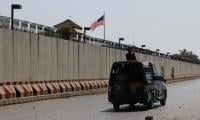
For Pakistan, the consequences have been immediate and painful. In Karachi, at least ten people were killed when protesters stormed the US consulate and were reportedly shot at by US Marines. Pakistan’s diplomatic posture has been measured. It has sought to balance relations, maintain dialogue and prevent further escalation. But while diplomacy continues abroad, maintaining peace within our borders is paramount. The state must ensure accountability for those who have been killed but also prevent chaos. This war has already led to chaos across the Middle East and beyond. It has exposed fractures in international law, alliance politics and the global order itself. If the objective was deterrence, the result so far appears to just be escalation. At a minimum, clarity is owed: to the American public, to regional allies, and to the global community. Wars launched without clearly articulated aims, demonstrable imminent threats and international consensus rarely end cleanly. The funerals in Iran, the protests around the world, the chaos in the Arab world: these are all chapters in a rapidly expanding conflict started by a Zionist regime that has no care for humanity. The urgent need now is de-escalation. And the US needs to take the lead in that.