As 2026 rings in geopolitical tumult all across the globe, the 21st century is adrift on what seems the edge of a new world disorder. Serial geopolitical crises are shaking up the new year on a tidal wave of risk and volatility unknown to humanity since the horrors of the Second World War.
As the veneer of global laws falls away, challenges from gunboat lawlessness, climate catastrophe and the unregulated future of AI-powered war bring new existentialisms to all notions of national security. As we speak, global politics is being reshaped less by shared international norms and more by fights over land, resources and hostile takeovers.
Across regions, conflict diplomacy is increasingly tied to energy access, supply chains and strategic geography rather than democratic transitions. The impacts and implications of this approach are visible across multiple theatres. In Ukraine, dialogue is now framed around territorial access and energy control alongside battlefield outcomes. Eurasia too holds its breath for the impact of conflict over Greenland, while the Pacific theatre signals unpredictability at every nautical mile around Taiwan.
Hemispheres eyeball hemispheres for great power flex. Across Africa and parts of Asia, competition over critical minerals has intensified, reviving familiar patterns of big power competition. Israel continues to defy all humanitarian and multilateral norms in a chronology of horrors that unfolds on social media, with India picking up cues of rogue unilateralism by unprovoked attacks across the border and an illegal suspension of transboundary water. And most recently in Venezuela, regime change is explained through control of oil supplies for the US. Simultaneously, rapid advances in Artificial Intelligence, dual-use technologies and hybrid warfare are transforming battlefields as well as state capacities to fight.
It is within this evolving global environment of escalating global discord and sputtering UN systems that Pakistan’s external relationships lie wedged. In a brittle international ecosystem of escalating crises, Pakistan has exhibited an extraordinary capacity to balance among great powers in its foreign policy responses. Given the reality that multipolarity in its emerging, unstable shape is now the new currency, Islamabad has been unusually dexterous in hedging between blocs while protecting state priorities.
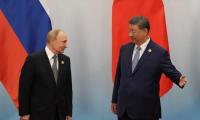
Obviously, for Islamabad, Beijing remains the bedrock ally, with close ties banked on building further mutual trust. Investments on belt and road architecture, particularly in infrastructure, trade and long-term development, will continue to build momentum. At the same time, Pakistan’s interactions with the US and other Western partners are likely to expand selectively, shaped by overlapping security interests. Managing this balance will require better portfolio management, so that cooperation in one domain does not generate friction in another, amidst a public and off-public communication overhaul at home and abroad.
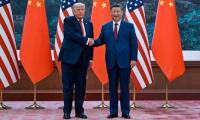
At the same time, the arc of a renewed impulse in both Islamabad and Washington to re-anchor bilateral ties reflects converging interests shaped by broader shifts. From a dull tarnish of decades of distrust, leadership-level bonding between the two has certainly bent the wheel to glittering atmospherics. While early days suggest caution, the durability of any reset will depend more so on Pakistan’s positioning amid growing multipolar competition, shifting resource priorities, and transactional diplomacy.
Developments in a turbulent West Asia will also continue to influence Pakistan’s strategic environment. Any new attack on a restive Iran, which borders Balochistan, will test Islamabad’s diplomacy as well as its heft. As it stands, the region remains volatile, shaped by terrorism and the humanitarian consequences of prolonged conflict.
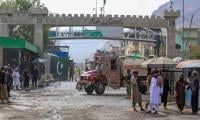
With Pakistan’s Western border under stress from loosely governed spaces and regime opacity in Afghanistan, regional and proxy actors will remain the main focus of responses from Pakistan. Islamabad’s posture will need to remain measured and firm, backed up with proactive counterterror efforts to curb cross-border militancy and investments from New Delhi, in bolstering a wider net of terrorist muscle into Pakistan.
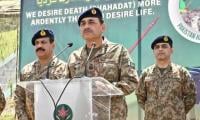
While Pakistan’s hard power, as evidenced in the May 2025 conflict with India, has changed the lens through which Islamabad is now viewed as a middle power with high military capabilities, the real test of Pakistan’s diplomacy will lie in deftly navigating its partnerships and core foreign policy values as well as its domestic compulsions.
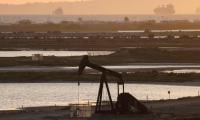
Economic considerations will be central to Pakistan’s positioning in 2026. Global competition for critical minerals, energy resources and industrial inputs has elevated the strategic value of resource-holding states. Pakistan’s mineral sector has drawn renewed international attention, but translating this interest into tangible gains will depend on a policy and infrastructure overhaul: creating ease of doing business, procedural transparency, security provision, environmental governance, and ensuring that local communities are not displaced. This may be Pakistan’s most promising source of investment to date.
Emerging technologies will surge in adding another layer of complexity. The growing integration of Artificial Intelligence, cyber capabilities, and unmanned systems into military and civilian domains is blurring traditional boundaries between peace and crisis, while reducing response windows. These technologies also carry profound economic implications, from workforce transformation to data governance and industrial policy.
Engaging effectively will require investment in human capital, regulatory foresight, and partnerships that prioritise resilience and adaptability. The impact of emerging technologies is evident everywhere, from the security sector to a rapidly changing business environment. With low-spectrum dogging everyday bandwidth, Pakistan has yet to keep pace with the digital revolution and will have to accelerate its AI-driven overhaul to keep up.
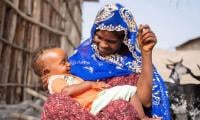
Climate pressures further complicate the outlook. Pakistan will remain a frontline nation in climate stress, yet climate finance for vulnerable countries will only be a shrinking pie. The sharp switch to fossil fuels by major powers has undermined efforts to reduce global warming, with Paris goals superseded by energy concerns. As one of the most affected countries on the Climate Risk Index for 2022 and one of the hottest places on the planet in summer, Pakistan will navigate a difficult course among climate shocks, the imperative to safeguard its environment, and a reform trajectory often off track.
Part of the problem is the constant grapple with domestic revenue generation and a moribund international financial architecture, which ignores the unsustainable debt crises of states like Pakistan. Despite an intensifying climate crisis that shaves off three per cent of GDP annually, and with external financing needs for the next fiscal year still hovering over $25 billion, new commitments made by MDBs like the World Bank and ADB still remain frozen in a boilerplate of incremental loans and debt-driven plans. This needs to change because such loan-based development financing is no longer fit for purpose.
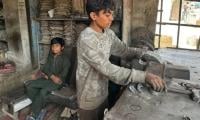
The good news is that Pakistan can continue its macroeconomic stabilisation trendlines, as the capacity to absorb multiple conflict and climate shocks appears to have exceeded expectations in 2025. The not-so-good news is that the country’s economic resilience will also be best judged by the lived experience of the 40 per cent living under the poverty line at the bottom of the social pyramid. That will require renewed national attention, particularly given 26 million children out of school and a job market under stress from both skilled out-migration and a high population growth rate that must create 1.5 million jobs each year to match new cohorts.
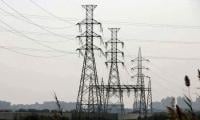
If Islamabad finds the political will to address investment and trade imbalances that are slowing economic growth, unlock its old energy infrastructure, incentivise distributed energy and modernise its ageing national grid, the opportunity in renewables is unprecedented. This is entirely possible.
Pakistanis have already voted with their rooftops on the solar revolution. Stepping outside conventional boxes may spur the structural shift necessary to renew its manufacturing and agricultural economies at the required scale. In 2026, a potential crisis in water resources will also need to be addressed, with pressures from glacial melt, high per capita water consumption and transboundary river management under stress from neighbours who flout international treaties with impunity.
Given that the global economy may well experience serious turbulence on account of geopolitical headwinds, while tariff wars and conflict will trigger downswings in multiple theatres, Pakistan will have to double down on enabling an environment where domestic solutions attract the kind of buffers needed to ride any crest of global upheaval as a winner that targets change for leveraging opportunity.
As Chairman Mao once famously remarked, “Everything under heaven is in utter chaos: the situation is excellent”.
The writer is chair of the Climate and Environment Standing Committee in the Senate of Pakistan, and former ambassador to the United States.