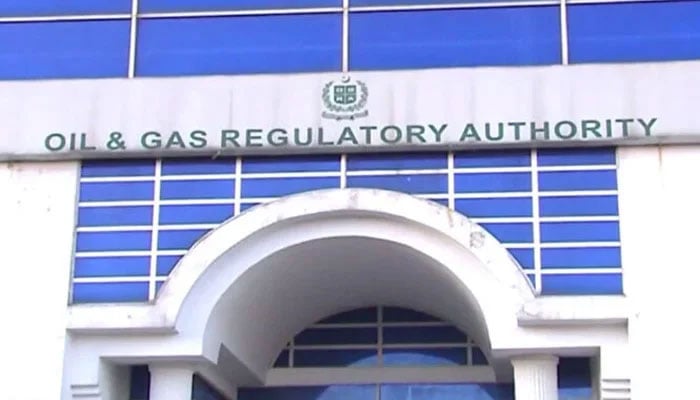
ISLAMABAD: Pakistan’s gas regulator has formally launched a nationwide public consultation to review the long-standing asset-based return formula for gas utilities, a move that could mark a major shift in how Sui Northern Gas Pipelines Ltd. (SNGPL) and Sui Southern Gas Co. (SSGC) earn profits amid market liberalisation and deepening sector stress.
In a public notice, the Oil and Gas Regulatory Authority (Ogra) said it is revisiting the rate of return (ROR) allowed to gas transmission and distribution companies under the existing tariff regime. The review follows a government directive to restructure the gas utilities by moving away from guaranteed returns linked to fixed assets.
OGRA said the decision reflects changing gas sector dynamics, including supply-demand imbalances, price volatility and the opening of gas market to competition. The regulator has hired consultancy firm KPMG to conduct the study, and the first draft report has already been submitted. A public hearing is scheduled for Friday (today) in Islamabad to gather views.
Earlier, two public consultation sessions were held in Lahore and Peshawar. Besides, in Karachi it will be held on January 12 and Quetta on Jan. 14, 2026. The review follows a government decision to restructure the two utilities and phase out the asset-based guaranteed return.
Meanwhile, the government has opened the gas market by allowing utilities to allocate 35pc of gas to third parties, up from 10pc. The move has drawn interest from private marketeers and appreciation from exploration companies, which hope better prices will ease their own cash flow pressures and revive stalled projects.
Since 2018, Ogra has allowed utilities returns on net fixed assets, a model critics say encourages pipeline expansion despite shrinking gas supplies. SNGPL’s operating costs rose to Rs94 billion in 2023-24 from Rs66 billion in 2019-20, while earnings nearly doubled to Rs38.9 billion despite lower gas supply, prompting industries to blame rising prices and profits amid worsening shortages.
The utilities, however, oppose any change, warning that key performance benchmarks, including unaccounted-for-gas (UFG), are linked to the current regime and cannot be abandoned overnight.
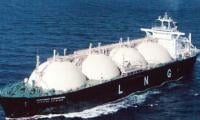
The debate comes as the gas sector struggles with a circular debt of about Rs3 trillion, which has paralysed the energy chain. Costly LNG imports, paid for by the SNGPL through Pakistan State Oil, have added to the strain.