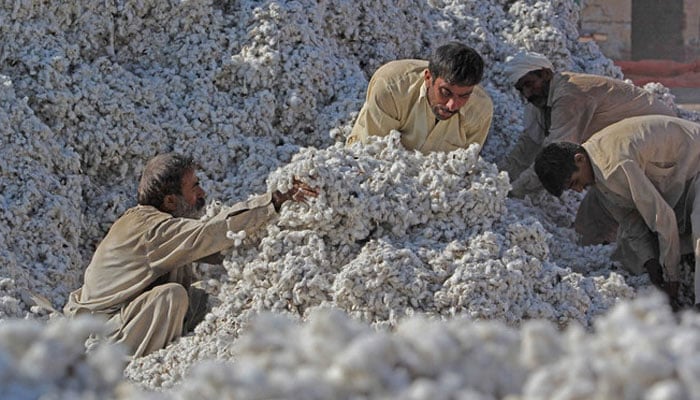
MULTAN: Phutti arrivals are showing positive signs, with no major difference reported between the current season and the corresponding period last year, The News has learnt.
According to phutti arrival statistics compiled by the Pakistan Cotton Ginners Association (PCGA), ginning factories received 5.434 million bales of phutti by December 31, 2025, compared with 5.452 million bales during the same period last year. This reflects a marginal shortfall of only 18,260 bales, or 0.33 percent, indicating overall stability in arrivals. In Punjab, ginning factories received 2.540 million bales of phutti, which is 118,162 bales fewer than the 2.658 million bales recorded in the corresponding period last year. The decline in Punjab stands at 4.44 percent.
By contrast, Sindh reported an increase. Ginning factories in the province received 2,893,378 bales of phutti, up by 99,956 bales from 2,793,422 bales last year, registering a growth of 3.58 percent. Overall, ginning factories produced 5,366,346 bales of cotton from phutti arrivals by December 31, 2025. During the current season, exporters and traders purchased 176,000 bales, while the textile sector purchased 478,380 bales. The Trading Corporation of Pakistan (TCP) has not made any cotton purchases in the 2025-26 season.
At present, 141 ginning factories are operational in Punjab, where about 2.54 million bales of cotton have been produced. Meanwhile, research by the Pakistan Business Forum (PBF) presents a more optimistic picture, describing the Cotton Crop Outlook 2025 as encouraging, with the crop recovering by around 18 percent year-on-year. According to PBF, Pakistan’s cotton sector has entered a phase of gradual recovery during the 2025 season, supported by improved arrivals and better market absorption. Consolidated national figures up to December 31, 2025 show arrivals of approximately 5.43 million bales, compared with about 4.55 million bales during the same period last year, reflecting an increase of around 18 percent.
PBF South Punjab Chairman Malik Talat Suhail said the recovery has been driven mainly by higher inflows from key cotton-growing areas of Punjab, along with stable contributions from Sindh. He noted that increased arrivals have translated into higher pressing volumes, while factory-held stocks remain below 0.5 million bales, suggesting effective domestic absorption without excessive accumulation. Limited export activity reflects a cautious approach to ensure local availability.
Despite the improvement, PBF emphasised that domestic production remains insufficient to meet national demand. “Pakistan’s textile and spinning industry requires an estimated 14 to 15 million bales of cotton annually to operate efficiently,” Suhail said. He added that even with better performance in 2025, domestic availability covers only part of this requirement, making imports unavoidable. This structural gap continues to exert pressure on production costs and foreign exchange reserves. PBF stressed the need for consistent, long-term policy support rather than short-term measures.
Improving yield per acre remains a key priority, as Pakistan’s cotton productivity still lags behind potential benchmarks. Enhanced access to quality seed, stronger pest management, and improved water efficiency could raise output without significantly expanding cultivated area. The forum also highlighted the need to rationalize the cost structure faced by cotton growers. In this regard, it suggested reviewing the existing 18 percent sales tax on cottonseed and oil cake, as these by-products contribute significantly to farmers’ incomes. While not a standalone solution, such fiscal adjustments, combined with agronomic improvements, could encourage greater cotton cultivation and support higher output in the 2026 season.
The PBF believes that if the current recovery trend-marked by an approximate 18 percent year-on-year increase in arrivals-is reinforced through stable pricing, improved productivity, and supportive policies, Pakistan can gradually reduce its reliance on imported cotton. Although complete self-sufficiency may not be immediately achievable, narrowing the demand-supply gap would strengthen the textile value chain, stabilize raw material availability, and enhance export competitiveness.
District-wise arrivals up to December 31, 2025 show: Multan (36,299 bales), Lodhran (15,568), Khanewal (126,723), Muzaffargarh (32,450), Dera Ghazi Khan (328,970), Rajanpur (33,804), Layyah (111,099), Vehari (181,243), Sahiwal (92,043), Rahimyar Khan (340,261), Bahawalpur (394,336), and Bahawalnagar (692,637).
In Sindh, arrivals include Sanghar (1,274,563 bales), Mirpur Khas (70,100), Nawabshah (82,559), Naushero Feroze (228,755), Khairpur (229,536), Sukkur (345,465), Jamshoro (45,200), and Hyderabad (151,656). Additionally, 178,590 bales have arrived in factories in Balochistan. Currently, unsold stocks of cotton and cotton lint stand at 549,664 bales.