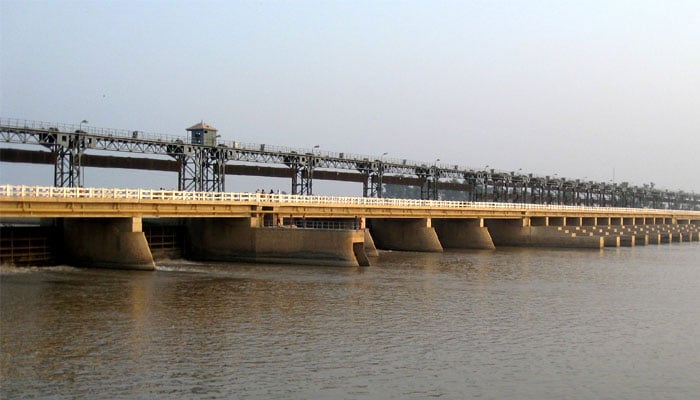
LAHORE: The Punjab government has initiated the implementation of a major project for the rehabilitation and modernisation of Islam Barrage, a key water infrastructure in the province.
The project, with an estimated cost of Rs6.79523 billion, is scheduled to be completed by November 2026. The initiative is aimed at improving the management of water resources and supporting Pakistan’s agricultural sector.
Agriculture is considered a central component of the national economy, with nearly 80 per cent of the country’s agricultural output coming from Punjab which largely depends on canal-based irrigation.
According to the project outline, ensuring adequate, reliable and sustainable irrigation for cultivable land is part of the Punjab government’s vision. The project is expected to contribute to increased agricultural production, rural development and improved management of water resources.
The National Water Policy 2018 places special emphasis on the sustainability and modernisation of irrigation systems to address present and future challenges. Punjab’s irrigation system is part of the Indus Basin and includes 14 barrages feeding 24 canal systems, with a combined capacity of 110,900 cusecs. In view of the safety of major water infrastructure, the Punjab government initiated a safety review study in 1998, which led to the formulation of a comprehensive programme for the rehabilitation and modernisation of barrages.
Islam Barrage was constructed on the Sutlej River between 1922 and 1927 under the Sutlej Valley Project and is more than 95 years old. Initially, it supplied water to Bahawal Canal, Qaimpur Canal and Mailsi Canal. After the implementation of the Indus Waters Treaty, Mailsi Canal was linked in 1965 to the Sidhnai–Mailsi–Bahawal Link Canal.
At present, Islam Barrage supplies 1,000 cusecs of water to Upper Bahawal Canal and 483 cusecs to Qaimpur Canal. The barrage irrigates approximately 106,000 acres (42,897 hectares) of land. The structure was originally designed to pass 300,000 cusecs of water, while its capacity has been increased to 332,000 cusecs after subsequent modifications. Due to aging, prolonged use and inadequate maintenance, the condition of the barrage, subsidiary weirs, gates and operating systems had deteriorated significantly. Water leakage from gates, malfunctioning machinery and structural weaknesses were causing water losses.