The US-led West, in the aftermath of World War II, established the so-called liberal world order with the proclaimed goals of promoting democratic values, a market economy, the rule of international law, human rights and free international trade, ostensibly to strengthen international peace and enhance global economic prosperity.
The UN, World Bank, IMF and GATT (later succeeded by the WTO) were created to realise these goals. However, as the historical record shows, the real purpose behind these new organisations was to maintain the global political and economic domination of the US and other Western countries.
The US was the main beneficiary of the new global order because of its overwhelming economic and military power, worldwide web of alliances, and decisive influence in the new intergovernmental organisations. It emerged as the sole superpower after the disintegration of the USSR at the end of 1991. However, more recently, the dramatic rise of China and other major powers across the world has sharply curtailed the US's ability to manipulate the international system to advance its national security and economic interests. There has been a corresponding decline in the American commitment to the liberal values underpinning the liberal world order.
In the economic sphere, the US and other Western powers advocated principles of a market economy and free trade, provided that these would enable them to exploit the resources and markets of Third World countries for the growth and enrichment of their own economies. Due to such exploitation, the share of China and India declined from about half of global GDP at the beginning of the 19th century to about 20 per cent by the beginning of the 20th century, and further to about eight per cent by 1949. However, the challenge posed by China’s dramatic economic rise has led policymakers in Western countries to reconsider their positions.
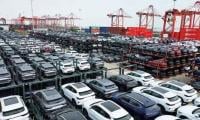
The same US which used to lecture the rest of the world on the advantages of free trade is now virtually begging China to reduce its productive “over-capacity” and huge trade surplus exceeding one trillion dollars per annum, according to the latest figures. American policymakers often overlook that the US was in a similar situation in 1950 and the early 1960s, when it had large annual trade surpluses with the rest of the world due to its enormous productive capacity, which enabled it to invest in productive assets and gain dominant influence worldwide.
The tables have turned now. It is now China that is running large trade surpluses, enabling it to penetrate and dominate foreign markets, particularly in Africa, Latin America and Asia, through investments and loans. Contrary to claims by Western policymakers, there is sufficient demand for China’s consumer goods and capital abroad, particularly in the Global South. China, by increasing its productive capacity and exporting at low prices, is helping to reduce prices of consumer goods, raw materials, and machinery in other countries. Furthermore, China, by investing part of its substantial foreign exchange earnings in other countries, particularly in the Global South, through its Belt and Road Initiative, is helping the global economy grow faster.
However, what was acceptable in the case of the US has become objectionable for China. Obviously, the US and other Western countries are concerned that China’s growing influence abroad will be realised at the expense of the West. The ‘over-capacity’ argument is based primarily on political grounds rather than on economic efficiency. China has outcompeted the US and other Western countries in manufacturing, thereby increasing its global exports, investment and influence.
Instead of addressing the potent economic challenge posed by China by raising the competitiveness of the US economy through investment and innovation, the US has resorted to imposing high tariffs on imports from China and other countries to protect its less efficient industries, thereby violating the principles of free trade and a market economy. In some cases, affected foreign countries have been forced to respond by raising tariffs on imports from the US.
The net result of this process would be in the form of reallocation of resources from more efficient to less efficient sectors with adverse effects on productivity worldwide. Thus, the US, in a misconceived attempt to protect its inefficient industries, has not only jettisoned the principles of free trade and market economy but also undermined the productivity and growth of the world economy.
The Trump administration’s National Security Strategy of December 2025 has driven the final nail in the coffin of the liberal world order and revived the era of unbridled national competition in security and economic spheres. The focus on the nation-state and ‘America First diplomacy’, rather than multilateral institutions, is the most significant change in US policy brought about by Trump’s NSS. This change would diminish the UN's role in managing international affairs and increase the likelihood of interstate conflict, thereby endangering international peace and security.
There is a clear recognition in Trump’s NSS of the potent challenge posed by China’s rise to the US global pre-eminence combined with the determination to prevent China from dominating the Indo-Pacific region through alliances such as the Quad including the US, Japan, India and Australia. It is noteworthy that the NSS assigns special importance to India in its policy to contain China. But it also places increased emphasis on considering China as an economic competitor rather than a mere security threat.
President Trump’s strategy revives the Monroe Doctrine with the Trump Corollary, which would reserve the Western Hemisphere for American domination. It remains to be seen how far the US would succeed in this goal, which may face resistance from major Latin American countries or other world powers. China’s entry into the region will also strengthen Latin American countries' capacity to resist US hegemonic designs.
The revival of the Monroe Doctrine implicitly recognises the right of major world powers to play a hegemonic role in their respective spheres of influence. President Trump’s NSS also indirectly acknowledges the importance of major civilisations in the management of international affairs while deploring the weakening of Western civilisation in Europe. This view somewhat echoes the theory of the clash of civilisations, articulated by Samuel Huntington in the 1990s.
The Trump administration, in its second term, has hastened the burial of the so-called liberal world order through the wholesale jettisoning of the fundamental principles that had underpinned it since the end of World War II. In the field of security, the prospects include increased risks of nation-state conflicts, a diminished role for the UN and other multilateral institutions, heightened great-power rivalries and growing inter-civilisational tensions.
In the economic field, the principles of free trade and a market economy will be discarded in favour of short-term, narrow national gains. Pakistan will have to navigate the ship of state with extreme care through the choppy waters ahead.
The writer is a retired ambassador and author of ‘Pakistan and a World in Disorder – A Grand Strategy for the Twenty-First Century’. He can be reached at: [email protected]