A spokesman for Sindh government
December 27 is not merely a date on Pakistan’s political calendar; it is a wound that still aches and a reminder of the heavy price this country has paid for democracy. Each year, this day forces us to pause, reflect, and remember the life and martyrdom of Shaheed Mohtarma Benazir Bhutto — a leader whose courage, vision, and sacrifice continue to define the democratic struggle in Pakistan.
Shaheed Benazir was a symbol of dignity and courage; her struggle for restoration of democracy, empowering people of Pakistan and resolving political turmoils by dialogue truly reflects her political wisdom. She stood tall globally as a leader with a democratic vision and public support.
Shaheed Benazir was a born leader, exhibiting all the traits of leadership which she inherited. This was reflected in her early days at Oxford. She showed all the signs of leadership since her days in student politics and an impeccable debating career.
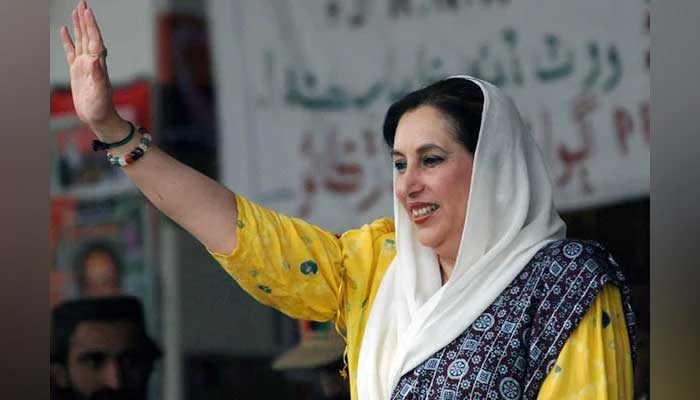
On her return to Pakistan on April 10, 1986 in Lahore, Shaheed Mohtarma Benazir Bhutto was welcomed by millions, said to be the biggest political turnout in the history of Lahore; a month later she landed in Karachi and it took almost eight hours to reach the meeting venue near the Quaid-e-Azam mausoleum from Karachi airport which otherwise would have been a 15-20-minute drive. Such was the public momentum and support of Shaheed Benazir.
Her martyrdom in 2007 was not an isolated act of violence; it was a direct attack on the idea of people’s rule, on constitutional supremacy, and on the politics of inclusion that she represented. When she was assassinated, Pakistan did not just lose a former prime minister — democracy lost its bravest voice.
Shaheed Mohtarma Benazir Bhutto with an extraordinary political journey faced immense challenges but with absolute courage and dignity. After the judicial murder of her father Shaheed Zulfikar Ali Bhutto, she inherited not privilege but persecution. Prison cells, solitary confinement, house arrest and forced exile became recurring chapters of her life. Yet none of these hardships could break her resolve. Instead, they strengthened her belief that Pakistan could only survive and progress through uninterrupted democratic rule.
Her return to Pakistan in 1986 was a moment of political resurrection. The sea of people welcomed her, it was truly historic. That moment reaffirmed the unique bond shared by the Pakistan Peoples Party with the masses and it became evident that Shaheed Mohtarma Benazir Bhutto was the undisputed symbol of democratic resistance.
In 1988, she made history by becoming the first woman prime minister of a Muslim-majority country. This was not only a personal milestone but a revolutionary moment for women across Pakistan and the Muslim world. As the prime minister of Pakistan, Shaheed Mohtarma Benazir Bhutto consistently sought to strengthen democratic institutions. She restored press freedom, revived student unions and labour organizations, and upheld parliamentary supremacy in an environment hostile to civilian authority. Her commitment to democracy was never selective; she believed in pluralism, dissent, and dialogue — a true democrat.
What set her apart was her unwavering belief that democracy must deliver social justice. Her focus on social welfare reflected the Pakistan Peoples Party’s founding philosophy of “Roti, Kapra aur Makan,” a promise to the most marginalized segments of society.
The Charter of Democracy stands as one of her most far-sighted contributions — a pact for democratic continuity. The subsequent restoration of parliamentary rule and landmark constitutional reforms were made possible by the sacrifices of Shaheed Mohtarma and the Pakistan Peoples Party.
Her martyrdom further entrenched democratic consciousness in Pakistan and reinforced the PPP’s historic role as the vanguard of people’s politics. Even today, every democratic gain — from constitutional amendments to civilian transitions — carries the imprint of her struggle.
December 27 is the day when the nation remembers and pays tribute to the iconic leader of Pakistan — Daughter of the East. This day reminds us that democracy is neither gifted nor guaranteed — it is earned through sacrifice, resistance and support of the people.
When democracy lost its bravest voice, it gained an eternal conscience. Shaheed Mohtarma Benazir Bhutto lives on — in the constitution she defended, in the party she led, and in the hearts of millions who continue to raise the slogan that echoes across generations: Jeay Bhutto.