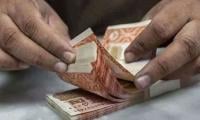
KARACHI: The Pakistani rupee is expected to remain stable in the coming week as traders attempt to predict its performance over the next year.
On Monday, the rupee closed at 280.22 against the dollar in the interbank market and ended the week at 280.17, showing marginal gains. The financial markets were closed on Thursday for Quaid-e-Azam Day and Christmas. According to a client note from Tresmark, the rupee is projected to remain within the 280-283 range over the next six months, with occasional fluctuations.
Looking ahead to how the rupee might perform in 2026, the report indicates that inflation will dictate the long-term trend. The market is likely to focus on the inflation differential. Currently, Pakistan’s inflation rate is significantly higher than that of the US. Even with anticipated gradual disinflation, the gap remains around 5.0 per cent, which translates to a depreciation of approximately Rs12-18, as noted in the report.
This implies a gradual weakening of the rupee throughout the year, consistent with inflation differentials, rather than a sharp or chaotic adjustment.
“In this scenario, the rupee weakens steadily, without triggering stress in reserves or confidence,” the report said. “This is the scenario markets would be more comfortable to witness.”
This outlook assumes a degree of political stability, adherence to the International Monetary Fund (IMF) framework, and a stable geopolitical environment. It also relies on fiscal discipline, continued external financing, and bond and multilateral inflows that support faster reserve accumulation. “In this environment, the rupee remains range-bound in the 280-283 range for the next 6 months with occasional overruns,” the report said.
“This is based on the aggressive reserve accumulation (almost 33% higher this year) and the new FX regime in place,” it added.
However, according to Tresmark, the factors affecting the rupee’s dynamics until 2026 will be influenced less by valuation gaps and more by a limited set of structural forces, including inflation and interest rate differentials that determine the long-term trend, political continuity that affects policy credibility, external financing capacity, and fiscal discipline that shapes balance-of-payments risk. Additionally, reserve accumulation behaviour will limit extreme volatility, while oil prices and regional export competitiveness will affect the trade balance. Last, geopolitical developments and global recession risks will influence flows and market sentiment.