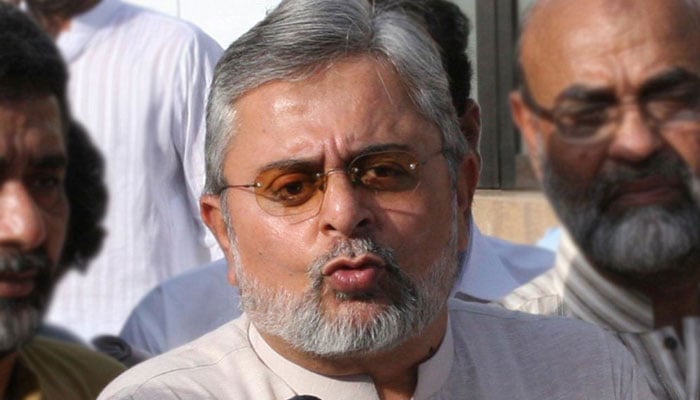
KARACHI: Chairperson of the Businessmen Group (BMG) Zubair Motiwala has urged the Oil and Gas Regulatory Authority (Ogra) to reject the Estimated Revenue Requirement (ERR) petition submitted by Sui Southern Gas Company (SSGC) for FY2026-27, warning that any further increase in gas tariffs would damage industry, exports and the wider economy.
Speaking at a public hearing on SSGC’s ERR petition held at a local hotel on Monday, he called for an immediate review of the tariff structure and urged Ogra to stop passing on financial inefficiencies, theft losses and cross-subsidies to the industrial sector.
He said industries, which maintain recovery rates of nearly 98 per cent, should not be required to subsidise domestic consumers, fertiliser producers and high-loss regions.
Motiwala further proposed that SSGC be split into two separate operational entities or boards, one serving industrial consumers and the other managing domestic and subsidised segments, to allow clearer assessment of financial performance and recovery efficiency. He said such a structure would make the industrial gas business commercially sustainable through higher volumes and improved efficiency.
He also called for the withdrawal of what he described as unjustified expenditure increases in the petition, particularly sharp rises in electricity costs, travel expenses and professional fees. He questioned the rationale for projecting a 73 per cent increase in electricity costs despite a decline in industrial gas consumption, which he said had reduced compressor usage.
Criticising exchange rate assumptions, he said that while the government had stabilised the rupee at around Rs279-280 per US dollar, SSGC had assumed an exchange rate of Rs287 per dollar, inflating its revenue requirement. He asked why earlier exchange rate gains had not been transparently passed on to consumers.
Motiwala said Pakistan’s industrial gas tariffs had become internationally uncompetitive, making it difficult for exporters to compete globally. Citing regional comparisons, he said industrial gas prices in Pakistan were around $14 per mmbtu, compared with $9.82 in Bangladesh, $12.18 in Vietnam, about $6.5 in Indonesia and $6.75 in India.
He warned that exporters could not survive with energy costs significantly higher than competing economies. “Exports cannot grow if production costs remain uncompetitive,” he said, adding that Pakistan’s economic stability depended on export growth and foreign exchange earnings.
Referring to industrial consumption trends, he said gas usage had fallen sharply as industries shifted to alternative fuels or shut operations due to high tariffs. He cited a decline from around 2,000 mmcfd to about 800 mmcfd, noting that many units were now relying on coal, rice husk and wood to remain operational.
Describing industry as the “golden goose” of the economy, he cautioned that excessive burden on productive sectors would weaken the industrial base and further erode gas demand, ultimately worsening the financial position of SSGC itself.
He also criticised continued cross-subsidisation policies under which efficient industrial consumers bear the cost of losses and inefficiencies in other segments, despite high recovery rates.
Raising concerns over Unaccounted for Gas (UFG) losses, he said SSGC’s losses remained above the regulator’s benchmark despite ongoing investment in reduction measures, reflecting operational inefficiencies.
He opposed the utility’s request to recover previously disallowed amounts, including Rs545 billion already determined by Ogra, saying reopening settled decisions would undermine regulatory credibility.
Motiwala also objected to the allocation of losses from Balochistan and other high-loss areas to industrial consumers, questioning the fairness of the approach.
While acknowledging certain operational improvements by SSGC, including time-based gas supply management and steps to reduce UFG, he said these did not justify additional financial pressure on struggling industries.