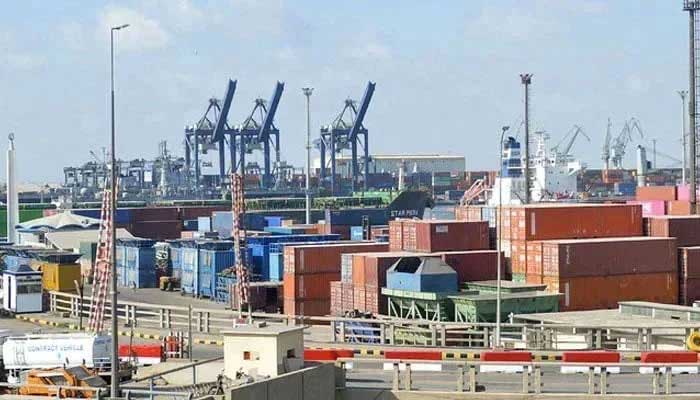
Pakistan’s export sector has traditionally relied on policy support to remain competitive. Exporters have emphasised the importance of affordable financing and exchange rate adjustment has often been used to contain costs and improve price competitiveness.
The assumption is that a weaker currency lowers export prices in international markets and stimulates export growth. However, experience over several decades suggests this approach has delivered limited and short-lived results.
Historical evidence shows that repeated exchange rate adjustments have not sustained export expansion, while inflationary pressures have intensified. Exports of goods and services currently account for about 10 per cent of Pakistan’s GDP, reflecting a relatively modest share of overall economic activity. Meanwhile, exchange rate pass-through contributes to higher costs for households, businesses and government finances.
During the 2022–23 period, the Pakistani rupee experienced a sharp depreciation against the US dollar, weakening significantly. Despite this adjustment, export performance remained subdued. Textile exports, the backbone of Pakistan’s export basket, increased only modestly from around $16.6 billion to about $17.8–17.9 billion, while headline inflation surged to nearly 38 per cent. This contrast underscores the limited effectiveness of currency depreciation in improving export competitiveness when domestic cost pressures remain elevated.
In Pakistan’s case, exchange rate depreciation feeds into higher input costs. Wages, fuel, electricity, transportation, logistics and imported machinery all become more expensive, eroding any initial competitiveness gains. This often results in rising production costs that offset the benefits of a weaker currency.
Structural constraints and policy uncertainty have also weighed on investment and growth. Real GDP growth has remained subdued at around 1.5–2 per cent over recent years, while medium-term projections suggest a gradual recovery, conditional on sustained reforms. International experience shows that durable export growth is achieved through macroeconomic stability, including low and predictable inflation, stable interest rates and an orderly exchange rate regime.
Improving export competitiveness sustainably requires focusing on reducing production costs through structural reforms. Priority areas include addressing infrastructure bottlenecks, resolving power-sector inefficiencies, particularly those related to Independent Power Producers, and increasing the availability of competitively priced domestic energy for industry. These measures are central to easing cost pressures across manufacturing and export-oriented sectors.
Fiscal policy also plays a critical role in supporting macroeconomic stability and growth. Although recent assessments indicate some improvement in fiscal and external indicators, the tax-to-GDP ratio remains low. Out of roughly 83 million unique bank account holders, only about 5.9 million file tax returns, and approximately 3.6 million are active taxpayers. This narrow tax base places a disproportionate fiscal burden on a limited segment of the economy.
Over the past three years, the tax burden on salaried individuals and documented businesses has increased significantly, even as overall economic growth has averaged around 1.8 per cent per annum. In this environment, the scope for further revenue mobilisation from existing taxpayers is limited. Broadening the tax base, improving compliance and enhancing expenditure efficiency are essential to create fiscal space without undermining growth.
Other macroeconomic indicators indicate the need for targeted reforms. Economic growth remains modest, foreign direct investment has stayed low, and export growth has largely stagnated. Government expenditure continues to rise despite stabilisation efforts, while progress on privatisation and restructuring has been incremental. Losses of state-owned enterprises, estimated in the hundreds of billions of rupees annually, continue to burden public finances. Reducing these losses could release resources for development spending in industry and agriculture.
Thus, Pakistan’s path to sustainable export growth does not lie in repeated reliance on exchange-rate adjustments or short-term incentives. Instead, it requires a consistent reform agenda centred on macroeconomic stability, lower production costs, energy sector reform, fiscal discipline and stronger private-sector participation.
By focusing on competitiveness, technology adoption and efficient resource allocation, Pakistan can strengthen export performance, attract investment and build a more resilient economy capable of withstanding global shocks.
The writer is a leading Pakistani industrialist. He can be reached at: [email protected]