A perfect storm refers to a lethal convergence of multiple adverse factors that align at precisely the wrong moment to produce a catastrophe far greater than the sum of its parts. In meteorological terms, it refers to the rare yet devastating alignment of weather systems. In more metaphorical or astrological language, it can be likened to an ominous alignment of stars -- that all but guarantees disaster.
Perfect storms are acts of nature, but the scale of destruction they cause is rarely determined by natural forces alone. Human preparedness -- or the lack of it -- often dictates the severity of the damage. Pakistan’s catastrophic floods of 2022 are a compelling illustration. The unprecedented intensity and duration of monsoon rainfall combined disastrously with long-standing governance failures: encroachment on floodplains, failure to clear drainage channels, weak enforcement of land-use regulations and a poor disaster-preparedness and response framework.
Together, these elements produced a perfect storm that resulted in economic losses and reconstruction needs estimated at around $30 billion. The central lesson from that calamity is clear: anticipatory planning and preventive strategies are not optional luxuries but essential safeguards.
This concept of a perfect storm can be meaningfully extended to Pakistan’s urban planning crisis. Nearly 39 per cent of the country’s population now lives in cities, a figure projected to rise to 50 per cent by 2050. Rapid population growth combined with accelerated rural-to-urban migration is placing extraordinary pressure on already fragile urban infrastructure.
Without timely and coherent planning, Pakistan risks a breakdown in housing, transport, sanitation and environmental sustainability. Unregulated and often illegal housing developments are consuming valuable agricultural land, while cities sprawl outward without the supporting infrastructure needed to sustain them.
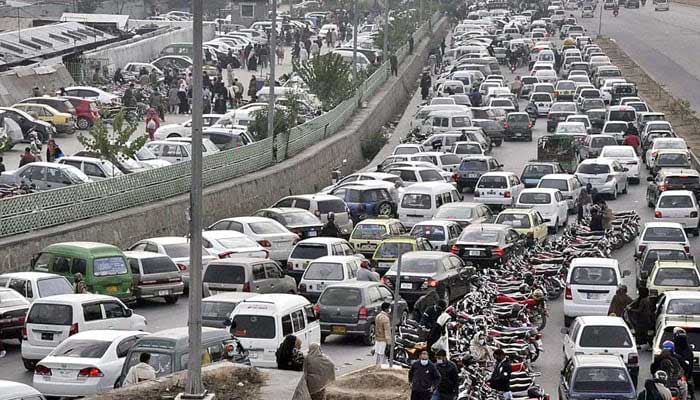
A microcosm of this failure is evident in the deteriorating road and bridge network of the Rawalpindi-Islamabad metropolitan area. Over the past decade, the twin cities have experienced a dramatic population surge, adding approximately 1.5 million residents and 1.6 million vehicles. Yet the expansion of housing stock, road capacity and public transport has lagged far behind this growth. The result is chronic congestion and declining mobility, driven not by inevitability but by prolonged policy neglect and institutional apathy.
With a combined population of roughly 5.7 million, the twin cities are currently served by approximately 205 public-sector buses and lack a fully integrated road-and-rail mass transit system. The absence of a complete Ring Road exacerbates the problem. Despite repeated road-widening projects, traffic congestion continues to worsen, underscoring the limits of car-centric solutions. The Ring Road under construction will remain functionally incomplete unless an eastern bypass is planned and integrated with the western section. Flyovers and underpasses, while helpful, are remedial measures introduced at least a decade too late. These projects should have been initiated years earlier, when population and vehicle growth trends were already evident.
Globally, densely populated metropolitan areas in developed countries rely on underground mass transit systems to sustain mobility. Such systems offer faster, safer and more environmentally sustainable transportation while preserving urban aesthetics. Transport planning experts generally agree that once passenger demand exceeds 25,000 to 30,000 passengers per direction per hour, underground transit becomes the most viable option. In the Rawalpindi-Islamabad corridor, the 23-kilometre Bus Rapid Transit system carries more than 135,000 passengers daily – and, that too, serves only a limited segment of the metropolitan area, leaving several dense zones underserved.
Pakistan’s major urban centres -- Karachi, Lahore, Rawalpindi-Islamabad, Faisalabad, Multan, Hyderabad and Peshawar -- are all experiencing rapid demographic pressure. By 2040, many are likely to qualify as ‘distressed traffic’ cities if decisive investments in mass transit are not made. The consequences of inaction are already visible: daily traffic gridlock, rising air pollution, declining productivity and urban sprawl that undermines community life and economic activity.
Population and building density are key determinants for underground transit feasibility, and with densities exceeding 10,000 people per square mile in many Pakistani cities, the threshold has long been crossed.
The traffic conditions in Rawalpindi-Islamabad represent a textbook-perfect storm. Chronic congestion on the Islamabad Expressway, Peshawar Road, and numerous feeder arteries stems from a convergence of factors: road capacity constraints, poor engineering design, an incomplete Ring Road, the absence of an integrated mass transit system, inadequate parking in commercial areas and frequent security-related stoppages. While VIP movement is facilitated through sanitised corridors, ordinary citizens endure hours-long traffic jams daily.
The solutions are well known but require political will, institutional coordination and sustained investment. A complete Ring Road including an eastern bypass, signal-free corridors on the Islamabad Expressway and Rawat-Tarnol stretch, an integrated road-rail mass transit system, long-delayed projects such as the Leh Expressway, adequate parking infrastructure in commercial zones, and -- resources permitting -- underground mass transit are essential to avert a full-blown urban mobility collapse. With appropriate city-specific adaptations, this framework applies to Pakistan’s other metropolitan centres as well.
Absent such interventions, Pakistan’s cities risk becoming permanent monuments to planning failure -- perfect storms of congestion, pollution and lost economic potential.
The writer is a security and defence analyst. He can be reached at: [email protected]