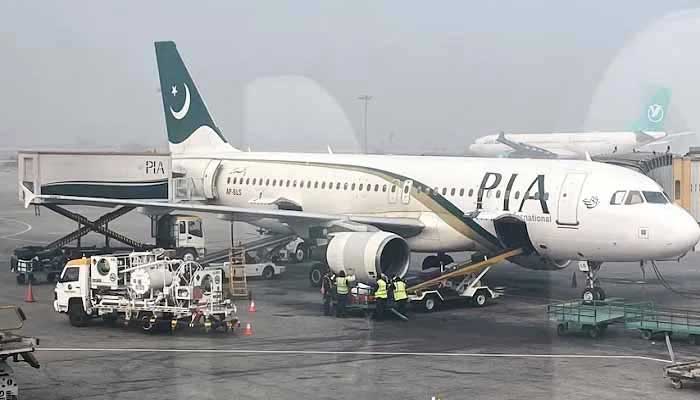
This week’s acquisition of a 75 per cent stake in Pakistan International Airlines (PIA) by a consortium led by the Arif Habib Group for Rs135 billion is being cast as a financial milestone.
Yet, airline ownership is rarely about superior returns. It is a low-margin, capital-intensive business that offers little financial justification. What it does offer is visibility, prestige and a seat closer to the state. In Pakistan, that proximity can matter more than any internal rate of return.
Airlines tend to be among the most unforgiving businesses in the global economy. They absorb capital relentlessly and remain exposed to fuel prices, currency movements and geopolitics. Over long cycles, the industry has struggled to generate equity returns meaningfully above the cost of capital. Free cash flow is thin and episodic once aircraft purchases, maintenance and regulatory costs are accounted for. This is why airlines, as an asset class, have consistently disappointed equity investors.
Capital expenditure lies at the heart of this problem. Aircraft are among the most expensive depreciating assets in commercial use. A single narrow-body jet costs upwards of $50 million to $60 million, while wide-body aircraft can exceed $150 million. Maintenance, leasing, training and compliance add further strain. Japan Airlines’ recent fleet renewal costs $2.3 billion for 20 A350s and $710 million for 11 A321neo, illustrating the scale involved. Even well-run legacy airlines typically operate on single-digit operating margins in good years.
PIA itself illustrates this reality. Before privatisation, the government was forced to shift roughly Rs660 billion to Rs670 billion of legacy debt and non-core liabilities off PIA’s balance sheet, without which no sale would have been possible. That alone should signal that this transaction is not a straightforward buyout of a clean, cash-generating asset. It is the case of owning a national and strategically important asset, albeit with impaired financials and a weakened balance sheet.
This is why long-term airline ownership is rarely a pure equity decision. It is more often a credit play. That works with optimising liabilities, managing cash flows and renegotiating supplier contracts, combined with a strategic bet on connectivity, influence and optionality.
Despite low return on equity, airlines tend to be an intriguing asset that people vie for. The competitive bidding that occurred earlier this week for PIA may be due to these reasons. First, owning strategic infrastructure has benefits beyond financial ones. Second, state support around bankruptcy, restructuring, regulatory relief etc, can have a positive impact on economics post-acquisition. Third, the presence of scarce assets, such as landing slots and air service agreements, has its appeal for some. Finally, and most importantly perhaps, airlines offer political and institutional leverage.
Seen through this lens, the PIA acquisition looks less like a traditional investment and more like a strategic repositioning exercise by the consortium.
The reported involvement of military-linked entities, alongside private capital, reinforces this interpretation. Globally, airline buyouts in most markets often involve state-adjacent capital, even when ownership is nominally private. The Gulf carriers provide clear examples in which airline strategy is inseparable from national policy.
This matters because it shapes expectations. PIA’s revival cannot be left to private capital alone. Airport infrastructure, airspace policy and regulatory consistency remain state responsibilities. Without coordinated state support, even the most competent management will struggle.
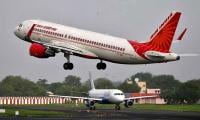
Interestingly, we can draw parallels with the relatively recent acquisition of Air India by the Tata Group in 2022 for approximately $2.4 billion. Like PIA, Air India was loss-making, overstaffed, operationally degraded, but symbolic for India. Tata’s buyout does not appear to yield near-term profits.
Post-acquisition, Tata committed substantial capital. It placed one of the largest aircraft orders in aviation history, valued at tens of billions of dollars, and allocated over $400 million (approximately Rs112 billion) solely to refurbish existing aircraft interiors.
Talent was prioritised, with leadership drawn from international aviation professionals, including executives from established global airlines, to turn the airline around.
Lastly, Tata prima facie accepted that profitability would take years and further capital injection would be required. Even with revenue growth and service improvements, losses still seem to persist three years out. Air India incurred losses in excess of $1 billion in FY 2025.
This experience with Air India’s acquisition confirms that airlines require patience, capital and elite management depth. There seem to be no shortcuts, even with the best and most experienced sponsors, with seemingly infinite resources at their disposal.
Arif Habib consortium’s PIA challenge is no different. It must withstand not just significant capital outlay but also finding the right talent to turn the company around. When British Airways was turned around in the 1980s, it had a bench of aviation managers, a capable civil service and a vibrant business environment with outstanding local talent. When Tata took over Air India, it could draw on globally competitive talent and managerial systems. Pakistan does not yet have that luxury.
There is no obvious Lord King figure waiting in the wings in Pakistan, as was the case with British Airways. Decades of politicisation have hollowed out managerial pipelines in state-owned entities. Institutional managerial talent in Pakistan is already thin. Autonomy without capability will not deliver transformation.
This leaves the new owners of PIA with an immediate challenge. They need external talent infusion as a topmost priority. International airline executives with proven turnaround experience must be inducted -- tied in with performance-linked contracts, combined with complete insulation from politics, to turn the beleaguered organisation around.
First of all, customer experience must be rebuilt and traveller confidence regained. From check-in and punctuality to in-flight entertainment and loyalty programmes, a complete revamp is the requirement to start the revenue growth cycle.
Second, fleet modernisation and route optimisation must be ruthless and data-driven. Third, airport infrastructure must be upgraded in parallel; the airline cannot outgrow the ecosystem it operates in. State-level support from the Ministry of Defence and the Civil Aviation Authority is a requirement for the infrastructure upgrade.
Fourth, bilateral routes and air service agreements must be strategically expanded and subject to consistent oversight to ensure economic viability. Finally, the state must recognise that selling first and hoping for a turnaround later is the reverse of how successful airline privatisations usually work. They need to work closely with the consortium to make this an example to be followed.
The PIA transaction is not the end of the story. It is the beginning of a difficult road ahead for the new owners. Airlines are not the typical asset class that undergoes systemic business cycles. They are idiosyncratic in many respects and require disciplined strategy, capital, and execution.
Whether this becomes a rare success or another expensive failure depends on abandoning the myth that this is a conventional financial investment. Airlines are turned around through hard choices on routes, fleets, labour and costs.
Capital is absorbed in large quantities long before value appears. Margins remain thin even in good years. If better returns elsewhere still frame expectations, disappointment is inevitable.
The writer has worked in investment banking and led operating businesses.