Climate finance is often described as the missing link between climate ambition and climate action. Trillions are pledged, billions are announced, yet on the ground, particularly in the Global South, the flow of capital remains timid, selective and episodic.
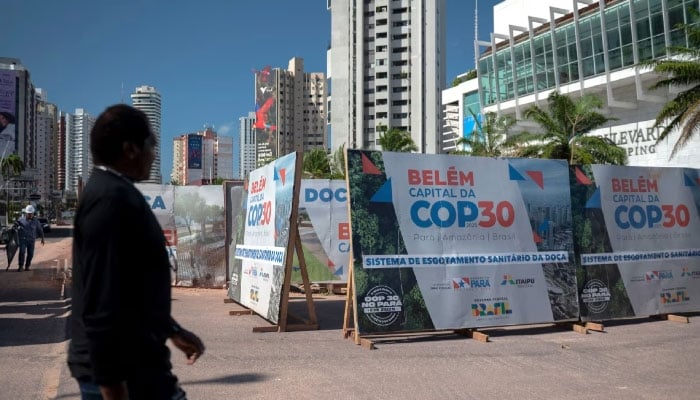
The usual explanation points to ‘risk’. A more uncomfortable and analytically sharper diagnosis lies elsewhere: climate finance today increasingly resembles Akerlof’s Market for Lemons, crippled not by a lack of money but by a lack of credible data. The outcomes of COP30 in Belem quietly reinforced this reality, while political signals to scale up finance, especially for adaptation, were strong, negotiations repeatedly circled back to the same constraint: without robust transparency frameworks, credible data and implementation-ready country platforms, ambition cannot be translated into bankable action.
In his Nobel-winning insight, economist George Akerlof showed how markets fail when sellers know more about product quality than buyers. Unable to distinguish good cars from bad ones, buyers price everything as average, or worse. High-quality sellers exit. What remains are lemons. Importantly, this outcome arises not from dishonesty but from rational behaviour under asymmetric information.
Climate finance now finds itself trapped in a similar equilibrium. Project developers, governments, and intermediaries typically possess far more information than financiers about the true climate quality of investments: whether emissions reductions are genuinely additional, whether adaptation benefits are durable, whether governance risks are manageable and whether policy commitments will survive political cycles.
Financiers, facing fragmented datasets, inconsistent baselines, weak monitoring systems and unverifiable claims, respond rationally by discounting all projects. The result is adverse selection: high-integrity climate projects struggle to secure affordable capital, while marginal or cosmetic projects find it easier to survive.
This problem is most visible in carbon markets. When buyers cannot reliably distinguish high-quality from low-quality carbon credits, prices converge to the bottom. Developers with rigorous measurement, reporting, and verification (MRV) systems face higher costs but receive little premium in return. Over time, serious actors exit or scale back, while the market is flooded with credits that meet minimum formal criteria but deliver limited climate value. The collapse of trust is not accidental; it is endogenous.
Yet the same logic extends far beyond carbon. Green bonds, sustainability-linked loans, adaptation funds and blended finance instruments all suffer from data opacity. Emissions inventories are outdated or incomplete. Climate risk data is patchy. Project-level performance data is rarely harmonised across jurisdictions. Ex-post verification is the exception, not the rule. In such an environment, financiers behave conservatively – not because they oppose climate action, but because they cannot price quality.
The tragedy is that this lemon’s equilibrium penalises precisely those regions where climate finance is most needed. In many developing countries, climate returns are high, but data systems are weak. Investors respond by demanding sovereign guarantees, political risk insurance, or short maturities, conditions that blunt the transformational impact. What is labelled ‘lack of bankable projects’ is, in reality, a lack of bankable information.
This has profound policy implications. If the climate finance market is failing due to information asymmetry, then disclosure rules, MRV systems, national registries and standardised taxonomies are not bureaucratic luxuries; they are market-enabling infrastructure. Just as warranties and branding rescued Akerlof’s used-car market, credible public data systems can rescue climate finance from adverse selection.
Article 6 of the Paris Agreement offers a partial escape route, but only if treated as infrastructure rather than accounting. Robust national registries, transparent corresponding adjustments, interoperable data platforms, and post-issuance performance tracking can help separate genuine mitigation from mere labeling. Similarly, transition credits, if grounded in verified plant-level and grid-level data, could prevent the premature pricing collapse that plagues voluntary markets.
For countries like Pakistan, the lesson is especially salient. The country faces a paradox of surplus electricity capacity, rising solar penetration, looming carbon border measures and constrained fiscal space. Climate finance could support the transition from coal, grid modernisation and industrial decarbonisation. But without credible, continuous and transparent data on emissions, dispatch, curtailment and financial flows, capital will remain cautious, fragmented and overpriced.
The solution to climate finance’s lemons problem does not lie in louder pledges or more acronyms, but in systematic market repair, the same kind of repair Akerlof himself argued was necessary when information asymmetries threaten market survival.
First, climate finance must be anchored in integrated climate and development planning rather than fragmented projects. Countries need coherent national climate investment pipelines that link mitigation, adaptation, energy, industry and fiscal policy into a single planning logic. A Country Platform, bringing together government, regulators, financiers, MDBs and the private sector, can serve as the institutional backbone of this integration. Such platforms reduce information asymmetry by aligning policy signals, sequencing reforms, and clarifying long-term transition pathways. When investors see how individual projects fit into a nationally endorsed transition trajectory, uncertainty declines and capital costs follow. Fragmentation produces lemons; integration restores confidence.
Second, transparency must be treated as market infrastructure, not compliance theatre. Credible climate finance depends on timely, granular, and comparable data across emissions, finance, and outcomes. This requires strengthening MRV systems, interoperable national registries, and open-access data platforms that allow financiers to verify claims ex post, not merely trust them ex ante.
In this context, Biennial Transparency Reports (BTRs) under the Paris Agreement should be elevated from reporting exercises to investment-grade documents, linking emissions trajectories, policy actions and financial needs in a manner intelligible to markets. When transparency is weak, investors price everything defensively; when transparency is credible, quality can finally command a premium.
Third, integrity must be explicitly rewarded, not assumed. Markets cannot function if high-integrity projects bear higher costs without higher returns. Public policy and MDB instruments must therefore create quality-differentiated pricing through guarantees, concessional tranches, transition credits or results-based payments tied to verified performance. This mirrors the logic of warranties in Akerlof’s original model: they keep good sellers in the market by signaling quality credibly. Integrity frameworks, whether for carbon credits, green bonds, or transition finance, must be enforceable, auditable and costly to fake; otherwise, they merely rename the lemons.
Fourth, international climate governance must reduce, not export, information asymmetry. Standardised taxonomies, harmonised disclosure rules and mutual recognition of data systems can prevent Global South projects from being discounted simply due to jurisdictional opacity. Article 6 mechanisms, if built on robust registries and transparent corresponding adjustments, can serve as cross-border quality signals rather than accounting loopholes. Without such coordination, climate finance will continue to reward geography over performance.
Finally, it is worth returning explicitly to Akerlof’s own theoretical remedies. He argued that markets plagued by lemons require institutions that signal quality, such as guarantees, standards, reputation mechanisms and regulation. Climate finance needs the same. Strong public disclosure rules, third-party verification, reputational penalties for low-integrity actors and selective state intervention are not distortions; they are preconditions for market survival. In Akerlof’s terms, the choice is not between free markets and regulation; it is between regulated markets and no markets at all.
Climate finance today sits at that crossroads. Without integrated planning, transparency, and integrity, capital will continue to retreat into caution, pricing ambition as if it were mediocrity. With them, the market can finally distinguish real decarbonisation from decorative climate action and begin rewarding the former accordingly.
The uncomfortable truth is this: climate finance is not failing because investors are short-sighted or unethical. It is failing because markets cannot distinguish peaches from lemons. And when everything is priced as a lemon, even the best projects begin to taste sour.
Fixing this does not require more rhetoric or bigger pledges. It requires investment in data as a public good – a boring, technical and profoundly transformative endeavour. Until then, the climate finance market will continue to do exactly what Akerlof predicted: punish quality, reward opacity and quietly undermine its own purpose.
In climate economics, as in used cars, information is destiny.
The writer has a doctorate in energy economics and serves as a research fellow at the Sustainable Development Policy Institute (SDPI).
Twitter/X: @Khalidwaleed_
Email: [email protected]