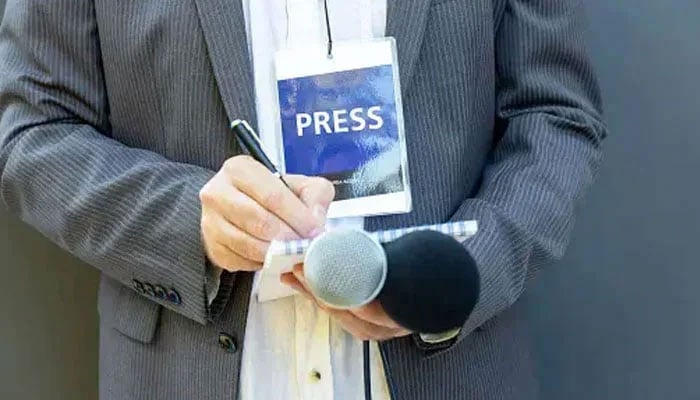
I wear two hats. One is that of a journalist. The other of a teacher who is supposed to walk into a classroom full of 18–19-year-olds and expected to make sense of the world for them.
Most days, the hats sit politely side by side. But some days, they collide head-on. That collision happened recently while I was putting together a course outline on Pakistan’s history. One of the modules is gender – men, women, trans rights, the constitution, law, religion, society and, because I refuse to treat it as an afterthought, class. [Note: Gender without class is just theory with good lighting].
And that’s when journalism barged in. At the same time that I was designing lectures, I was also reading (and being appalled by) recent court judgments for an editorial. Judgments that would be darkly comic if they weren’t so cruel. You read them once in disbelief, then again just to make sure you didn’t imagine them.
The Supreme Court has somehow managed to turn rape into ‘fornication’, effectively informing a survivor that what happened to her wasn’t rape. The Lahore High Court has declared that marital rape doesn’t exist – because marriage apparently cancels consent. And somewhere in between, a judge decided to write about how live-in relationships could lead to murder.
So there I was, staring at my course outline and wondering: what exactly am I supposed to do with this? How do I explain to students that the constitution promises dignity and equality, while the courts charged with upholding it seem determined to hollow those words out? How do I teach ‘rights’ when the institutions meant to protect them keep moving the goalposts, especially for women?
How do we live in a world this skewed? And no, this is not a uniquely Pakistani disease. The global moral rot is alive and kicking – quite shamelessly.
We watched Western feminists theatrically cut their hair for Iranian women – tears, slogans, viral videos, solidarity merch all there. And then we watched the same voices go conspicuously silent when Palestinian women were bombed, starved, raped, displaced and erased (still are, in fact, along with Palestinian men and children). Apparently, some women are easier to hashtag than others.
Easy, isn’t it?
This selective feminism is dangerous, dishonest and teaches young people that outrage is optional and morality is negotiable. Of course, class complicates everything – at least to me or those of us that still call it class and not ‘privilege’.
But interestingly, one of the few spaces where gender violence cuts across class is the online world. The internet is the great equaliser in cruelty. Whether you’re working class or elite, liberal or conservative, hijabi or not, the trolling machine doesn’t discriminate.
Even someone like me who finds girl-boss feminism exhausting and its liberal performance deeply nauseating can see how online abuse flattens difference. One example that is right in front of us is that of the very wonderful Asma Shirazi, who has been viciously trolled for years now. Campaigns of bullying, character assassination and threats, all powered by anonymity. The internet has turned impunity into a sport and women journalists seem to be fair game.
So I circle right back to the question that keeps coming back to haunt me: what do I do with all this? What do I teach the young ones sitting in front of me, scrolling through a world that tells them they are free while constantly policing their clothes, their voices and their bodies? What do I write in editorials when the system itself refuses to acknowledge harm? Probably the same old things. Because repetition can be resistance? Perhaps?
How do you give hope to a generation entering a Pakistan that has touched modernity in fragments – young women studying, working, organising, creating and yet still being dragged back into the same idiotic arguments about honour, virtue and visibility?
Maybe, as my friend Mehmal Sarfraz suggested during her recent Geo Report Card appearance, our judges need to sit down and watch Case No 9 by Shahzeb Khanzada.
Perhaps it’s time to rethink both conservatism and liberalism as they currently exist. Conservatism that polices women while excusing violence and liberalism that celebrates ‘choice’ selectively, depending on whose politics are aligned – these are both performances that do not help women.
Because whether it’s Bihar’s Nitish Kumar thinking it’s funny to yank a niqab off a woman’s face, or Bombay’s Javed Akhtar believing he has the moral authority to lecture women about veiling, or our higher judiciary telling women the violence they have faced is not really violence – can they all please just sit down?
Women do not need saving. But they do need the law. And they do need justice – without any philosophical gymnastics accompanying it.
The writer heads the op-ed desk in this newspaper and teaches college and university students. She says stuff on X @zburki and can be reached at: [email protected]