The sea is a poor archivist of borders. Tides erase lines, fog dissolves landmarks and currents carry small boats across coordinates that exist more clearly on paper than on water. Yet in South Asia’s north-western corner, where Pakistan and India face each other across the creeks of Sir Creek, the ocean has repeatedly become a courtroom.
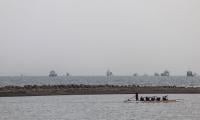
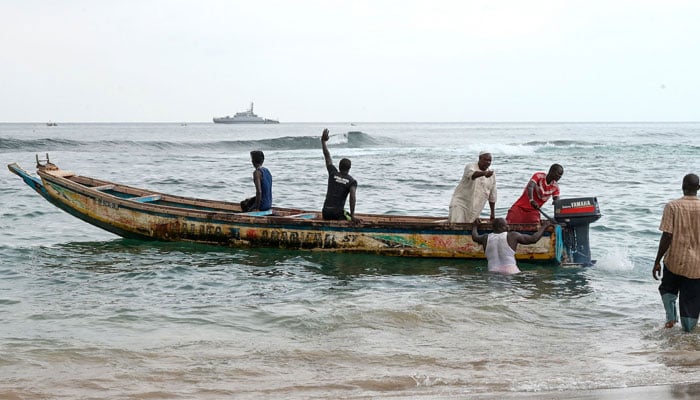
On December 10, eleven Pakistani fishermen from Ibrahim Hyderi, a working-class fishing settlement in Karachi, were taken into custody by the Indian Coast Guard near the marshy channels of the Sir Creek region. Among them were two children. Their alleged offence was not sabotage or smuggling, but losing direction in heavy fog. Such incidents have become so familiar that they barely register beyond brief headlines and diplomatic murmurs.
What distinguishes this episode is not its novelty but its clarity. Two of the detainees are minors, separated from their families and placed into a system designed for adult offenders. That single fact strips away the usual rhetorical cover of sovereignty and security. It exposes a problem that has long been mislabelled as a border dispute when it is, in truth, a recurring human-rights failure. Fishing communities along the coasts of Sindh and Gujarat have long lived in a twilight zone between geography and geopolitics. Sir Creek, a narrow estuary shaped by shifting silt and mangroves, has never been conclusively demarcated despite rounds of technical talks and survey missions. The channel itself moves over time, rendering fixed reference points unreliable.
Small fishing boats, many without sophisticated navigation equipment, operate in these waters daily. When visibility drops or engines falter, crossing an invisible line is less a decision than an accident. To criminalise such moments is to criminalise uncertainty itself. Both India and Pakistan know this. Their coast guards encounter accidental crossings regularly, and both countries’ prisons hold fishermen from the other side at any given moment. Over the past two decades, hundreds – perhaps thousands – of fishermen have been detained, sentenced under domestic laws and released only after diplomatic negotiations. Each release is announced as a gesture of goodwill. Each arrest restarts the cycle.
Civil-society groups in Pakistan have repeatedly drawn attention to the social cost borne by fishing families when a breadwinner disappears across the maritime horizon and into a foreign jail. Similar advocacy exists in India, where fishermen’s unions and lawyers have documented the hardships faced by Gujarati families when their boats stray and do not return. The symmetry is striking. So is the persistence of inaction. The detention of children sharpens the moral stakes. International norms regarding child welfare are not ambiguous.
Children are meant to be protected from detention except in the most extreme circumstances, and even then, only briefly and with special safeguards. Holding minors in foreign custody for a navigational error violates the spirit of these principles, even if authorities insist on legal formality. It also contradicts common sense. Children do not choose maritime routes, negotiate coordinates or assess political risk. They accompany older adults because poverty leaves families with few alternatives. In communities such as Ibrahim Hyderi, fishing is not an occupation chosen following career counselling. It is inherited, informal and precarious.
Boats are often owned collectively or financed through debt. Daily earnings depend on weather, fuel prices and luck. When a fisherman is detained, income stops immediately. When a boat is seized, the damage becomes structural. Families fall behind on loans, children leave school and nutrition worsens. When the detained person is himself a child, the harm becomes both economic and psychological. The cost is paid in missed meals and long nights.
Governments often defend arrests by invoking maritime law and the need to protect territorial waters. Yet even the most sovereignty-conscious reading of international maritime practice does not require imprisonment as a default response. Enforcement tools exist that are proportionate, administrative and reversible. Identification, warning, escorting vessels back to safe waters, or imposing fines are all options used elsewhere in the world.
The choice to rely on incarceration is therefore not mandated by law; it is chosen. Past experience demonstrates that alternatives are viable. On multiple occasions over the years, both India and Pakistan have released large groups of fishermen after confirming nationality and completing paperwork. These releases have occurred during periods of both tense and calmer relations. They have been carried out through established land crossings after weeks or months of detention.
The machinery for repatriation exists. What is missing is urgency. The existence of formal mechanisms makes prolonged detention harder to justify. Since 2008, the two countries have maintained an agreement that requires regular exchange of information about prisoners, including fishermen. Lists are shared twice a year. Consular access is meant to follow. In theory, this framework should prevent people from being forgotten. In practice, it often functions as a waiting room, where cases linger until diplomatic attention returns. For fishermen, time is not neutral. Every additional week deepens hardship.
There is also an unspoken political economy behind these arrests. Fishermen are easy detainees. They do not mobilise large constituencies. They lack lawyers, media reach and political patrons. Detaining them signals vigilance at minimal domestic cost. Releasing them, by contrast, requires bureaucratic effort and political decision-making. This imbalance explains why arrests are swift while releases are slow. The logic breaks down when children are involved. No credible security argument can justify holding minors as leverage or precedent. Doing so undermines the very claim states make when they assert adherence to international norms. It also damages trust at the local level, where communities that already feel marginalised interpret such actions as proof that their lives matter less than lines on a map.
History suggests that incremental cooperation is possible even when larger disputes remain unresolved. India and Pakistan have, in the past, coordinated on humanitarian exchanges, disaster relief and limited confidence-building measures despite hostility elsewhere. Fishermen should be the least controversial domain for such cooperation. They do not implicate core territorial claims. They do not alter military balances. They simply acknowledge shared humanity.
Practical solutions are not difficult to imagine. A joint protocol for accidental crossings could establish rapid screening and repatriation timelines, especially under adverse weather conditions. Dedicated communication channels between coast guards could allow real-time coordination rather than post-arrest paperwork. Shared investment in basic navigation technology for small boats would cost far less than maintaining fishermen in jail. Even symbolic measures – such as joint public statements committing to the immediate return of minors – would shift incentives.
Boat confiscation, an often-ignored aspect of the problem, also deserves attention. When vessels are impounded for extended periods, families lose not only income but also the means to recover it. Promptly returning boats or implementing compensation mechanisms would reduce desperation and discourage risky fishing trips. It would also signal that enforcement is about safety, not punishment.
Some argue that leniency could encourage illegal fishing. The evidence for this is thin. Fishing routes are dictated by fish stocks, fuel costs and survival, not by assessments of jail terms across a disputed creek. What deters dangerous behaviour is predictability and support, not fear. Clear rules, reliable communication and humane enforcement are more effective than sporadic crackdowns.
The broader regional context reinforces the urgency. Climate change is altering fish migration patterns and increasing pressure on coastal livelihoods. As catches decline, fishermen travel farther and stay out longer. The risk of accidental crossings will grow. Treating each incident as a criminal matter is therefore unsustainable. It locks states into a cycle that punishes the vulnerable while leaving root causes untouched.
The December 2025 arrests should therefore be treated as a test case. The immediate priority should be the release and repatriation of all eleven fishermen, with the children returned without delay. This should not be framed as a concession or favour, but rather as compliance with basic human rights principles.
Beyond the immediate case lies a larger choice. India and Pakistan can continue to outsource their unresolved maritime boundary to the bodies of fishermen, allowing poverty and fog to trigger imprisonment. Or they can decide that certain issues – especially those involving children – are too small, too human and too repetitive to be held hostage to rivalry. The second path requires less courage than it appears. It requires only consistency.
The writer is dean of the faculty of liberal arts at a private university in Karachi. He tweets/posts @NaazirMahmood and can be reached at: [email protected]