This is that time of the year when, in a sense, “We look before and after, / And pine for what is not”. In the second half of the last month of the year, we feel inclined to take stock of the year that is about to end and to look ahead, confusedly, to another year in our lives.
Universally, this is supposed to be a season of joy and hope. Even beyond the Christened world, Christmas and the New Year are celebrated with lights and festivities. In most Western countries, streets and homes begin to be illuminated weeks before the occasion. Choosing gifts for family and friends becomes a serious business.
And the New Year is certainly a valid excuse for celebration. It comes with solemn resolutions for, say, doing things differently. In most cultures, the new year, even if they do not follow the Gregorian calendar, is a time to rejoice.
For instance, the Chinese lunar new year, which begins on a date between January 21 and February 20, is a spring festival that is celebrated as the most important and hectic time of the year. The year of the fire horse will arrive on February 17. It is similar to Nowruz, which is celebrated in Iran and a number of other Central Asian countries, and it coincides with the spring equinox.
Talking about the new year and festivals that are marked by communal joy and happiness, I need to mention that Basant is being revived in Lahore after nearly a quarter of a century, though with some limitations. In its heyday, Lahore’s Basant was really a many-splendoured thing. What happened to it and why it was banned is a story that tells a lot about our capacity to damage things that allow people to be happy and have fun. Anyhow, let us see what we do with this new incarnation of Basant.
Meanwhile, we have to contend with certain thoughts and feelings that are also seasonal for us. What I mean is that the second half of December has some references that are exclusive for us, in Pakistan. I was hesitating to come straight to it because that has become an annual expression of the kind of bereavement that we just cannot comprehend.
Yes, December 16 is staring us in the face. Every year, this day of infamy comes with its ‘slings and arrows’. There is something about this date because its lightning has struck twice in the same country. Does that make Pakistan a country specifically jinxed? Are there other manifestations of the fault in our stars?
First, of course, there is the sixteenth of December that came in 1971. That was more than half a century ago. But momentous events that affect the destiny of millions of people are not to be forgotten. So, how have our historians dealt with the loss of the eastern wing of Pakistan and what lessons have been drawn from that tragedy?
I have said that I did not wish to focus entirely on the sixteenth of December because the grief that it rouses has been with us for so long, and we have been talking about it. It is about the same as the other tragedy that occurred on the same date, though it is more recent.
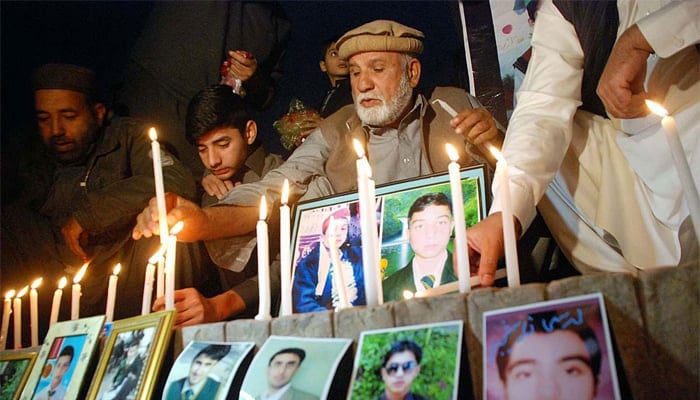
You may have noticed that on this year’s December 16, some top officials issued statements on the eleventh anniversary of the massacre of our schoolchildren in Peshawar’s Army Public School. One reference here is that the spectre of terrorism is still haunting the Islamic Republic of Pakistan. Ah, but we also remain uncertain about what we have learnt from this tragedy.
So much for the sixteenth of December. There is another date in late December that has left a void in our heart, in a national context. That is the 27th. The year was 2007. Again, the assassination of Benazir Bhutto is a tragedy hard to bear. It would be fair to assume that it changed the political history of Pakistan. I have some precious memories of Benazir. Thus, there is an emotional element of a personal kind in this national tragedy.
While I invoke these historical events and underline our inability or unwillingness to interpret them against the backdrop of our present conditions, the nation’s current mood is also very relevant. Actually, this gloomy environment has prompted me to recall the past tragedies of December.
T S Eliot had called April the ‘cruelest’ month because he saw its promise of rebirth and hope as not relevant in the situation he was describing. December is our cruelest month for more valid reasons. Yet, it brings a season of festivity that I noted at the outset. Time passes and 2025 is coming to an end and the New Year is only ten days from today. We cannot disengage ourselves from the social and cultural and even meteorological vibes of the season. Though winter is still very mild in Karachi, this is the time for festivals and festivities.
In Karachi, a five-day World Book Fair opened on Thursday. But the highlight of the season will be the 18th International Urdu Conference of the Pakistan Arts Council, Karachi. The four-day event will begin on December 25.
At the personal level, some exciting things may be happening. Socially, it could be a busy calendar. In particular, this is an opportune time for weddings and many of us may have a wedding in our own family. A wedding is quite like a festival that extends to three or four days.
When I talk about an environment of gloom and anxiety, it should be possible to include the entire world. So much, such as the Bondi Beach attack in Sydney, has happened in different parts of the world. One headline, quoting a leading American economist, said: “We are living through a singularly turbulent time”.
This means that they will have a lot to talk about when they get together at lavish wedding receptions.
The writer is a senior journalist. He can be reached at: [email protected]