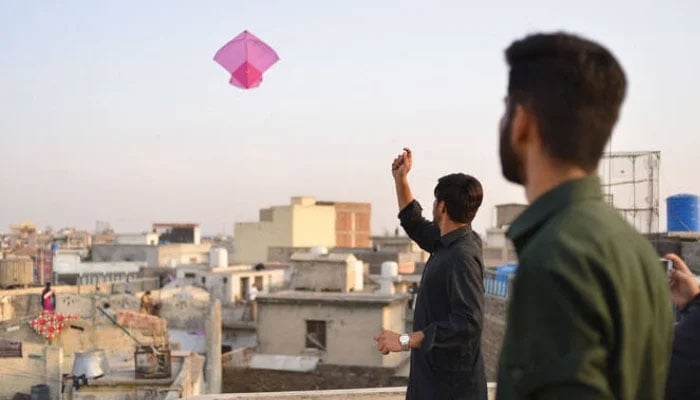
For nearly two decades, Basant has lived in the uneasy space between longing and liability. The memories are vivid – rooftops filled with music, colours rising into the Lahore sky, neighbourhood rivalries decided by a single bo-kata.
Yet the ban that followed was not arbitrary but the culmination of preventable tragedies, counterfeit strings, unregulated manufacturing and a festival that became too dangerous for the modern city it occupied. As conversations reopen about bringing Basant back, the question is no longer whether people want it. They do. The real question is whether the state can regulate it without repeating yesterday’s mistakes.
This time, the answer may lie in technology rather than tradition. The emerging Smart Basant model proposes something unprecedented: every kite entering the sky would be a registered object, authenticated through secure dual QR codes – the same grade used to protect State Bank securities and pharmaceutical batches. These QR codes do more than identify a kite; they bind it to an approved string type and size category, creating a synchronised pairing that ensures compliance with safety standards.
No kite can be launched until it is scanned through the Basant app, which verifies authenticity, size, pairing and the legitimacy of the rooftop from which it is being flown. Once validated, the app activates GPS tracking, transforming kite flying from an anonymous pastime into a geo-triangulated, fully traceable event.
The real innovation, however, appears not at takeoff but at the moment a kite is cut. In traditional Basant culture, the fallen kite belonged to whoever could chase it down and claim it. But from a regulatory standpoint, a cut kite is no longer a benign souvenir. When the string snaps, the kite’s aerodynamic balance is compromised. The bamboo or carbon ribs experience a sudden torsional shock, altering the kite’s flight profile in ways invisible to the naked eye but critical for safety.
A cut kite cannot be expected to re-enter flight without increased risk. The string–kite pairing stored in its QR code also becomes invalid. The system marks the kite as ‘retired’, preventing re-registration or re-use. This principle is essential not only for safety but also for accountability. If a cut kite is unlawfully re-flown and causes injury, determining liability becomes impossible. Technology cannot regulate what the system no longer recognises.
Under the Smart Basant framework, each cut event is recorded through a quick photo submission by the winning flyer. The losing flyer cannot activate another kite until this registration is completed, preventing manipulation of scores or inventory. This converts paich – the airborne duel – into a governed competitive activity with digital integrity.
Meanwhile, fallen kites are recovered not by children climbing electricity poles or chasing through traffic, but by trained Suthra Punjab teams assigned for safe retrieval. These teams deposit kites at designated depots where QR codes are scanned to generate analytics. The data reveals which manufacturers produce durable kites, which batches fail early, and which retailers maintain compliance, creating an unprecedented feedback loop for a historically informal industry.
At the backend, a serverless data system allows the government to monitor real-time kite density, safety hotspots, complaint clusters, rooftop activity, manufacturer performance and revenue collection. Each flight activation contributes a small micro-fee – an amount small enough for the public but large enough at scale to fund enforcement, youth programs, prize pools and operational costs. This transforms Basant into a self-sustaining civic event rather than a burden on provincial resources.
Critics may argue that this level of oversight sanitises a festival defined by spontaneity. Yet a city of nearly 15 million people cannot afford nostalgia without responsibility. The ban was not imposed because Basant lost its charm; it was imposed because Lahore could not absorb its risks. A regulated, traceable, technology-driven Basant offers a rare opportunity: to restore cultural joy without reopening the wounds that led to the festival’s closure.
A kite, once cut, has lived its full life. Letting it return to the sky would bring us back to an era of unchecked risk. Letting technology guide Basant forward offers something better – a festival where colour, competition and celebration can rise again, but this time without leaving casualties in their wake.
The writer is an electronics engineer with over 11 years of experience in Pakistan’s solar and renewable energy sector. He tweets/posts @zorayskhalid and can be reached at: LinkedIn.com/in/zorays or zorayskhalid.com