When I stepped out of my room in the morning for breakfast, I was told not to leave the hotel. Stay inside. This was Saturday last, on January 31. It seemed a grim warning, prompting dark apprehensions about what might be happening outside.
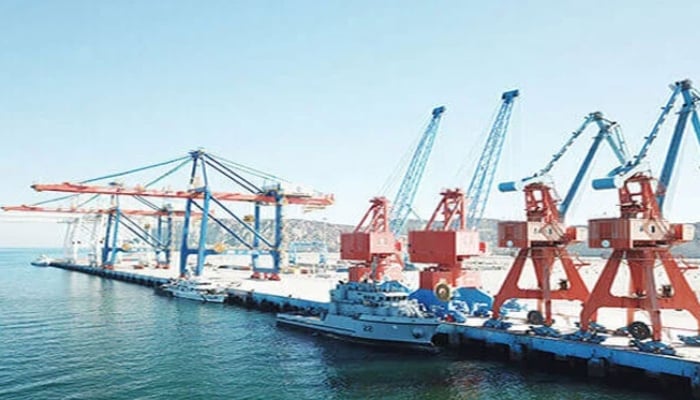
Ah, but where was I to have suddenly landed in such a dramatic situation? Well, I was in Gwadar, the port city of Balochistan. And I was there as a participant in the Gwadar Book Festival. This means that the journey, by road from Karachi, was not undertaken to explore the region's security situation but to indulge in the most peaceful and enlightened activity possible for any community, anywhere.
Now, I need to return to what happened that day, though I do not intend to delve into the broader political and security situation in the troubled province. It would be hard for me to make sense of the complex internal and external factors, and of the status of separatist militancy, which has been present for a fairly long time. I am only trying to sort out some memories of an experience that became so exceptional for me as an observer.
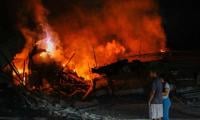
Anyhow, there were simultaneous terrorist attacks in at least 12 cities and towns of Balochistan on that particular day. One highlight of this coordinated terrorist attack, revealing a certain level of command and reach of the militants, was the action that took place in Quetta, the fortified capital of the province.
Other places that figured in official reports were: Mastung, Nushki, Dalbandin, Kharan, Punjgur, Tump, Gwadar and Pasni. The statement issued by ISPR also said that terrorists targeted civilians in Gwadar and Kharan. Thus, Gwadar stood out in some ways and I was there.
In fact, I had already been familiar with the unrest that has existed in the province for more than two decades. Years ago, I participated in two fact-finding missions by the Human Rights Commission of Pakistan, led by Asma Jahangir.
So, confronted with this situation last weekend during my visit to Gwadar, I wondered why these conflicts linger for so long, almost endlessly. There is no accounting of the loss that the nation as an entity and the people at a human level have to suffer. Against this backdrop, the latest upsurge in violence raises some new questions. We may never know the truth of the encounters and the casualties that occurred on that fateful day but the obvious message is the vulnerability of the security structure that has been built in the province.
Personally, I felt cheated, because the Gwadar Book Festival had been on my wish list, and I could not be part of it after the Saturday and Sunday sessions had to be cancelled. There is great excitement this weekend in the literary and social circles in Karachi and Lahore as literary festivals are being held simultaneously. Their media coverage is extensive.
But the Gwadar book festival is unique in terms of where and how it is organised. It has become the city’s pride, with the area’s intelligentsia's passionate involvement. It is also an adventure for those who come from other cities in the country – and Gwadar is not an easy destination.
Though the festival had to be aborted, it became possible to get together with the panelists who were there and with a number of social and political notables of the region. We had long and spirited conversations on the developing situation in the province and the terrorist attacks lent a pulsating sense of urgency to our deliberations.
There was also time for a tour of the Shahi Bazaar in the old city. With its dilapidated structures and broken old wooden balconies, the place still has its magical air of the past. Drinking tea at its iconic Kareemka hotel, a busy dhaba of the rustic kind, I felt transposed to another time. Gwadar, without the security barriers, is a great place to visit. Its coast should be the envy of beaches that attract the world’s tourists.
Even more remarkable, from a tourist standpoint, is the Makran Coastal Highway that connects Gwadar with Karachi. Driving a distance of around 600 kilometres on it is an unforgettable experience. So much of it passes through the Hingol National Park, one of the country's largest. It contains mud volcanoes and the Hinglaj Mata Mandir, a fascinating Hindu shrine.
But the highway’s reputation, even beyond Pakistan, rests on its unique rock formations. The hills literally are giant sculptures carved by ocean winds and the natural forces of erosion. This spectacle would take your breath away. Two well-known formations are named the Princes of Hope and the Balochistan Sphinx.
Incidentally, there is a highly credible certification of the beauty and grandeur of this phenomenon. In April 2022, BBC World broadcast a feature with this intro: “Following a route once taken by Alexander the Great’s army, the Makran Coastal Highway is considered one of the most scenic – and fascinating – in South Asia”.
It is significant that this feature was part of a series the BBC had titled ‘The Open Road’ as a “celebration of the world’s most remarkable highways and byways”. But isn’t it a tragedy that this touristic wealth is out of bounds for the world’s travellers? Because of its strategic importance and unrest in the province, there are security checkpoints and the traffic is subject to certain regulations.
In his feature, the BBC reporter spoke about the Anti-Terrorism Force, “with AK 47s in hand”, checking his passport and the No Objection Certificate issued by the government to allow foreigners in sensitive areas.
Last Sunday, the three of us left Gwadar in the afternoon and reached Karachi before midnight. On the way, including within the city of Gwadar, we were checked seven times. With the full moon hovering above in the evening, we didn’t mind.
The writer is a senior journalist. He can be reached at: [email protected]