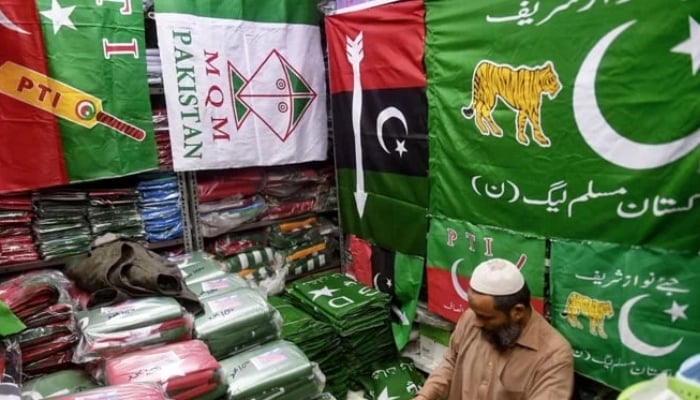
Outside election years, a major national party typically requires Rs5–10 billion a year just to function. This covers continuous political operations, not campaigning – and this in a system with 171 registered political parties.
Central party machinery – secretariat staff, media cells, legal teams, social media, polling, data, and narrative management – costs an estimated Rs1–2 billion annually. Provincial and district structures – offices, organisers, stipends, transport and patronage maintenance between elections – add another Rs2–3 billion per year.
Political mobilisation – jalsas, protests, logistics, and bail-legal cover – requires Rs1–2 billion. Media and relationship management – advertising, narrative placement, intermediaries, and “relationship costs” with power centres – consume a further Rs1–3 billion.
Put together, a normal year costs Rs5–10 billion; a pre-election year, Rs15–25 billion. A full election cycle runs to Rs50–75 billion. And lo and behold, only a small fraction of this ever appears in official party accounts. Much of that cash is off-book – hard to document, easy to deploy.
Red alert: after elections, the system must repay financiers and local networks. Repayment rarely comes in cash. It comes through tax exemptions, procurement contracts, regulatory waivers, tariff protections, discretionary postings and selective enforcement, and access to state land, permits, quotas and subsidies.
Over time, Pakistan has become a ‘rent factory’. Political finance pushes governments to keep sectors sufficiently regulated to extract rent, but not sufficiently reformed to become competitive.
Pakistan’s sugar sector is rent-prone – administered prices, export quotas and import bans. Remember, cartels thrive under regulation; competition is blocked. This is how rent is extracted: Price spikes become political bargaining chips and policy oscillates between export permission and import restriction. Economic damage: One, households overpay Rs500+ billion a year (over $1.8 billion). Two, farmers don’t gain; intermediaries do.
Yes, power and energy is rent-prone – complex tariffs, capacity payments and fuel pass-throughs. Regulation is dense, but governance is weak. This is how rent is extracted: Guaranteed returns via contracts, circular debt socialises losses; consumers pay through tariffs and taxes. Reform targets losses, but threatens financiers, fuel suppliers and local political patrons – so it stalls. Economic damage: High industrial power tariffs impose a direct competitiveness tax of roughly $1–2 billion a year – and when lost textile orders are added, the annual damage plausibly rises to $2–4 billion.
Yes, Pakistan’s trade policy and customs are rent-prone–tariff dispersion, exemptions and SRO-style carve-outs. This is how rent is extracted: sector-specific protection is negotiated through influence, and customs valuation disputes are settled informally. Not to forget that smuggling thrives where enforcement is selective.
Economic damage: Anti-export bias. Inefficient firms survive and consumers pay higher prices. Damage: $5-8 billion per year.
Rent exists because discretion exists. Political finance thrives where rules are flexible and enforcement is selective. Separate politics from cash by putting an end to invisible money. Remember, cartels survive when reform is piecemeal. When multiple rents are attacked at once, coordination among rent-seekers collapses. Solutions: Kill discretion. Separate politics from cash and open protected sectors simultaneously. Red alert: Pakistan’s economic damage is not accidental; it is financed. As long as politics runs on off-book money, policy will be written as repayment. Break the rent cycle and growth follows.
The writer is a columnist based in Islamabad. He tweets/posts @saleemfarrukh and can be reached at: [email protected]