This year, the United Nations turned 80 years old. But as Secretary-General Antonio Guterres launched his latest reform effort, the ‘UN80 Initiative’, there was little to be celebrating. At the same time as commemorative events praised the UN Charter and its foundational importance for peace, development and human rights, the UN system was facing draconian funding cuts that threatened to wipe out liquidity and undermine core operations. The Trump administration had dramatically withdrawn from the World Health Organisation earlier in January, then completely dismantled USAID shortly after. These were criminally inhumane acts when America is the UN’s largest single donor, and USAID – despite its flaws – still spent billions on vital health services, disaster relief and anti-poverty efforts.
The impact on the world’s developing nations is already devastating. Hundreds of aid organisations have shut down, leaving the humanitarian system at breaking point. The head of OCHA, the UN agency for coordinating emergency relief, spoke of funding cuts as a ‘seismic shock’ to a sector that suddenly contracted to one third of its size. The World Food Programme faced an alarming 40 percent drop in funding compared to last year, causing an unprecedented crisis for tens of millions across the globe reliant on food aid. UNICEF warned that the liquidity crunch is jeopardising lifesaving work, threatening to roll back advances in reducing child mortality. The UN refugee agency, UNHRC, announced that up to 11.6 million refugees and forcibly displaced people are at risk of losing access to direct humanitarian assistance. Many other UN health programmes that depended on US funds received termination notices, including for HIV treatment, AIDS, malaria and tuberculosis.
Global development in reverse: But the blame for this crisis doesn’t rest with the cruel, heartless Trump administration alone. Two dozen of the world’s richest nations are pulling back from their obligations for global development, with many slashing aid budgets and funds channelled through multilateral lenders. Here in Britain, the Labour government is cutting its foreign aid budget from an already meagre 0.5 percent to 0.3 percent of GNI, amounting to a 40 percent reduction in coming years. The Lancet medical journal estimated in June that cuts to USAID alone could result in more than 14 million additional deaths by 2030. A recent study by the Barcelona Institute for Global Health says the combined US and European cuts could lead to 22.6 million additional deaths by 2030, reversing decades of progress in global health and poverty reduction.
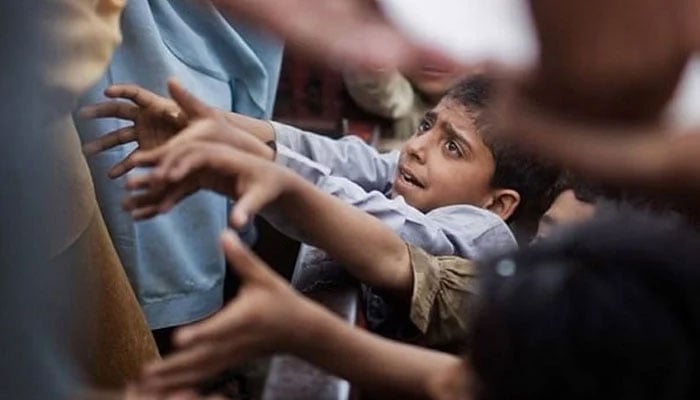
These decisions by our governments to drastically scale back the sharing of global resources is an insult to the founding vision of the United Nations. All year long, the UN has warned of a major hunger emergency with acute food insecurity set to worsen in 16 low-income countries, putting millions of lives at risk. Six are at the highest risk of famine or ‘catastrophic hunger’: Sudan, Palestine, South Sudan, Mali, Haiti and Yemen. Other countries of very high concern include the Democratic Republic of Congo, Myanmar, Nigeria, Somalia, Syria, and Afghanistan. Children in these ‘hotspots’ are particularly vulnerable as malnutrition weakens immunity, making them more susceptible to disease and death. Even before the aid cuts, the latest Global Report on Food Crises revealed that the number of starving people more than doubled in 2024 (mainly due to the horrifying weaponisation of hunger in the Gaza Strip and Sudan).
The causes of increasing food insecurity are complex and largely driven by an unrelenting wave of global crises including conflict, economic instability and climate-related emergencies. It is not due to a lack of global resources or population growth: FAO statistics show there is enough food produced to feed the world’s eight billion people, and a further three billion more. Indeed, the WFP estimates that less than one percent of the $21.9 trillion spent on military budgets over the past decade would be enough to end world hunger. Yet global military spending surged to a record high of $2.7 trillion in 2024, nearly 13 times the amount of official development assistance from the world’s wealthiest nations, and 750 times the UN regular budget in 2024. As Guterres remarked in a landmark UN report on The Security We Need: Rebalancing Military Spending for a Sustainable and Peaceful Future: ‘A more secure world begins by investing at least as much in fighting poverty as we do in fighting wars.’
Excerpted: ‘Where’s Our Outrage for the World’s Hungry, Dying Poor?’.
Courtesy: Commondreams.org