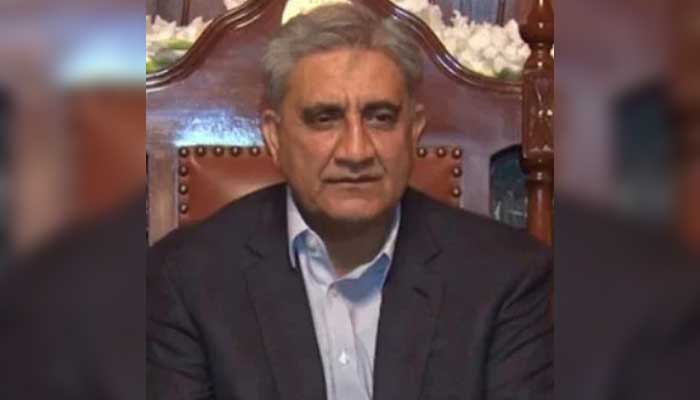
ISLAMABAD: Following the conviction of former DG ISI Lt-Gen (retd) Faiz Hameed, certain political and media circles have begun speculating about the possibility of legal action against former army chief Gen (retd) Qamar Javed Bajwa.
However, informed sources have dismissed such claims, stating that there is neither any probe nor any proceeding underway against Gen Bajwa.
Sources said the gossip being circulated in some quarters is baseless. According to them, the military accountability process that culminated in the conviction of Gen Faiz was strictly evidence-based and confined to his individual actions, with no material linking the former army chief to the case.
Instead, sources indicate that after the army concluded the accountability process against one of its own senior officers, expectations are growing that accountability could extend beyond the military domain. Judges, bureaucrats, politicians and even media persons who allegedly played roles in the past political engineering or overstepped constitutional and legal limits may come under scrutiny in the days to come.
A similar position had earlier been conveyed by the military spokesperson. In a last year press conference, the DG ISPR, while responding to questions arising from Gen Faiz’s arrest and court martial proceedings, made it clear that the military accountability system is transparent and does not operate on allegations or assumptions, but on solid evidence.
When asked whether former prime minister Imran Khan could be tried under the Army Act in connection with the Gen Faiz case, the DG ISPR had termed the question hypothetical and said the matter was sub judice. However, he underlined that under military law, if any individual is found to have used a person falling under the jurisdiction of the Army Act for personal or political gains, and evidence exists, the law would take its own course.
The military spokesman was also questioned about the role of former army chief Gen Bajwa and former DG ISI Lt Gen (retd) Naveed Mukhtar in the appointment and promotion of Gen Faiz. In response, the DG ISPR emphasized that it would be unfair to link others to the actions of an individual who, for his personal interests and at the behest of certain political elements, crossed his constitutional and legal limits.
These remarks, coupled with the absence of any evidence against Gen Bajwa or Gen Mukhtar, clearly suggest that there is no case against the former army chief in the Gen Faiz matter. Sources maintain that while there is no move against Gen Bajwa, the post-Faiz scenario should open the door for a broader accountability process aimed at those in civilian institutions who allegedly facilitated or benefited from unconstitutional conduct in the past. Such accountability, they say, would be essential to ensure that responsibility is fixed across the board and not selectively applied.