The tension between Kabul and Islamabad has created the impression that Pakistan has lost all allies in the landlocked country. It is claimed that Pakistan infuriated socialist and nationalist sections of Afghan society by supporting the Mujahideen during the late 1970s and 1980s. In the 1990s, we made another mistake by allying with Gulbadin Hekmatyar of Hizb-e-Islami, alienating other Mujahideen factions, and finally, after the rise of the Afghan Taliban in the mid-1990s, tying our fate to them and angering almost all non-Pashtun groups.
So, do we have any allies in Afghanistan now? Can we trust any group there? Can we tolerate the Afghan Taliban in our backyard as they hobnob with Islamabad's arch-enemy India? How does the Taliban rule affect Pakistan’s national security, already threatened by the presence of the TTP on Afghan soil? These are important questions that must be debated if we are to craft a realistic Afghan policy that serves Pakistan’s long-term interests.
There is speculation that Pakistan is trying to reconcile with the erstwhile Northern Alliance leaders to counter the Afghan Taliban’s bankrolling of TTP terrorists. Critics cite Islamabad’s invitation to some of these leaders to attend a moot in the federal capital as evidence. But others insist that anyone can participate in debates and discussions, and that such invitations do not necessarily signal a major policy shift.
Unlike the Taliban, the Northern Alliance is not monolithic. Its factions are also less disciplined. While the majority of the Taliban are Pashtun and Sunni, the alliance is riddled with sectarian and ethnic fault lines, and the non-Pashtun coalition lacks ideological coherence.
However, others argue that Pashtuns have not always been monolithic either, and that their movements have also been marked by factionalism and ideological differences. They claim Pakistan played an important role in forging unity among Taliban ranks by using financial and military assistance as leverage. They assert that without Pakistan’s support, the Taliban could never have defeated their rivals in the 1990s, and that their re-emergence was possible because Islamabad aided their guerrilla war against Nato.
Pacifists in Pakistan and Afghanistan argue that instead of creating any proxy, Islamabad should ally with the international community and anti-Taliban elements in Afghanistan. They argue there is no way the Northern Alliance can make any military headway because the Afghan Taliban today are more powerful than ever. Unlike the 1990s, they have not allowed Uzbeks, Tajiks or Hazaras to establish any power base. From the Panjshir Valley to Bamiyan, and from Uzbek to Turkmen areas, their grip appears strong everywhere.
In the past, Iran, Russia, the Central Asian States and India supported the alliance, but now almost all of them are friendly towards the Taliban, or at least unwilling to pick a fight with the holy warriors. Some Arab countries, like Qatar, also enjoy close ties with Kabul, leaving very little space for Islamabad to challenge this rising menace. This leaves Pakistan with the option of joining the international community alone. But some political observers believe that anti-Taliban Afghan women could become Pakistan’s best allies. The Taliban’s political opponents are overwhelmingly non-Pashtun men, and Kabul seeks to suppress them. Therefore, opposition to the Taliban is concentrated in non-Pashtun areas because Pashtun men largely see the Taliban as a source of ethnic empowerment. Thus, the Taliban are not unpopular everywhere in Afghanistan.
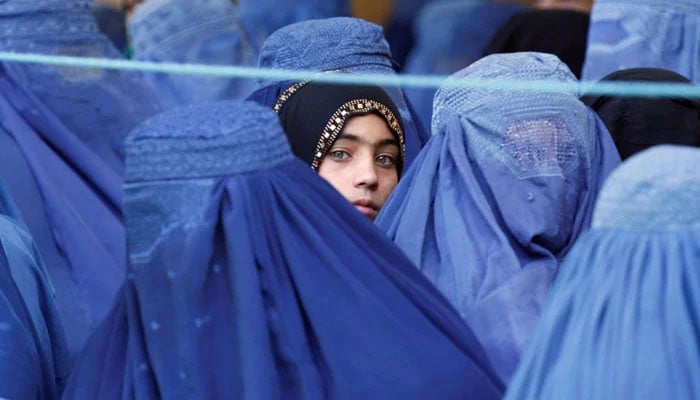
But their gender apartheid has affected women of all nationalities, ethnicities and sects. They have cracked down on Shia women, insulted Tajik female activists and humiliated Uzbek women’s rights workers. Progressive Pashtun women also deeply resent their tyrannical rule. This gender apartheid has also affected men in various sections of society. Thousands of men, many of them Pashtun, have been whipped or publicly punished for petty crimes or minor mistakes.
Tens of thousands of Afghan women have sought shelter in Western countries. They have been opposing Taliban atrocities at various forums and exposing their anti-women policies. Feminists worldwide are paying attention, organising rallies in solidarity, providing shelter and jobs and lobbying politicians to act against Kabul.
Thousands of such women have also taken refuge in Pakistan. Unfortunately, the government’s indiscriminate action against Afghan refugees is causing resentment among them. Islamabad must act against those Afghan nationals who may have sought refuge in Pakistan while collaborating with the TTP or with the holy warriors in Kabul’s power corridors, but it must not antagonise the tens of thousands of Afghan refugees who despise Taliban rule and have sought safety here to escape persecution.
Afghan singers, artists, journalists, teachers, lecturers, writers, politicians, former civil servants and NGO workers are among those staying in Pakistan and waiting to settle in Western countries. The plight of Afghan women is a major issue in the Western world, where women’s rights groups are hugely influential, and some Western governments have excellent female representation in their parliaments.
These Afghan women will face mortal danger if deported. Pakistan can easily win their hearts and minds by allowing them to stay until Western states issue visas. Islamabad must understand that these activists are likely to speak about the plight of Afghan women at international forums. They want to rebuild their shattered lives, and they will certainly remember that their survival was made possible by the kindness of the Islamic Republic.
Pakistan cannot pressure wealthy Arab states that bankroll the Kabul regime. Only the Western world and the broader international community are in a position to pressure the Taliban into changing their stance on cross-border terrorism. They can also compel Kabul to form an inclusive government and hold transparent elections in the war-torn country.
These Afghan women can greatly mobilise international opinion. Their stories are the most powerful way to expose Taliban atrocities. Their movement could also become a blessing for Pakistan. Therefore, Islamabad should be sympathetic towards Afghan women and other refugees, shelter them, work for their safe transport to Western countries and democratically confront the Kabul regime by aligning with the international community.
Pakistan needs allies in Afghanistan. In the past, it sided with dark forces that shut down schools and colleges for women, deprived them of livelihoods and erased them from public life. This time, it can undo its past mistakes by supporting these vulnerable women who have caused no harm to Pakistan and who bravely challenge the gender apartheid of the Afghan Taliban.
The writer is a freelance journalist who can be reached at: [email protected]