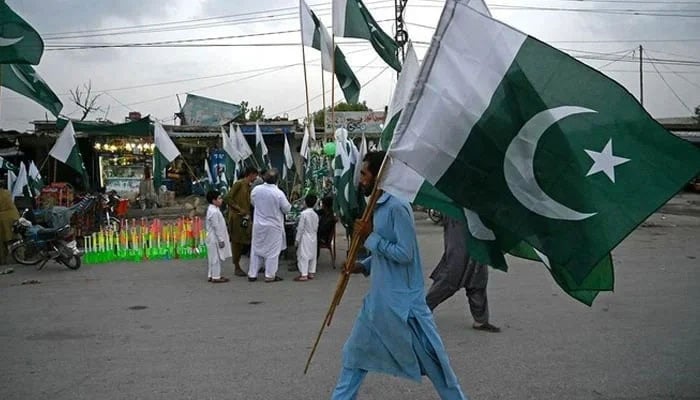
Same flag. Different country. Same green colour. Different operating system. Same parade ground. Different command culture. Same tank. Different turret. Same missile. Different guidance. Same payload. Different target set. Same terrain. Different theatre doctrine. Same rifle. Different sight. Same republic. Different model.
Old Pakistan was a noisy, dysfunctional democracy with a powerful army. Is New Pakistan going to be a quiet, disciplined state operating under a new military-led governance model?
Old Pakistan was fragmented – power dispersed, ministries divided, courts interventionist and decisions trapped in endless vetoes. New Pakistan is centralised – authority consolidated, judiciary restructured and command unified. Is New Pakistan going to be a state that decides and delivers? Old Pakistan drifted. Will New Pakistan direct?. Old Pakistan hesitated. Will New Pakistan act?
Old Pakistan had a political marketplace, not a state. In Old Pakistan, political parties traded power, ministries sold influence and the system became a bazaar where deals trumped decisions. Can New Pakistan become a rules-based state where decisions outlast deals?
Old Pakistan fed rent-seekers and starved producers. In Old Pakistan, SOEs consumed cash, cartels captured policy, and productive sectors were suffocated by taxes, controls, and uncertainty. Will New Pakistan reward production, foster competition and free enterprises from bureaucratic strangleholds?
Old Pakistan allowed veto points to multiply. Courts, provinces, regulators, ministries – every node could block action, and no node could enforce delivery. What will New Pakistan have – a streamlined state with unified authority? Will New Pakistan be defined by a single point of delivery?
Will the New Pakistan reward producers or rent-seekers? The New Pakistan must favour factories before favourites; competition before cartels. Will the New Pakistan promote officers who deliver and cashier those who only salute? Will the New Pakistan promote officers for results, not relationships? Will the New Pakistan institutionalise success and retire incompetence? Will the New Pakistan reward the man who produces wealth or the man who extracts it? The New Pakistan cannot function without three essentials: policy that holds, contracts that bind, and justice that moves.
Old Pakistan lived in a strange duality: the constitution said one thing, the power structure did another. Power has now stopped pretending. What was exercised behind the curtain is now codified in law. No more musical chairs between ministries, provinces, courts and committees. Remember, responsibility sits where authority sits.
In a centralised system, power is visible – and so is responsibility. Remember, when all authority sits at the apex, there is no one else to blame. If the economy slows, the leadership cannot point fingers at ministers or bureaucrats. If investors retreat, the leadership cannot point fingers at ministers or bureaucrats. If security weakens, the leadership cannot point fingers at ministers or bureaucrats.
Will ministries, in the New Pakistan, move in one direction? Will the state speak in one voice? Will merit become the operating system?
When power is centralised, excuses expire. Delivery becomes the only defence. In such a system, the apex cannot outsource failure; it must own both the verdict and the outcome.
The writer is a columnist based in Islamabad. He tweets/posts @saleemfarrukh and can be reached at: [email protected]