Islamabad:Dr Aqsa Shabbir, from Lahore College for Women University emphasised that smog mitigation in Punjab must shift from reactive closures to long-term prevention.
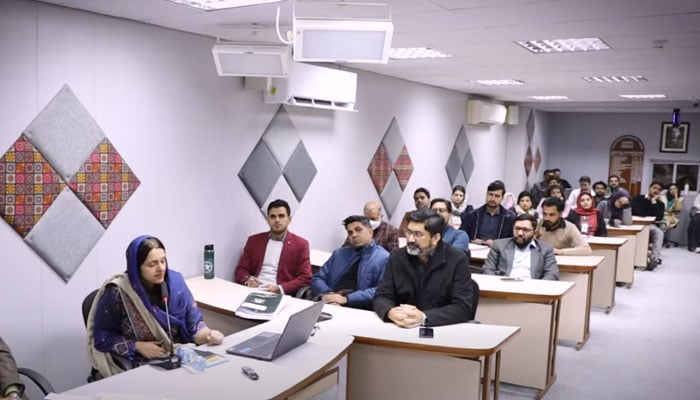
Dr Aqsa was addressing a seminar on “Clean air, green future: smog mitigation, resilience and carbon credit feasibility” hosted here by Pakistan Institute of Development Economics located at Quaid-i-Azam University Campus. The event brought together researchers and policymakers to discuss Lahore’s escalating smog crisis, sectoral emissions and emerging behavioural solutions for sustainable mobility.
She noted that Lahore’s air pollution accelerated after rapid industrialisation in the 1990s with smog becoming an annual emergency by 2016. Since then, 12 policy documents were produced including the Punjab Clean Air Policy (2023), Climate-Resilient Punjab Action Plan (2024) and the Smog Control Strategy (2024–25). Despite these frameworks, weak implementation, insufficient surveillance and low institutional capacity remain the biggest constraints, she highlighted.
She reiterated that the transport sector contributes up to 83 percent of Lahore’s emissions, followed by industry and agriculture. While initiatives such as vehicle inspection centres, fuel-quality monitoring and shifts to EVs appear promising on paper, gaps in coordination -- especially between the transport and energy departments -- hinder progress.
In agriculture, subsidised super seeders and rice straw shredders delivered partial success, yet affordability barriers, language-inaccessible awareness campaigns and inconsistent monitoring allow stubble burning to persist.