This is an address by the chief election commissioner of Reformistan: ‘On March 23, 2029, Reformistan witnessed what had long been dismissed as impossible: an election result that no party challenged.
‘There were no street protests, no emergency press conferences, no televised accusations of tampering, and no late-night disputes over who truly won. Instead, political parties – victors and losers alike – stood before the nation and said the same striking words: The people have spoken.
‘For decades, our elections were not defined by how people voted, but by how results were questioned. Losing parties blamed manipulation, winning parties were suspected of invisible support, and citizens cast ballots without belief. The core weakness was never ideology or leadership but reliance on human discretion in every step of the electoral process. When individuals manage elections, suspicion follows them; not necessarily because they are corrupt, but because discretion is vulnerable.
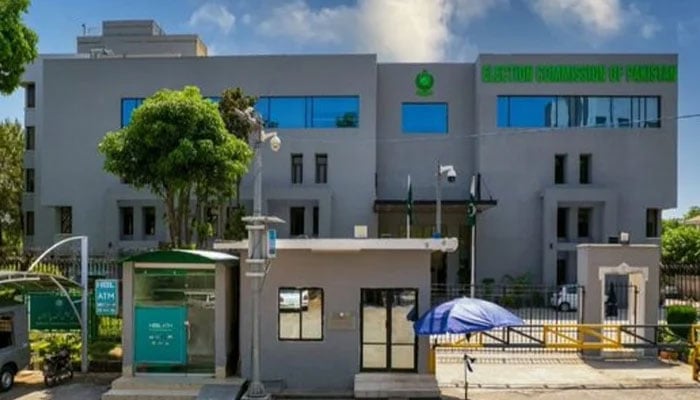
‘In 2025, the Election Commission of Reformistan (ECR) confronted this truth. We stopped asking citizens to ‘trust us’ and began building a system where no individual – not even the election commissioner – could alter outcomes. This shift was grounded in one simple rule: elections must be citizen-controlled and technology-guarded.
‘The first transformation replaced secrecy with transparency. A web and mobile portal digitised the registration of political parties and candidates. Instead of relying on Returning Officers behind closed doors, candidates uploaded all affidavits, financial disclosures, and qualification documents online. AI-based verification cross-checked these against national databases, detecting inconsistencies or false declarations within minutes. Once cleared, profiles became public, making scrutiny a right of citizens rather than a privilege of administrators. Elections were no longer filtered through hidden interpretation; they were laid bare for everyone to see.
‘The second reform eliminated backstage manipulation of physical materials. By 2027, every ballot box, seal and ballot packet was geo-tagged and linked to a QR code that citizens could scan with their phones. A public blockchain ledger logged each box from the warehouse to the counting table. The rumours of ‘extra boxes arriving at night’ died not through denial but through public traceability. Swapping or secretly moving ballot boxes became not just illegal but technically impossible.
‘The third reform ended the opaque, vulnerable chain of result compilation. In 2029, results did not travel up through administrative layers. They were completed at the polling station where votes were cast. Counting was conducted on the spot, signed digitally by polling staff and party agents using biometric verification, and uploaded instantly with time and location stamps.
‘Each result, once submitted, was locked on the blockchain and published for the public. There was no waiting, no transport, no middle authority capable of delaying, altering, or ‘rechecking’ results in secrecy. We removed every place where tampering could occur.
‘Fourth, this overhaul was not announced overnight. Between 2026 and 2028, more than 60 by-elections served as testing labs. Every glitch became public record. Every complaint became a lesson. Citizens watched the system being built, corrected, and refined. Trust did not arrive by proclamation; it emerged through participation.
‘Fifth, we confronted the new danger to democracy: misinformation. An AI-driven Deepfake-Kill Switch Protocol now automatically detects and blocks manipulated campaign videos. No candidate can be destroyed by a fabricated scandal hours before voting. Elections are no longer vulnerable to lies manufactured in audio-visual laboratories.
‘Sixth, we dismantled the dirtiest inequality in politics: money. Paid political advertisements were banned entirely. Every candidate now receives equal, state-provided digital space for manifestos, policy debates and voter engagement. We replaced the competition of wealth with a competition of ideas. A schoolteacher and a billionaire now contest elections on level ground.
‘Seventh, we opened democracy to public audit. For the first time, the entire 2029 election dataset – turnout, polling station counts, finance disclosures, nomination records and complaints – is freely downloadable in machine-readable form. Journalists, researchers, universities and civic groups can analyse, verify and critique the system. Democracy now invites scrutiny instead of fearing it.
‘This required not just tools, but talent. The ECR evolved from a clerical department into an institution of specialists: cybersecurity analysts, forensic auditors, statisticians, AI engineers, behavioural economists and legal scholars. Elections stopped being administrative tasks and became a technical ecosystem.
‘Most importantly, oversight was decentralised. Citizen observers uploaded photos, videos, and irregularity reports with timestamp and location data. A live national heat map displayed incidents in real time. Monitoring no longer belonged to a few officials – it belonged to millions of people.
‘To protect these reforms from political reversal, a Constitutional Guarantee for Electoral Continuity was enacted. No elected government can alter or suspend these digital systems. Election technology was placed in the hands of voters, not rulers.
‘Behind the scenes, a national cybersecurity shield continually stress-tests the election server. All software is open source, allowing experts and civil society to audit and improve it. Integrity isn’t achieved through secrecy but through exposure.
‘The 2029 election did not prove that voters suddenly trust politicians. It proved something far more powerful: voters trust systems that cannot be manipulated.
‘Reformistan did not revive democracy through promises, speeches or tribunals. We rebuilt trust by eliminating the need for trust. And finally, the ballot became stronger than influence – not by chance, but by design’.
[Note: this is a fictitious take on the future]
The writer is associate professor at the Pakistan Institute of Development Economics (PIDE). He can be reached at: [email protected]