NATHIA GALI: Strengthening safety standards in social security hospitals has become essential for improving care for millions of insured workers and their families, officials and experts said on Tuesday, pledging to build the capacity of the healthcare workforce and raise the quality of service delivery at these facilities.
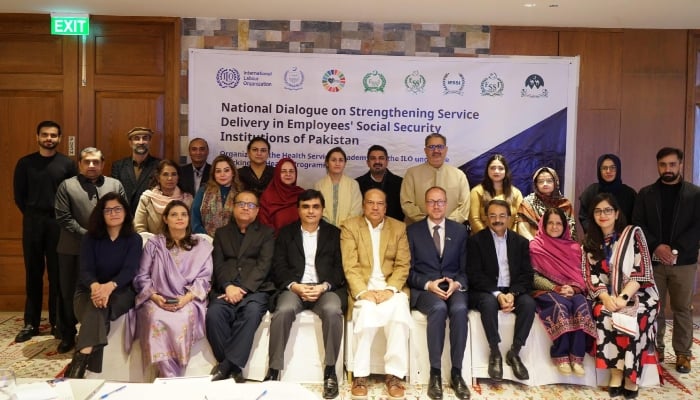
They were speaking at a national dialogue organised by the International Labour Organization (ILO) and the Health Services Academy (HSA). The two-day meeting, held under the Working for Health Programme of the ILO, OECD and the World Health Organization, brought together provincial Employees Social Security Institutions from Punjab, Sindh, Balochistan and Khyber Pakhtunkhwa.
Organisers said the goal is to create a more prevention focused and worker centred service delivery model by improving OSH practices, strengthening hospital governance and enhancing coordination across ESSIs.
ILO Country Director Geir Tonstol said social security hospitals are often the first line of protection for workers but cannot ensure quality care unless healthcare staff are protected through strong OSH systems.
HSA Vice Chancellor Professor Shahzad Ali Khan said the dialogue offered a chance to examine the entire system rather than isolated deficiencies. He said Pakistan must treat OSH as a basic requirement in all health facilities, improve supervision and invest in training so frontline staff are not exposed to preventable risks.
He added that the HSA will continue helping provincial institutions build capacity, share learning and move toward safer, better managed and accountable health services. PESSI Commissioner Muhammad Ali said their collaboration with the ILO has already produced measurable improvements through the HealthWISE toolkit, including safer waste handling, better ergonomics and more structured OSH training. He said stronger partnerships among provincial ESSIs will help expand quality care to a much larger share of the workforce.
Officials said the Working for Health Programme has given social security institutions the technical support and tools needed to modernise service delivery and embed safety, dignity and prevention into routine operations. They said such reforms are vital for creating a stronger and more equitable social protection system.