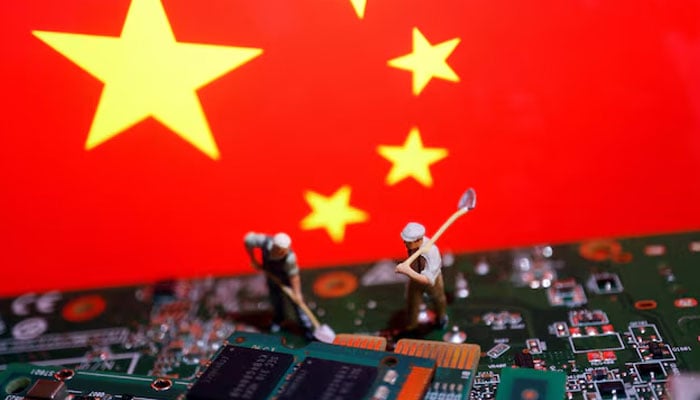
The future relies heavily on rare earth metals. Their unique magnetic, luminescent, and chemical properties make them essential components of the Fourth Industrial Revolution. They are critical for developing modern technologies such as smartphones, clean energy systems, televisions, computers, electric vehicles, missiles, fighter jets, airplanes, and electronic warfare tools. It is difficult to envision today’s economy and defense sectors functioning without rare earth metals. In short, modern life depends on them. Therefore, it’s widely recognized that a country controlling the supply chain for rare earth metals will likely lead the global economy and security, and China has secured that position.
Now, China is the undisputed leader in the supply chain of rare earth metals. It dominates the entire process, from mining, extraction, and refining to processing these metals. However, China did not reach this position overnight or easily. It is the result of decades of effort. China started working on rare earth metals even when the country faced challenges like slow growth, poverty, and food insecurity. In 1978, Comrade Deng Xiaoping made rare earth elements (REEs) a priority, believing they would be crucial for the country’s future. He appointed Fang Yi to lead the efforts. From there, China began to master the REEs supply chain and develop a vibrant domestic market for REEs.
First, China envisioned to use its resources more efficiently and expand its global influence; it needed to invest in research and development (R&D). Therefore, China concentrated on building REE-related research infrastructure to support research. Deng Xiaoping in 1980s issued specific directives to the newly established National Science Foundation regarding REEs. Thus, REE became a priority in the 863 strategic program, launched in 1986. This helped formalize REE research, especially funding for separation technologies and industrial applications. It is believed that this initiative served as a launching pad for China’s dominance in REEs.
The establishment of Baotou Pioneering Rare Earth Hi-Tech Development Zone in Inner Mongolia was another transformative initiative. The zone focuses on REE mining, production, and processing. It also emphasizes developing new technologies related to REE. Additionally, China has set up two leading research centres in the zone: the Baotou Rare Earth Research Institute and the Chinese Academy of Sciences’ R&D centre. These centre aim to turn the zone and city into a “magnet valley.” The zone has also attracted significant investments in modern technologies and industries, including 5G, AI, and more. Finally, the zone is committed to reducing its carbon footprint and enhancing its green image by cutting emissions.
President Jiang Zemin further accelerated the pace of R&D by saying, “If China could master REE technology, its REE resource advantage could then help lead China to economic superiority.” Therefore, under his leadership, China made significant investments in R&D and focused specifically on the Baotou Zone. President Hu Jintao carried on this tradition and even increased efforts to develop REEs and related R&D through research and investment.
President Hu was fortunate to have a prime minister, Mr. Wen Jiabao, who had a deep understanding and expertise in REE. Notably, Prime Minister Wen Jiabao received formal education and training in geological surveying and geological structures. Therefore, he had a deep understanding and a clear vision for the REE, which helped China.
Prime Minister Wen Jiabao used his expertise and personal interest to reform and modernize the REE sector. He sped up efforts after the warning in 2005 by Xu Guangxian, a leading REE scientist, that “if current trends continued, the Bayan Obo mine resources would be depleted by 2040.” The warning was based on analyzing waste production, lower efficiency in extracting REE, and widespread pollution.
Therefore, China initiated comprehensive reforms, beginning with tax reforms for the REE industry. China started removing value-added tax rebates and increased taxes on the export of unrefined REEs. These taxes aimed to regulate production and address overproduction. As highlighted by
Second, China started consolidating its REE production and processing by reducing the issuance of licenses and regulating the licensed industries involved in exploration, mining, or processing of REEs. For example, in 2006, China had 47 national and 12 joint venture (China-Foreign) companies, which decreased to 22 national and 9 China-Foreign companies by 2011. Third, under the guidance of Prime Minister Wen Jiabao, China developed the “Plan for Developing the Rare Earth Industry 2009-2015.” A Rare Earth Metal Society was also established, with 150 members, to speed up the work. The society was tasked with creating a detailed plan and implementing programs to develop an integrated REE supply chain and industry. It also divided the country into major REE districts: Jiangxi, Guangdong, Fujian, Hunan, and Guangxi in the South; Inner Mongolia and Shandong in the North; and Sichuan in the West. Fourth, increased and improved investment in R&D, especially for innovative technology to enhance the efficiency of separation, refining, and recycling.
President Xi further accelerated efforts to modernize the REE sector and strengthen China’s position as a leader in the industry. Under his guidance, China quickly unified REE enterprises. As a result, six major companies emerged: Inner Mongolia Baotou Iron and Steel Group, China Minmetals Corporation, Aluminum Corporation of China (Chinalco), Guangdong Rare Earth Group, Xiamen Tungsten, and Ganzhou Rare Earth Group. These companies dominate the supply chains, covering resource acquisition, exploration, design, construction, operation, distribution, and deep processing.
In conclusion, from above discussion, we can draw two conclusions. First, the successive leadership continues to invest in the REE sector, focusing strongly on mastering the entire supply chain.
Second, if a country wants to compete with China, it will take decades, as developing a complete supply chain ecosystem requires significant time. For example, the US Department of Energy concluded that creating a full supply chain ecosystem for REE would take approximately 15 years. Therefore, at this point or in the near future, no country can compete with or weaken China. The best approach is to encourage close cooperation and strive toward a prosperous future for everyone, as no nation can advance without collaborating with China, since REEs are essential to modern technology and economic growth.