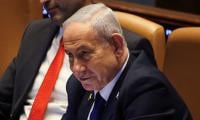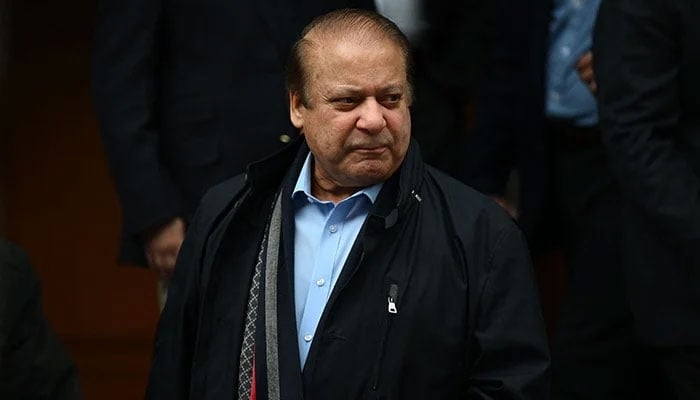
Former prime minister and PML-N chief Nawaz Sharif on Wednesday said that the country’s problems stemmed not only from PTI founder chairman Imran Khan but also from “those who brought him to power”. Mian Nawaz Sharif has kept a low profile ever since the February 2024 elections. This rare public appearance after months of silence has naturally raised questions. Some believe Nawaz alluded to the establishment when he spoke about the accountability of those who brought Imran to power, while others think he was referring to the judges who facilitated the process. Could Nawaz have deliberately said this because he wants to diffuse the impression that the PML-N is playing the role of the B-team of the powers-that-be? On the other hand, Rana Sanaullah said on Thursday that those who caused harm to Pakistan in the past “may face accountability” when the time comes, but for now, “the focus should be on working for the betterment of the country”. The real question is what all this means for Nawaz Sharif’s political legacy. After the 2024 elections and the way this PML-N government has legislated away civilian space to the powers that be, many are asking why Nawaz tarnished his own legacy at the twilight of his political career. Could this talk of ‘accountability’ be a throwback to his time in the sun as a symbol of resistance? A message perhaps to his own voter base ?
Regardless of the reasoning, this may not make much difference in reclaiming his lost legacy, especially when his brother is the PM and his daughter is the CM of the country’s largest province. Even if Nawaz tries to draw a distinction between his political ideology and that of his family members, it does little good for the country’s democratic process. The 26th and 27th amendments have already left civilians with virtually no meaningful space. Nawaz used to once talk about civilian supremacy; today, his party has all but abandoned this principle. Some could criticise Nawaz for sounding aggrieved despite his party being in power. But it is easy to forget that Nawaz was the victim of political intrigues and conspiracies precisely because he attempted to reclaim civilian space. If he laments this loss, it is not without reason. It was not only his personal defeat but a setback for the democratic project itself.
What is clear now is that all political parties seem to have made their peace with the fact that acceptability by the powerful quarters is more important than popularity. This is the unfortunate reality of Pakistan’s political landscape. Nawaz’s role in this democratic erosion may be undeniable, but he also eventually fought for civilian supremacy, even if he lost that battle. There is a lesson here for the PTI as well. When rival parties – no matter how begrudgingly – come together to defend their rights, democracy gets a breather. But when political parties refuse to engage, dialogue or build consensus, the third force always prevails. And Pakistan’s history shows, time and time again, that once that space is ceded, it is rarely returned.