The passage of the constitutional amendment creating the position of chief of defence forces (CDF) marks one of the most consequential transformations of Pakistan’s defence architecture in recent memory. It reflects a national consensus that the evolving security environment requires a more harmonised, forward-looking command structure, one designed not for the threats of yesterday but for the multidimensional challenges of today.
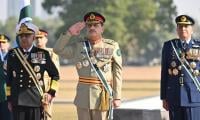
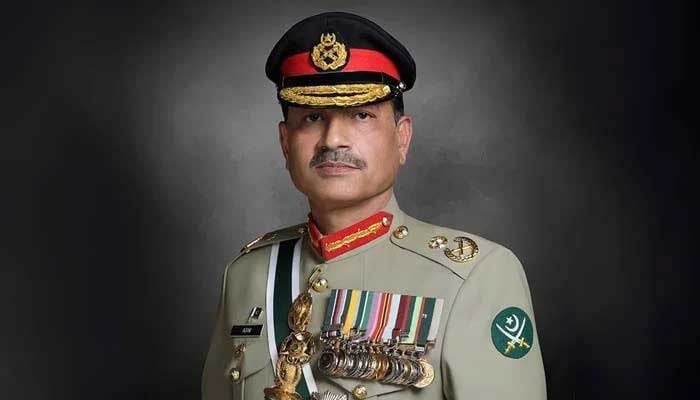
Entrusting this role to Chief of Army Staff Field Marshal Syed Asim Munir, whose leadership has earned deep respect nationally and abroad following the historic success of Marka-e-Haq and Bunyan-um-Marsoos, gives this reform both substance and strength from the outset.
For decades, Pakistan’s armed forces have operated as coordinated pillars of national defence. Yet the modern strategic terrain is no longer confined to single domains. Land, sea, air, cyber, information and space now intersect in real time. The creation of the CDF role is not a verdict on the performance of our services; rather, it is a natural evolution of military thought, ensuring that Pakistan’s tri-services operate with enhanced harmony and unified long-term vision. In the complexities of contemporary warfare, synergy is a strategic requirement.
With one senior commander guiding inter-service alignment, Pakistan gains the ability to pursue long-term planning, coordinated capability development and unified strategic direction. This forward-looking approach strengthens our national security posture at a time when regional and global dynamics are changing swiftly. The reform aims to deepen integration, enhance readiness and create a more seamless interface between strategic decision-making and operational implementation – all essential elements of a resilient defence system.
The appointment of COAS Field Marshal Syed Asim Munir as the first CDF holds special significance. His tenure has been marked by clarity of purpose, operational discipline and an unwavering emphasis on national unity. His leadership during Marka-e-Haq and Bunyun-um-Marsoos not only reinforced internal stability but also drew international commendation for the precision and strategic foresight with which the operations were executed. Beginning this new chapter under his guidance offers an institution undergoing historic reform continuity, maturity and confidence.
Pakistan is also aligning with global military practices. Many advanced and stable defence systems – including Australia, whose chief of the defence force oversees joint operations, and the UK, where the chief of the defence staff serves as the principal military adviser and coordinator of tri-service strategy – have long embraced unified military leadership.
Even countries like France and Canada operate under similar principles of integrated command. Though structures and titles vary, the underlying philosophy is shared: modern security demands coherence, unity and coordinated policy direction across all branches of the armed forces. Debate around major institutional changes is natural in any democracy, and constructive questions are part of responsible national dialogue. But it is equally important to recognise that this reform has been enacted through a constitutional process and reflects the considered judgment of the elected legislature. The objective is not to alter balance, but to enhance effectiveness by providing Pakistan’s defence establishment with the strategic tools required in today’s world.
As the new structure takes shape, its promise lies in the potential to deepen inter-service coordination, streamline strategic planning, and shape a unified vision for the years ahead. As this reform takes root and evolves, Pakistan can expect greater alignment in defence priorities, clearer long-term capability development, and an even stronger collective posture across the army, navy and air force.
The creation of the office of chief of defence forces is not simply an administrative adjustment. It is a forward-looking commitment to national security, a recognition of the changing contours of modern warfare and a declaration that Pakistan intends to meet the future with strength and clarity. That this new chapter begins under the leadership of COAS Field Marshal Syed Asim Munir further reinforces the sense that Pakistan is moving with purpose and confidence into a new era of strategic maturity.
By embracing an integrated command and preparing its defence institutions for tomorrow’s challenges, Pakistan is safeguarding its future.
The writer is a leading Pakistani industrialist. He can be reached at: [email protected]