Pakistan is not running out of water the way conventional narratives suggest; rather, it is running out of the capacity to manage, govern and equitably distribute what it already has.
This distinction is precisely why water stewardship must now be treated as a central pillar of national policy rather than a peripheral sustainability concept. A country that once had more than 5,000 cubic meters of water available per person annually now operates close to the water-scarcity threshold, with per capita availability hovering around 885-1,100 cubic meters, a decline driven not only by population growth but by decades of institutional fragmentation, weak regulation and inefficient allocation. This is no longer a distant risk but a present and accelerating constraint on economic growth, public health and social stability.
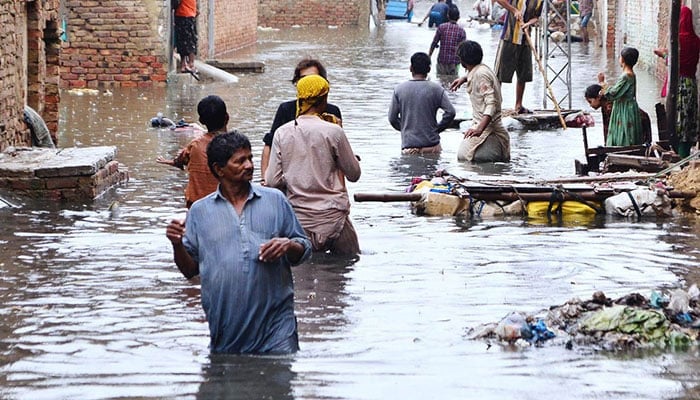
What makes Pakistan’s situation particularly paradoxical is that scarcity coexists with abundance, as the country oscillates between devastating floods and acute shortages, exposing systemic governance failures rather than limits of natural supply. The 2022 and 2025 floods, widely linked to climate change, illustrated how excess water can become a destructive force when infrastructure, planning, and regulation fail; yet the lack of sufficient storage capacity means this water is not captured for future use.
This flood–drought paradox is compounded by a severe water quality crisis, with national assessments indicating that between 69 and 85 per cent of drinking water sources are contaminated, while less than 1.0 per cent of wastewater is treated before discharge into natural systems. The economic cost of this failure, estimated at nearly 4.0 per cent of GDP annually, highlights that water insecurity is deeply embedded within Pakistan’s development challenges.
Agriculture, which consumes nearly 90 per cent of Pakistan’s water resources, sits at the centre of this crisis, yet operates within a system that rewards inefficiency and perpetuates unsustainable practices. Four major crops account for the bulk of irrigation demand while contributing only a fraction to national economic output, highlighting a structural imbalance that has remained largely unaddressed.
The groundwater, often treated as a buffer against surface water shortages, is being extracted at unsustainable rates without effective regulation, leading to declining aquifers and worsening water quality, particularly in rural and peri-urban areas. When projections from the National Adaptation Plan suggest that water demand could increase by as much as 60 per cent by 2047, the scale of the challenge becomes unmistakable.
Yet an even deeper layer of vulnerability lies in the ecological foundations of Pakistan’s water system. Nearly 90 per cent of the flows in the Upper Indus Basin are sustained by snow and glacier melt, making Pakistan one of the most cryosphere-dependent countries in the world. Climate change is rapidly disrupting this delicate balance, altering snowmelt patterns, accelerating glacier retreat in some regions, and increasing the frequency of glacial lake outburst floods. These changes are not only affecting seasonal water availability but are also intensifying the volatility of flows, creating sudden surges followed by prolonged shortages.
In the absence of efficient storage, watershed management, and adaptive infrastructure, such variability translates directly into agricultural losses, damaged irrigation systems and heightened disaster risks. What was once a relatively predictable hydrological system is now becoming increasingly erratic, and policy frameworks have yet to fully internalise this shift.
This domestic vulnerability is further compounded by emerging geopolitical risks surrounding the Indus Basin, which underpins Pakistan’s water security. The Indus Waters Treaty, long regarded as a stable diplomatic mechanism for transboundary water governance between Pakistan and India, was held in abeyance by India last year, as it develops upstream hydro projects, raising concerns about the predictability of flows and water. In this evolving context, water stewardship is no longer confined to environmental discourse rather has become a strategic necessity, enabling Pakistan to strengthen internal resilience against both climatic shocks and external uncertainties. Efficient storage, equitable allocation, and sustainable use are not merely technical goals but safeguards against a future in which water becomes a tool of vulnerability.
Water stewardship, therefore, must be reframed as an integrated governance approach that aligns efficiency, equity, ecosystem protection and collective accountability across sectors. In Pakistan, the private sector has increasingly engaged in water stewardship initiatives, investing in water efficiency, wastewater management and community-level interventions, often in collaboration with research institutions and civil society.
At the same time, community organisations have played a decisive role in ensuring that these interventions are not only implemented but sustained, embedding behavioural change, local ownership and inclusivity into water management practices. These efforts demonstrate that solutions exist, but they remain fragmented, operating in silos without the policy support required for scale.
While existing policies such as the National Water Policy and the National Climate Change Policy acknowledge elements of integrated water resource management, they do not fully operationalise water stewardship as a structured, multi-stakeholder framework with clearly defined roles for the private sector, communities and development partners. This gap has tangible consequences, as it restricts the alignment of corporate initiatives with national priorities, limits access to finance for scaling solutions and prevents the institutionalisation of successful models.
In this regard, even foundational frameworks such as the Water Apportionment Accord of 1991, while historically significant, require re-evaluation through a climate-informed lens. Designed in a different hydrological context, the accord does not adequately account for flow variability, emerging climate risks or the need for transparent, real-time water accounting.
There is a growing need to embed stronger accountability mechanisms that not only define provincial shares but also track how water is managed, allocated and utilised within provinces, including addressing issues such as water theft, inefficient distribution, and pricing distortions. Similarly, important water sources, such as hill torrents, which are often underutilised and poorly managed, must be systematically integrated into national water planning rather than treated as episodic or peripheral resources.
Pakistan, therefore, needs to develop a dedicated national water stewardship roadmap that positions stewardship as an integral component of water governance rather than an optional add-on. Such a roadmap would need to clearly define how private sector actors, community organisations, development partners and government institutions can collaborate within a unified framework to achieve water security objectives. It would also need to establish mechanisms for scaling successful models, ensuring that community-driven interventions are not isolated success stories but are systematically integrated into broader development strategies.
Central to this effort is the creation of an enabling regulatory environment that encourages private sector participation while ensuring accountability and alignment with national goals. This includes introducing mandatory water-use reporting, strengthening wastewater discharge regulations, and establishing performance benchmarks for water efficiency and reuse.
At the same time, the government must actively support private-sector engagement by facilitating access to international climate and development finance, enabling blended financing models, and creating incentive structures – such as tax benefits, recognition platforms or preferential procurement policies – that reward responsible water practices.
Equally important is the need for government ownership of water stewardship as a national priority, where successful initiatives are not only acknowledged but actively scaled through public investment, policy support, and institutional integration. Without such ownership, even the most effective models will remain limited in impact, unable to address the scale of Pakistan’s water challenges.
In this context, think tanks and community organisations must be recognised as essential partners in implementation, given their role in ensuring the sustainability, inclusivity and local relevance of water interventions.
At the same time, strengthening data systems and institutional capacity remains critical, particularly at the provincial and district levels, where water governance is ultimately operationalised.
Ultimately, Pakistan’s water crisis is not a story of inevitable scarcity but of governance choices, where fragmented systems, weak incentives and limited coordination have transformed manageable challenges into systemic risks. Water stewardship offers a pathway to reverse this trajectory, but only if it is institutionalised as a core component of national water policy, supported by strong regulatory frameworks, active private sector engagement, and empowered community participation.
In a country where water sits at the intersection of climate change, economic development and geopolitical uncertainty, the question is no longer whether Pakistan can afford to adopt water stewardship, but whether it can afford not to.
Zainab Naeem is an environmental scientist and leads the ecological sustainability and circular economy programme at theSustainable Development Policy Institute (SDPI). She is also a member of the Punjab Climate Change Implementation Committee.
Ebadat Ur Rehman Babar is a doctoral researcher and works at SDPI as a research associate.