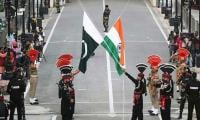
For 25 years, nuclear deterrence in South Asia rested on a basic understanding shared by both Pakistan and India: force would remain a measure of last resort because the consequences of miscalculation were simply too high.
This arrangement was never comfortable, but it offered a level of predictability that kept several dangerous moments from turning into something far worse. That sense of predictability is now weakening, and the reasons for it are not evenly distributed across the region.
Pakistan’s nuclear posture has remained steady since its formal declaration. It is built on clarity, credible minimum deterrence and the separation of political messaging from strategic signaling.
India’s political environment has shifted in a different direction. Senior figures frequently reference ideas associated with Akhand Bharat, a concept that imagines a larger civilisational space extending well beyond India’s present borders. When such ideas are echoed by ministers or party leaders, they naturally affect how Pakistan interprets intent and risk in moments of tension.
This is a significant change from earlier periods. Under Vajpayee, India’s leadership approached nuclear signaling with caution and kept ideological language separate from strategic decisions. The political environment shaped by the BJP today operates differently. Domestic narratives and electoral pressures often carry over into India’s strategic messaging, creating noise where clarity once existed.
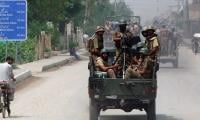
The crisis in May highlighted this shift. After the attack in Pahalgam, India launched missile strikes into Pakistani territory, prompting Pakistan to respond with limited and controlled action that avoided civilian harm and signaled a desire to contain the situation. For several days, the region witnessed missile strikes, drone activity and exchanges along the Line of Control that unfolded far faster than diplomatic channels could react. The crisis subsided, but it revealed a troubling trend. Political incentives within India encourage leaders to project force in ways that can complicate crisis management, regardless of whether the strategic establishment intends such messaging.
The evolution of military capabilities adds another layer of complexity. India continues to invest in missile defence, long-range systems and conventional doctrines that allow for rapid cross-border operations. Pakistan’s advancements are shaped by a different purpose and focus on preserving the credibility of deterrence amid these changing conditions. The challenge is not the presence of new technologies on either side, but the absence of a shared understanding of thresholds in a more complex strategic environment.
Great-power competition shapes crisis behaviour, but Pakistan’s position within it is more balanced than India’s. India’s deepening military and political alignment with the US places its actions within a broader strategic framework that invites global attention and sends signals to audiences outside the region.
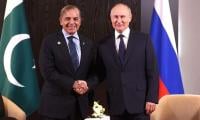
Pakistan, by contrast, has strengthened ties with Washington in recent years while maintaining its long-standing and reliable partnership with China. This dual alignment gives Islamabad a degree of flexibility and autonomy in crisis decision-making that New Delhi does not enjoy. Pakistan can engage both powers without being drawn into a single doctrinal track, helping keep its responses focused on the immediate situation rather than external expectations. When major powers have stakes on only one side of a regional crisis, the space for quick de-escalation narrows. Pakistan’s balanced relationships reduce that risk rather than amplify it.
Domestic politics play a role as well. India’s current political climate is heavily influenced by televised nationalism and an appetite for assertive language, which makes restraint more costly for its leadership. Pakistan’s national security decision-making remains institutional and largely insulated from day-to-day political turmoil, which has contributed to consistent and measured responses during crises. The pattern across the past two decades is clear: Pakistan’s replies have been proportionate and transparent, and they have tended to create space for de-escalation rather than escalation.
It is important to be accurate about the state of regional leadership. Pakistan continues to rely on a strategic community with deep understanding of crisis management and nuclear signalling. The erosion of restraint is not emerging from Islamabad. It is tied to the political environment in New Delhi, where strategic communication is increasingly shaped by sentiment and ideological narratives rather than disciplined assessment.
These developments do not suggest that nuclear conflict is imminent. Deterrence remains intact and military institutions on both sides understand the consequences of any serious miscalculation. The concern is that the guardrails that once supported crisis stability have thinned. India’s domestic incentives encourage sharper rhetoric. Communication channels are unreliable. Crises now move faster than they once did. New technologies create room for misreading intent.
Pakistan has kept its doctrine steady and its crisis behaviour measured, but stability in a nuclear region cannot rest on one-sided caution. The events of May showed how quickly the region can move toward danger when political impulses in India override strategic restraint.
South Asia needs predictable signaling, working communication channels and leadership that treats nuclear deterrence as a responsibility rather than a backdrop for domestic narratives. The region has already lived enough history to understand the limits of force, and that understanding must guide New Delhi’s choices if stability is to hold.
The writer is a non-resident fellow at the Consortium for Asia Pacific & Eurasian Studies. He tweets/posts @umarwrites